
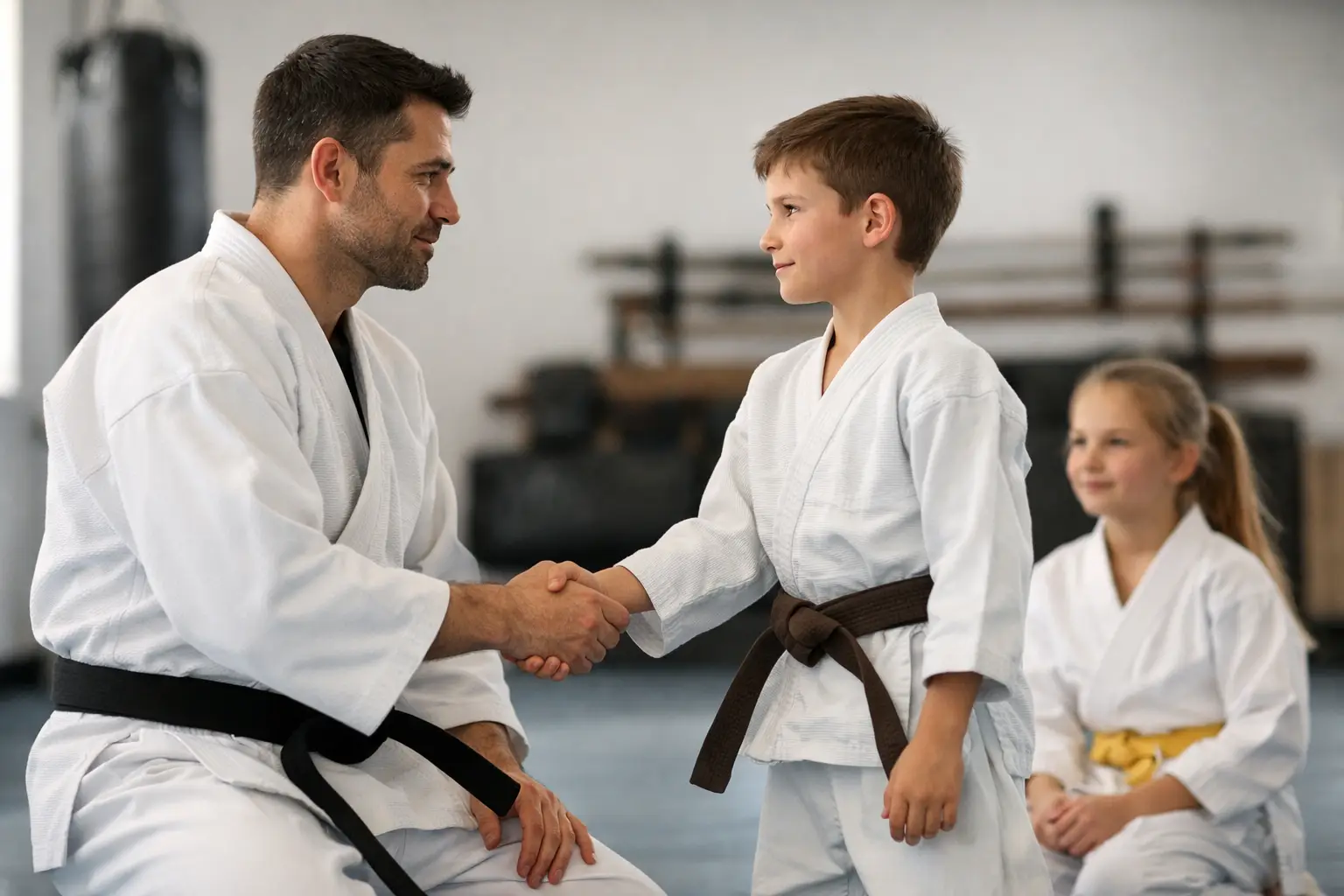
A child steps onto the mat for the first time, and most parents are thinking about movement, coordination, or maybe self-defense. What often surprises them is how quickly the bigger changes begin to show up outside of class. When people ask how martial arts builds leadership, the answer starts there – in the everyday habits students carry home, into school, and into every room they enter.
Leadership is not just about being loud, outgoing, or naturally in charge. For many children and teens, real leadership begins much more quietly. It looks like making eye contact when speaking, following through on responsibilities, staying calm under pressure, and treating others with respect even when emotions run high. Martial arts creates a structure where those traits are practiced again and again until they become part of who a student is.
How martial arts builds leadership from the inside out
The strongest leaders are not the ones who simply tell others what to do. They are the ones who can lead themselves first. That is one of the clearest reasons martial arts works so well as a leadership tool. Students learn very early that progress depends on personal responsibility.
In class, no one can focus for them, control their attitude for them, or put in their effort for them. They learn to listen, try again after mistakes, and stay disciplined even when something feels difficult. That matters because leadership is built on self-control. A child who can manage frustration is more prepared to lead than a child who only performs well when things are easy.
This is also why martial arts tends to benefit students with very different personalities. A naturally confident child may learn humility and patience. A quieter child may find their voice. Both are important leadership lessons. It is not about turning every student into the same kind of leader. It is about helping each one develop the character traits that make leadership real.
Discipline becomes dependability
Parents often use the word discipline, but what they usually want is something deeper than obedience. They want a child who can be counted on. Martial arts helps build that kind of dependability through repetition, routine, and standards.
Students bow in, pay attention, follow instructions, and learn that details matter. Over time, that mindset carries into schoolwork, chores, friendships, and team environments. A student who develops discipline in training is often the same student who starts completing tasks with less reminding and showing more pride in doing things well.
Dependability is a leadership trait people trust. Whether a child is working on a school project or helping at home, others begin to see them as someone who follows through. That is a powerful shift, especially for young people who are still shaping their identity.
Confidence grows through earned progress
There is a big difference between confidence that is given and confidence that is earned. Martial arts builds the second kind. Students do not just hear that they are capable. They experience it.
They struggle with a skill, keep practicing, and eventually improve. They work toward the next level and see that steady effort leads somewhere. They spar, perform, or participate in front of others and discover they can handle pressure better than they thought. That kind of confidence has substance behind it.
Leadership requires that foundation. A student who believes in their ability to face challenges is more likely to speak up, help others, and take initiative. At the same time, martial arts usually teaches confidence with respect, which helps prevent it from turning into arrogance. That balance matters. Strong leaders inspire trust, not intimidation.
Respect is where leadership earns its influence
A lot of people think leadership starts with authority. In reality, it starts with how someone treats others. Martial arts places respect at the center of training, and that shapes students in a lasting way.
They learn to respect instructors, training partners, rules, and the learning process. They also learn self-respect, which is just as important. A student who respects themselves is less likely to follow negative influences and more likely to make thoughtful choices.
This is one reason martial arts can be especially valuable during the school-age and teen years. Young people are constantly navigating peer pressure, social dynamics, and emotional ups and downs. Respect gives them a framework. It teaches them that leadership is not about dominating the room. It is about setting a standard through conduct.
Students learn to lead by example
In a healthy martial arts environment, leadership is visible. More experienced students often model focus, patience, and encouragement for newer students. Even younger children begin to understand that their behavior affects the people around them.
That lesson is huge. It helps students realize that leadership is not reserved for adulthood or for a special title. They can practice it now by showing kindness, staying coachable, and helping create a positive class culture.
For some students, this comes naturally. For others, it takes time. That is normal. Leadership development is not a straight line, and growth can happen in small steps. A child who once struggled to listen may eventually become the one encouraging a classmate who feels unsure. Those moments matter because they show leadership becoming a habit.
Resilience is one of the most practical leadership skills
If there is one trait that separates lasting leaders from temporary ones, it is resilience. Martial arts gives students regular, healthy exposure to challenge. They miss techniques. They face corrections. They get nervous. They lose rounds, forget combinations, or need more time than expected to improve.
That can be uncomfortable, but it is also incredibly valuable. Students learn that setbacks are not the end of the story. They are part of the process. Instead of quitting at the first sign of difficulty, they begin to develop persistence.
This lesson reaches far beyond the mat. At school, resilient students are more likely to recover from a poor grade or social setback. As they grow older, they are better prepared for pressure, responsibility, and disappointment. Leadership is not tested when everything is easy. It is tested when plans change, stress rises, and people still need someone steady.
Accountability builds maturity
Martial arts also teaches students to take ownership. If they are distracted, they are corrected. If they improve, they know why. If they want to advance, they understand that effort matters.
That kind of accountability can be challenging at first, especially for children who are used to blaming circumstances or giving up when something feels hard. But handled in a supportive environment, it helps students mature. They begin to see that their choices have consequences and that growth requires honesty.
That is one of the clearest answers to how martial arts builds leadership in everyday life. Leaders do not make excuses for everything. They learn, adjust, and move forward.
Why this matters for families
For parents, leadership development is not just about the future. It affects daily life right now. A child with stronger focus, better self-control, and more confidence often does better with routines, school expectations, and social situations. Family life can feel more peaceful when children are learning how to regulate emotions and respond with respect.
That said, growth does not happen overnight. Some students show visible changes quickly, while others build leadership more gradually. Age, personality, consistency, and environment all play a role. A four-year-old will not demonstrate leadership the same way a teen will, and that is okay. The goal is steady development, not perfection.
In a family-centered program, parents are not just spectators to that process. They get to watch their child become more responsible, more composed, and more willing to rise to expectations. That is one reason many families see martial arts as more than an activity. It becomes part of how they are raising their child.
For older students and adults, the leadership benefits are just as real. Training can sharpen mental discipline, increase confidence under pressure, and reinforce the habit of staying calm and purposeful. Whether someone is leading in school, at work, at home, or in the community, those qualities travel well.
At TUFF Martial Arts Academy, this idea is at the heart of training. Martial arts is not treated as physical practice alone. It is a path for building character, strengthening families, and helping students grow into the kind of leaders others want to follow.
The best part is that leadership developed through martial arts rarely looks flashy at first. It shows up in a stronger handshake, a calmer response, a better decision, or the courage to keep going when something feels hard. Those are the moments that shape a leader, and they often begin with something as simple as stepping onto the mat and choosing to grow.