
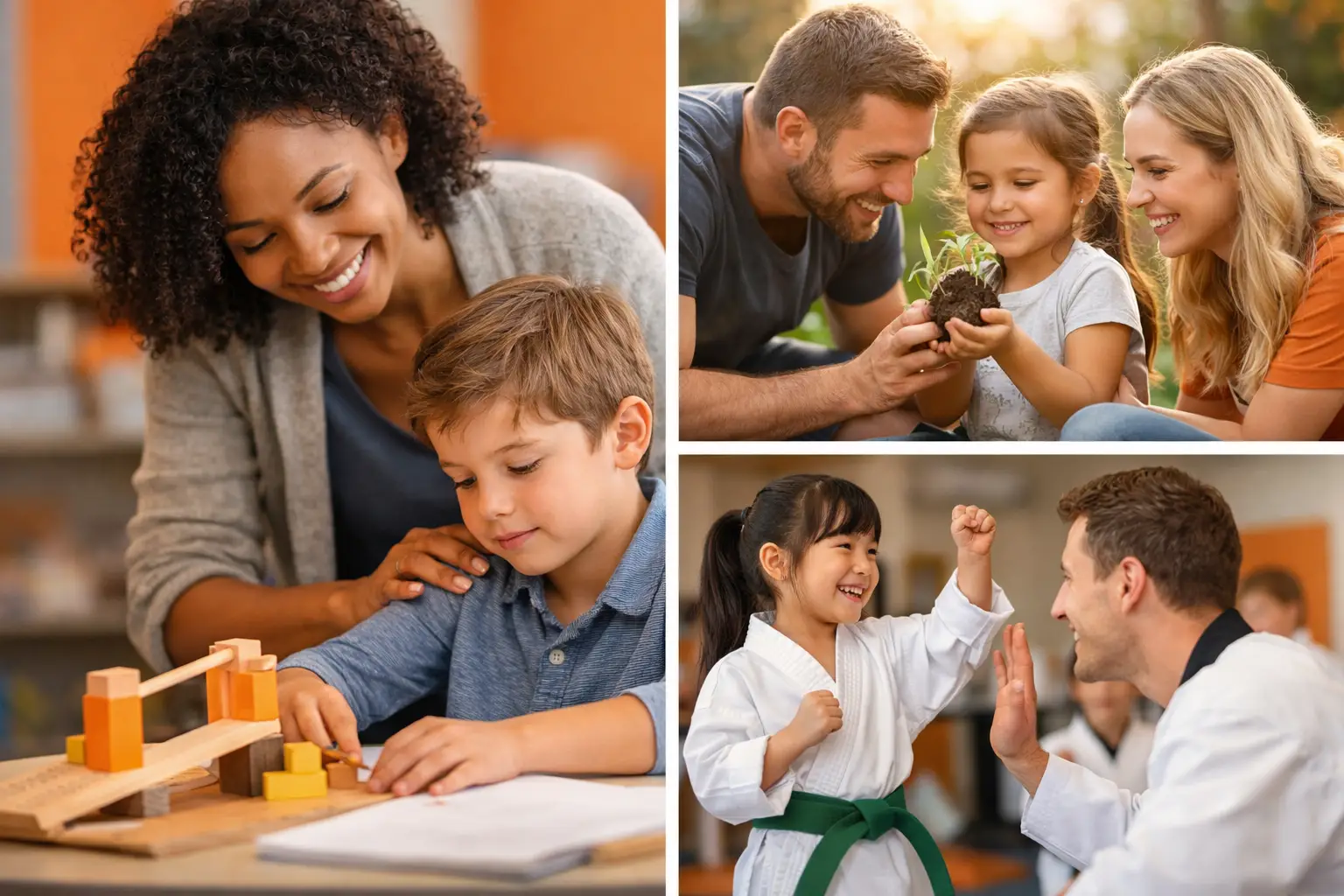
Some lessons show up quietly. It looks like your child putting their shoes away without being asked, owning a mistake instead of blaming someone else, or helping a younger sibling even when nobody is watching. That is why character development activities for children matter so much. They are not about creating a perfectly behaved kid. They are about building habits that shape how a child responds when life gets hard, frustrating, or unfair.
For most parents, this is the real goal. You are not just looking for something that keeps your child busy for an hour. You want experiences that help them grow into someone steady, capable, and trustworthy. The good news is character is not built through long speeches. It is built through repetition, expectations, and the right kind of challenge.
Why character development activities for children work
Children learn character the same way they learn most things – by doing. A lecture about responsibility rarely changes much on its own. A simple daily job they are expected to finish does. A reminder to be kind may fade in five minutes. A regular habit of serving others starts to stick.
That is the trade-off many families miss. Character-building activities are usually less flashy than entertainment-based activities. They may even bring some resistance at first. But they give children something more lasting. They create opportunities to practice patience, honesty, follow-through, self-control, and care for other people.
It also helps to know that no single activity does everything. Some build confidence. Others build empathy. Some teach a child to manage frustration. Others help them think beyond themselves. The goal is not to find one perfect answer. The goal is to create a pattern of growth.
8 character development activities for children
1. Give them a meaningful household role
Children grow when they know they are needed. Not praised for every tiny task, but trusted with something that matters. Feeding the dog, setting the table, checking backpacks before the next school day, or helping sort laundry can do more than fill time. It teaches contribution.
The key is consistency. If the job disappears whenever they complain, the lesson disappears too. If the expectation stays, children begin to understand that being part of a family means showing up. That kind of responsibility carries over into school, friendships, and team environments.
2. Practice delayed gratification in small ways
A lot of character comes down to what a child does between wanting something and getting it. That space matters. It is where patience, emotional control, and decision-making start to form.
This does not have to be complicated. It can be waiting until chores are finished before screen time, saving allowance toward a larger goal instead of buying something small right away, or taking turns during a game without interrupting. Small moments like these help children learn they can handle discomfort without falling apart.
3. Use reflection after conflict
Conflict is one of the best teachers if it is handled well. When a child lies, talks back, quits too quickly, or hurts someone’s feelings, the moment should not end at punishment alone. Reflection is where the growth happens.
Ask simple questions. What happened? What were you feeling? What choice did you make? What could you do differently next time? This keeps the focus on ownership instead of shame. Children need to understand that mistakes are serious, but they also need to believe they can grow from them.
4. Put them in situations where effort matters
Children build character when they face challenge without an immediate escape route. That could mean learning a new skill, sticking with a physical activity, practicing for a performance, or working through a task that does not come easily.
This is one reason structured programs can be so powerful when they are led with the right values. In martial arts, for example, a child learns very quickly that progress requires consistency, coachability, and perseverance. They cannot talk their way into growth. They have to earn it one class at a time. For many families, that kind of environment gives children a healthy place to work through frustration and come out stronger on the other side.
5. Create regular opportunities to help others
Empathy grows when children get close enough to somebody else’s needs to notice them. That can happen in everyday life. Writing a thank-you note, helping a younger child with a task, bringing in groceries for a neighbor, or setting aside items to give to another family all help children think beyond themselves.
What matters most is not making it performative. Children do not need to be told they are amazing every time they help. They need to see that serving others is a normal part of being a good member of a family and community. Over time, that shapes how they treat people when no reward is attached.
Building character at home without making it feel forced
One mistake parents make is turning every lesson into a speech. Most children tune that out fast. Character-building works better when it is woven into normal family life.
Keep expectations clear. Follow through calmly. Praise effort, honesty, and growth more than talent or personality. If your child tells the truth in a hard moment, say so. If they keep going after wanting to quit, point it out. Children repeat what gets recognized.
It also helps to avoid setting the bar at perfection. Character is not a straight line. A child can be generous one day and selfish the next. They can show maturity in one setting and lose control in another. That does not mean the lesson is failing. It means they are still practicing.
6. Let them lead something small
Leadership starts long before adulthood. A child does not need a title to practice it. Let them help plan a family game night, lead warm-ups before a backyard activity, pack snacks for a younger sibling’s event, or be responsible for checking that everyone has what they need before leaving the house.
These moments teach more than independence. They teach awareness, initiative, and follow-through. Children begin to see that leadership is not about being the loudest person in the room. It is about helping a group move forward.
7. Read stories and talk about choices
Books, movies, and even real-life situations can open the door to strong conversations about character. Ask what a character did well, where they failed, and what your child would have done in the same situation.
This works because it creates enough distance for children to think honestly. Talking about someone else’s choices is often easier than talking about their own. Over time, they start connecting those ideas back to real life. They begin to notice courage, dishonesty, loyalty, selfishness, and resilience in ways they did not before.
8. Put them in a community with standards
Children are shaped by the environment around them. If they spend time in spaces where effort is expected, encouragement is normal, and accountability is part of the culture, that influences them in powerful ways.
This is where the right afterschool program, team, or activity can make a real difference. Not because a program magically changes a child, but because children often rise to the level of the environment they are in. At TUFF Martial Arts, families often come in looking for structure, confidence, and a place where their child can be challenged in a healthy way. What keeps them here is seeing their child grow in how they carry themselves, how they respond to correction, and how they show up at home.
What parents should watch for over time
Character growth usually shows up in ordinary moments before it shows up in big ones. Your child may recover from disappointment faster. They may start taking ownership without being cornered into it. They may show more patience with a sibling, more consistency with responsibilities, or more calm when things do not go their way.
Those changes can be easy to miss because they do not always arrive with a big announcement. But they matter. In many cases, these are the signs that your child is building a stronger inner foundation.
It is also worth saying that every child responds differently. Some need a physical outlet to bring out their best. Some need clear routines. Some need more time and repetition than others. That does not mean you are doing it wrong. It means character development is personal, and the right activity is the one your child can grow through consistently.
If you are choosing character development activities for children, think less about what sounds impressive and more about what creates real practice. Look for responsibility, challenge, service, reflection, and community. Those are the places where strong character tends to grow.
Children do not become leaders by being told they are one. They become leaders by learning how to act when something is hard, boring, unfair, or uncomfortable. Give them enough chances to practice that, and the growth will speak for itself.