
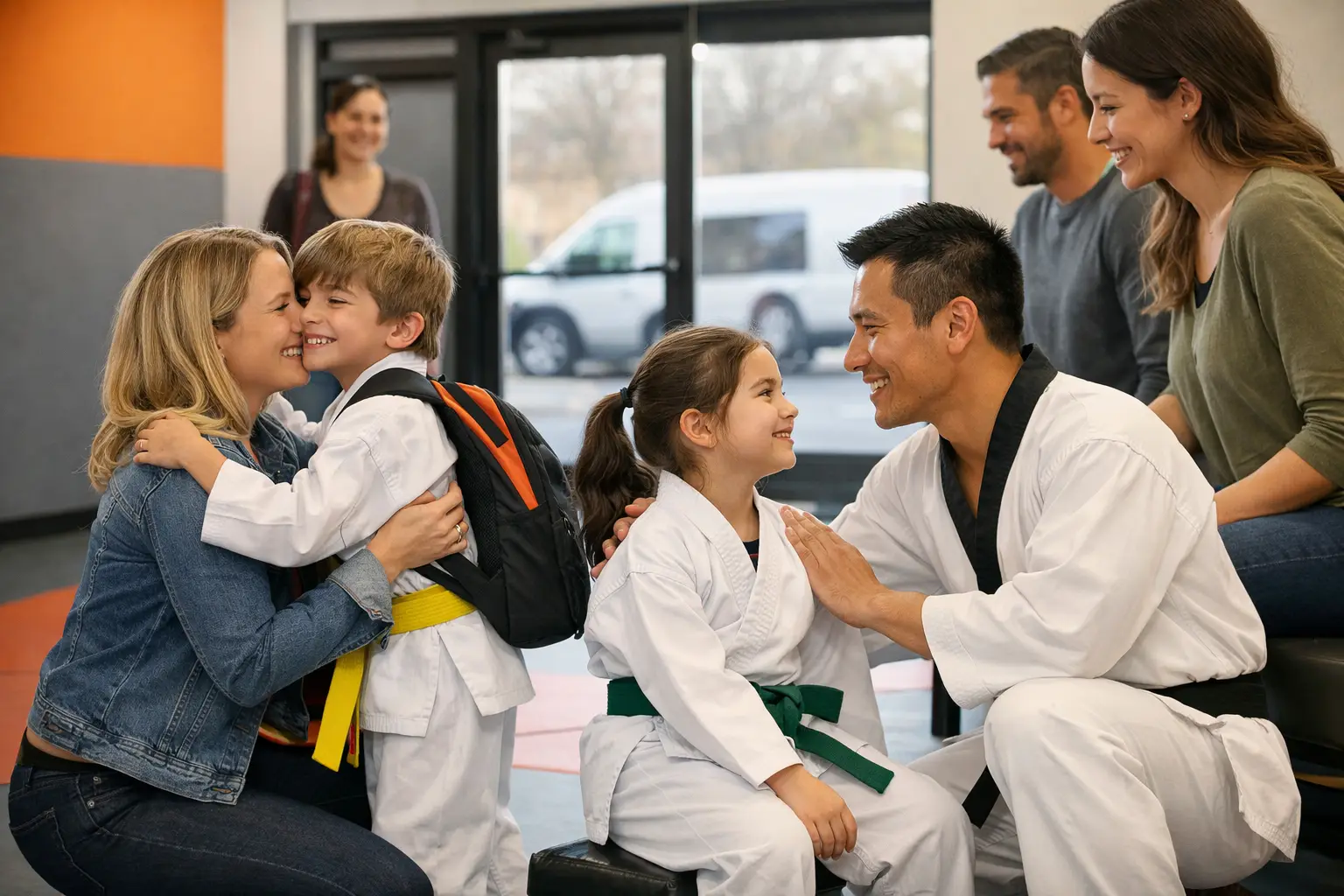
The hardest part of any afterschool plan is usually not 6:00 p.m. It is 2:00 or 3:00 p.m., when school lets out, work is still going, and your child has too much time, energy, or uncertainty packed into a small window of the day. That is exactly where parents start asking how afterschool pickup martial arts works, and whether it is really a practical solution or just another activity with a nicer name.
The short answer is this: it is part transportation, part structured care, and part training environment. But for families, the real value is not just that a child gets picked up from school. It is that the hours between dismissal and dinner stop feeling wasted, chaotic, or disconnected.
How afterschool pickup martial arts works day to day
A good afterschool pickup martial arts program starts before your child ever steps on the mat. The first piece is transportation. Students are picked up directly from their school by the program’s staff or drivers and brought to the academy on established routes. That matters more than people realize. For working parents, the biggest barrier is often not finding something worthwhile for a child to do. It is figuring out how that child gets there safely and consistently every single day.
Once students arrive, the day usually follows a predictable rhythm. They check in, settle down, have a snack if the program provides one or if they bring one from home, and move into a supervised afterschool block. Depending on the program, that can include homework time, reading, quiet reset time, and then martial arts class later in the afternoon.
That order matters. Kids are coming in from a full school day. Some need movement right away. Others need a few minutes to breathe, eat, and reset before they can handle one more instruction-heavy setting. A strong program understands that afterschool is not just an extension of school. It is a transition period, and kids do better when that transition is handled with intention.
What parents should expect from the pickup process
If you have never used an afterschool pickup program before, it is normal to wonder how the logistics actually work. Most families want to know the same things. Who picks up my child? How does the school know where they are going? What happens if there is an early release or a schedule change?
The answer is usually a combination of school authorization, staff coordination, and consistent routines. Parents complete pickup permissions in advance so the school knows the child is cleared to leave with the program. The martial arts academy then follows its assigned route and pickup procedures each day. The more established the route system is, the smoother this tends to be.
There is a practical side to this that parents should pay attention to. Not every program serves every school, and not every route has unlimited space. That means fit matters. If your child’s school is on the route, great. If it is not, you need to know that upfront rather than assume transportation can be improvised later.
This is one reason families across South Miami-Dade often look for programs with a real transportation network, not just occasional pickup help. When vans, staff, and school partnerships are already part of the daily operation, parents are not depending on a last-minute workaround.
The part that matters most after pickup
Transportation gets the child there. The environment is what makes the program worth it.
A lot of parents are not just searching for coverage until they get off work. They are looking for a place where their child is not checked out in front of a screen for three hours. They want those hours to count for something. They want their son or daughter to be around adults who are paying attention, setting standards, and helping them grow.
That is where martial arts changes the shape of an afterschool program.
In a typical afterschool setting, supervision may be the main service. In a martial arts setting, supervision is only the beginning. Kids are expected to participate, listen, reset themselves when they get off track, and carry themselves differently than they did when they walked in. Over time, parents often notice small but meaningful changes. A child starts handling transitions better. They become more coachable. They move through frustration with less drama. They begin to take pride in doing hard things well.
None of that happens from one class. It comes from repetition, structure, and the right people leading the room.
How afterschool pickup martial arts works for different kids
Not every child shows up to afterschool the same way.
Some kids are social and active and need a place to channel that energy. Some are mentally done by the end of the school day and need a stronger reset before they are ready to engage again. Some have struggled in other activities because they got bored, shut down, or felt lost in the crowd.
A thoughtful program accounts for that. It does not treat every child like a copy of the next one.
That does not mean the environment is loose. It means the adults understand that growth looks different depending on the child. One student may need help learning how to settle their body and pay attention in a group. Another may need to build confidence by sticking with something long enough to see progress. Another may already love training and simply needs consistency and mentorship.
This is where parents should be honest about what they need. If you mainly need dependable afterschool transportation and supervision, say that. If you are also hoping your child finds more confidence, better habits, or a stronger sense of direction, say that too. The right academy should be able to explain how their program supports both the practical need and the developmental one.
Homework, training, and the real rhythm of the afternoon
One question parents ask often is whether martial arts afterschool leaves enough room for homework. That depends on the program design, but in a well-run setting, academics are not treated like an afterthought.
Many programs build in dedicated homework time before class begins. That gives students a chance to complete at least part of their work while they are still in a structured environment. It also gives parents a better evening. Instead of getting home with an overtired child and starting everything from scratch, you may be walking into a night that feels more manageable.
There is a trade-off, though. Some children do their best homework at a table in a quiet room. Others focus better once they have moved their body first. Age matters too. A kindergartener’s afterschool needs are different from a middle school student’s. That is why parents should ask how the daily schedule is built, not just whether homework help exists.
Training itself usually happens in a set class block, with students grouped by age or level. During class, the atmosphere should feel active but clear. Kids should know what is expected, what they are working toward, and how to respond when they make mistakes. A strong class does not need to be harsh to be serious. The standard can be high and still feel encouraging.
Communication with parents matters more than most people think
When families ask how afterschool pickup martial arts works, they are often really asking something deeper: how will I know my child is okay, growing, and in the right hands?
That answer lives in communication.
Parents should know the pickup plan, the general afternoon schedule, and how the academy handles changes or concerns. They should also have a sense of who is leading their child’s day. Not in a polished sales way. In a real way. You should feel that the people responsible for your child take that responsibility personally.
That is especially important for younger students and for children who need a little more support with transitions, confidence, or consistency. Parents do not need a dramatic report every day, but they do need enough visibility to trust the process.
At TUFF Martial Arts Academy, that trust has always mattered because families are not handing over just an afternoon slot on the calendar. They are handing over part of their child’s daily routine, energy, and growth. That should never be treated casually.
Is afterschool pickup martial arts the right fit?
For a lot of families, yes. But not always for the same reason.
For some, the biggest benefit is practical. Their child gets picked up from school, stays in a structured environment, and they avoid the daily scramble that makes afternoons so stressful. For others, the practical piece is only what gets them in the door. What keeps them there is seeing their child begin to grow into someone stronger, steadier, and more confident over time.
It also depends on your child. If they need constant novelty and resist all structure, there may be an adjustment period. If they are shy, they may need time before they fully engage. If they are carrying a lot of energy after school, they may thrive faster than you expect. The key is not finding a magic fix. It is finding a place where your child is consistently guided, challenged, and known.
That is what parents are really looking for when they ask how afterschool pickup martial arts works. They are asking whether those hours after school can become more than a scheduling problem. They can. When the pickup is reliable, the environment is strong, and the adults leading it care about who your child is becoming, afterschool stops being dead time and starts becoming part of the answer.
If you are weighing options right now, look past the flyer version of aftercare and ask what your child’s afternoons are building toward.