
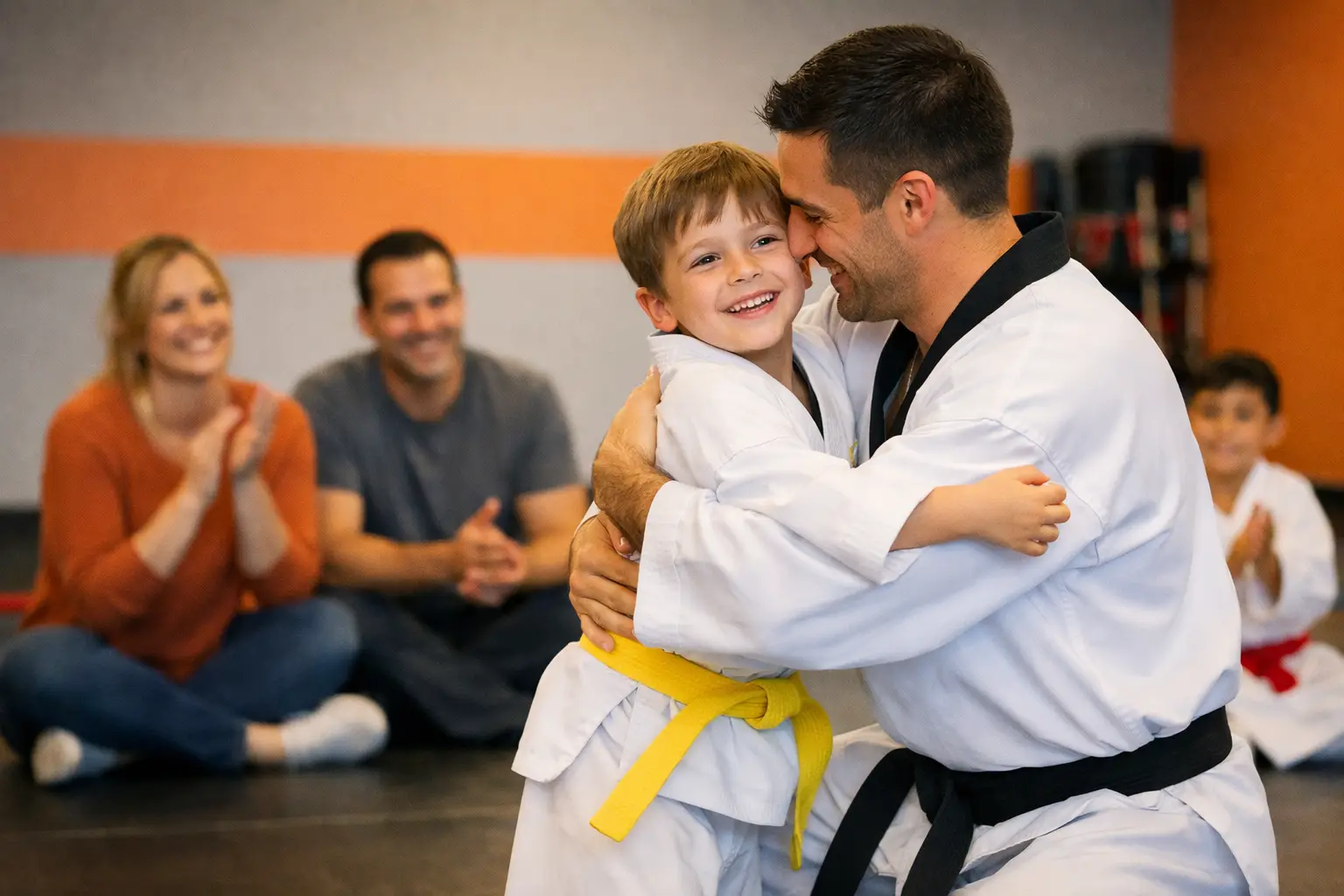
Some kids don’t need more reminders. They need a rhythm they can feel.
That is usually what parents are really asking when they want to understand how martial arts creates routine. Not a color-coded chart on the fridge. Not another speech about responsibility. They want something their child can count on, something steady enough to shape the rest of the week.
Routine matters because kids rarely build it from words alone. They build it from repetition, expectation, and the experience of showing up even on the days they do not feel like it. Martial arts gives them that in a way many activities do not. It is structured, physical, and consistent. Over time, that structure starts to carry over into the rest of life.
How martial arts creates routine in real life
A strong routine is not just about keeping a schedule. It is about teaching a child what happens next, what is expected of them, and how to move from one responsibility to another without constant resistance.
Martial arts helps because class follows a pattern. Students arrive, get themselves ready, step onto the mat, listen, move, practice, reset, and finish. The order matters. Kids begin to understand that progress comes from doing the small things in the right sequence, over and over again.
That may sound simple, but for many families, simple is exactly what has been missing. When a child is used to pushing back on transitions, avoiding tasks, or bouncing from one thing to the next, a predictable class structure can become an anchor. They learn that there is a time to settle in, a time to work, and a time to finish strong.
This is one reason martial arts often feels different from activities that are more casual or less consistent. There is a clear beginning, middle, and end. Kids are not left guessing what the next ten minutes will look like. They start to trust the structure, and eventually they begin to work within it.
Routine starts before class even begins
Parents usually notice the first changes outside the training floor.
A child who knows they have class starts preparing for class. They know when to get dressed, when to pack their gear, when it is time to leave, and what kind of behavior is expected once they arrive. That may not seem like a big breakthrough, but for a family that has been dealing with daily chaos, those moments matter.
Routine is built in these small repeatable actions. Put on the uniform. Bring the right equipment. Get in the car on time. Walk in ready. Follow directions. Finish class. Go home and continue the evening.
Those steps create something many kids are missing – a dependable pattern of action. They begin to see that responsibilities are not random. They happen in order. And when that order is repeated every week, it starts to feel normal instead of forced.
This is also where parents often find some relief. They are no longer carrying the full weight of creating structure by themselves. The program reinforces it. The class time reinforces it. The instructors reinforce it. The child starts connecting effort with expectation in more than one setting.
Why repetition works better than constant correction
A lot of parents are exhausted from repeating themselves all day.
Clean your room. Put your shoes away. Sit down. Pay attention. Stop interrupting. Most families are not lacking good advice. They are lacking a system that gives that advice somewhere to land.
Martial arts works because it does not rely on one big motivational moment. It relies on repetition. Students practice the same core behaviors in every class – lining up properly, listening for instruction, waiting their turn, controlling their body, finishing the drill, and trying again.
That kind of repetition has value because it is lived, not just explained. A child experiences what it feels like to pause, follow through, and recover when they get off track. They are not simply being told to do better. They are being given regular chances to do better.
That difference matters. Correction without structure often turns into frustration. Structure with repetition gives a child room to improve.
Of course, progress is not always quick. Some children adapt to routine fast. Others test it first. They may resist the expectations before they begin to settle into them. That does not mean the process is failing. It usually means the routine is new enough to challenge old habits.
How martial arts creates routine at home too
The biggest win is not that a child can follow directions for one class. The biggest win is when that pattern starts showing up at home.
Parents may notice bedtime getting a little smoother because the child is more used to transitions. Mornings may improve because there is a clearer understanding that preparation comes before play. Homework can become less of a battle because the child has more experience sticking with a task until it is done.
This does not happen by magic, and it does not happen the same way for every family. Martial arts is not a switch you flip. It is a framework. The children who benefit most are usually the ones whose families support the same expectations outside class. When home and training reinforce each other, routine gets stronger much faster.
That is why the best programs do more than keep kids busy. They create standards kids can recognize. Show up prepared. Give your effort. Stay with the task. Reset when needed. Those lessons hold up far beyond the mat.
The confidence piece parents do not always expect
Routine is easier to follow when a child feels capable inside it.
This is where martial arts has an advantage. As students improve, they begin to trust themselves more. They know how class works. They know they can make it through hard rounds. They know they can listen, adapt, and keep going. That growing confidence reduces some of the friction around routine because the child no longer feels lost every time a structure is placed in front of them.
Kids who struggle with consistency are often not lazy. Sometimes they are discouraged. Sometimes they are overwhelmed. Sometimes they are used to feeling behind before they even start. A steady martial arts environment can change that by showing them what success looks like in steps.
First, they learn to arrive ready. Then they learn to stay engaged. Then they learn to recover after mistakes. That builds a kind of confidence that is practical, not performative. It is the confidence of knowing, I know what to do next.
Routine with accountability feels different
Not all routine is healthy. Some routines are just nagging with a schedule attached.
What makes martial arts different is accountability. There is a standard, and the child is expected to rise to it. They are seen. Their effort matters. Their choices have weight. That accountability helps routine stick because it is not only about checking boxes. It is about becoming dependable.
For families, this can be especially meaningful. Parents are not only looking for occupied time after school. They are looking for an environment where expectations are clear and where their child is known well enough for growth to be noticed. That is part of why a structured program can become such an important part of family life.
At TUFF Martial Arts, that has always been the heart behind the work. Not just teaching kids moves, but helping families build something steadier around them.
What parents should keep in mind
If you are hoping martial arts will create routine for your child, consistency matters more than intensity.
One great class will not change a household. Showing up week after week might. Give it time. Let your child get familiar with the structure before you decide what it is doing. Pay attention to the small changes first – getting ready with less resistance, listening faster, handling transitions better, recovering from frustration sooner.
Those changes are easy to overlook because they do not always arrive in a dramatic moment. But that is how lasting routine usually forms. Quietly. Repeatedly. With enough consistency that a new pattern starts to feel like part of who your child is.
And for many parents, that is the real goal. Not a child who is busy, but a child who is steadier. A child who knows how to step into the day with more order, more ownership, and more confidence than they had before.
Sometimes routine is not built by asking kids to do more. Sometimes it is built by giving them a place where the right things happen often enough to become natural.