
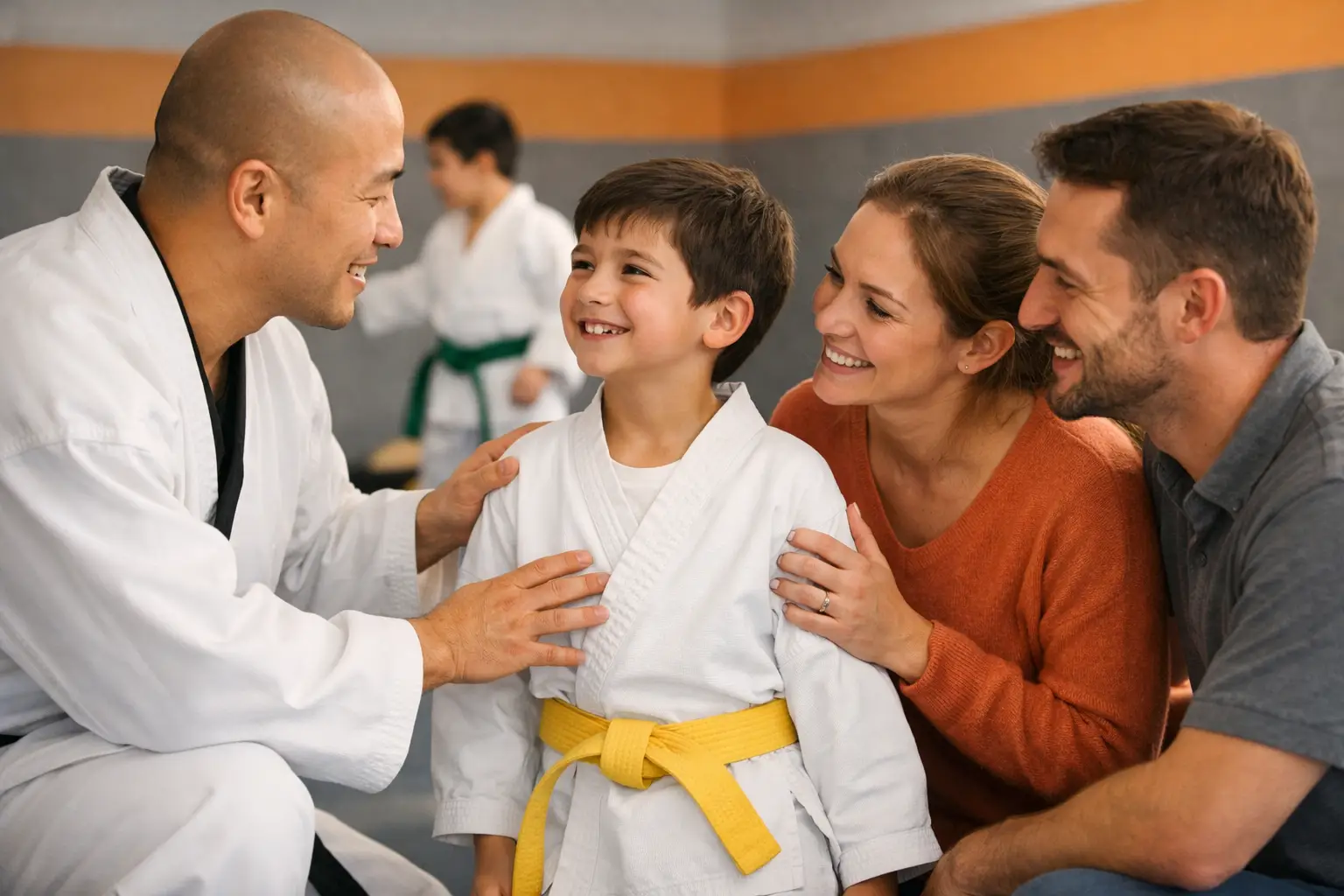
A child who bounces off the walls after school is not always asking for more entertainment. Sometimes they are asking for a place where expectations are clear, energy has a purpose, and effort is noticed. That is how parents use martial arts: not as a magic fix, but as a steady environment where children can practice showing up, listening, trying again, and becoming more sure of themselves.
For many families, the question starts after other routines have fallen short. A child may be struggling with big reactions, trouble settling into homework, low confidence, or too much unstructured time at the end of the day. Parents are not looking for a flashy uniform or a quick belt. They are looking for something that gives their child a better way to move through the day.
How Parents Use Martial Arts Beyond the Class
The most meaningful changes rarely happen in one dramatic moment. They build through small, repeated experiences: putting shoes in the same place before class, greeting an instructor, waiting for a turn, accepting correction without shutting down, and finishing a drill that felt difficult at first.
Martial arts gives parents a structure that children can understand. There is a beginning, a lesson, an expectation, and a chance to improve. For a child who feels scattered by a busy school day, that kind of predictability can be grounding. For a child with plenty of energy, it creates a healthy outlet that asks for more than just running around.
Parents often notice that their child begins carrying parts of the routine home. Maybe they respond more calmly when redirected. Maybe they are more willing to finish a task before moving on. Maybe they start talking about effort differently because they have learned that progress comes from practice, not from getting everything right immediately.
Those changes are not guaranteed, and they do not happen on the same schedule for every child. A quiet child may need time before participating fully. A child who is used to testing boundaries may take longer to trust a new routine. What matters is a program that stays consistent enough for the child to keep practicing the skills they need.
A Place for Energy, Not a Label
Parents sometimes come to martial arts because their child has a hard time sitting still or managing a full day of stimulation. That experience is familiar to many families, including the family that built TUFF Martial Arts. The original mission began with a father looking for an outlet for his own son and choosing to train alongside him.
That story matters because it is honest. Martial arts is not a clinical answer to every challenge a family may face. It can, however, give a child a meaningful place to move, follow direction, recover from mistakes, and earn the pride that comes with real effort. For many parents, that is exactly the kind of support they have been trying to find.
Building Confidence That Holds Up Outside the Mat
Confidence is often misunderstood as being loud, outgoing, or fearless. Parents usually want something deeper for their children. They want them to walk into a new room without shrinking. They want them to speak up when something is wrong, handle a setback without falling apart, and know they can work through hard things.
Martial arts creates frequent opportunities for that kind of confidence. A student may be nervous before demonstrating a skill, frustrated when a sequence does not click, or disappointed after a tough practice. With patient coaching and repetition, they learn that those feelings do not have to end the effort.
The value is not that every child becomes a natural competitor. Some will love the challenge of tournaments, while others will grow most through regular class and personal milestones. A healthy program gives both children room to develop. It teaches that growth is not measured only by who stands on a podium, but by how a student carries themselves when things do not go their way.
Parents can support this at home by asking better questions after class. Instead of asking, “Did you win?” or “Did you get your next belt?” try asking what felt hard, what they practiced, or what they are proud of. Those questions tell children that their effort matters even when progress is still in progress.
The Routine Working Families Can Actually Use
A strong martial arts program can also solve a practical problem without treating children like a scheduling problem. Working parents need to know where their child will be after school, who is supervising them, and whether that time has purpose.
The best afterschool routines do more than fill the hours until pickup. Children need time to decompress, complete responsibilities, move their bodies, and be around adults who hold them to clear standards with care. When those pieces are connected, parents are not forced to choose between dependable coverage and meaningful development.
For families in South Miami-Dade, logistics can be the difference between wanting a program and being able to use it consistently. Transportation from school, reliable pickup routines, and programming that extends through school breaks can remove a major source of daily stress. Consistency is especially valuable because children cannot build momentum in an environment they can only attend once in a while.
That does not mean every child needs every available program. Some families need two afternoons a week. Others need a daily afterschool plan or a camp option during school breaks. The right choice depends on the child’s temperament, the family’s schedule, and whether the program can maintain the same quality of care across all of those settings.
What Parents Should Look for Before Enrolling
The question is not simply whether a class looks exciting during a trial visit. Children often enjoy the first day. The better question is whether the adults in the room have a clear plan for helping them grow over time.
Watch how instructors correct students. A strong correction should be direct, calm, and connected to the next opportunity to do better. Watch how they speak to the child who is having a harder day, not only the child performing perfectly. Notice whether students are expected to contribute to the room by listening, helping, and taking ownership of their choices.
It also helps to ask how the school communicates with parents. A family-centered program should make room for honest conversations about goals, routines, and the moments when a child needs extra encouragement. Parents know their children best. Instructors see them in a different setting. When those perspectives work together, a child gets more consistent support.
Finally, look for patience with the process. Children do not become leaders because someone tells them they are leaders. They become leaders when adults give them meaningful responsibility, teach them how to handle mistakes, and keep believing in their ability to improve.
Turning Class Lessons Into Family Habits
Martial arts works best when it becomes part of a child’s larger life, not a separate hour on the calendar. Parents do not need to turn home into a dojo. A few simple connections can make the lessons more real.
Keep routines clear before and after class. Let children pack their own water, prepare their uniform, and take responsibility for putting their gear away afterward. If they forget something, resist the urge to rescue every small mistake. Natural consequences, handled with calm support, teach far more than a lecture.
When a hard moment comes at home, remind them of a time they stayed with a challenging drill. When they are discouraged by schoolwork, connect it to learning a new skill one piece at a time. The point is not to force a martial arts lesson into every conversation. It is to help children recognize a truth they have already experienced: they can do difficult things without doing them perfectly the first time.
The right martial arts experience will not change a child overnight, and no parent should be promised that it will. What it can offer is more valuable than a quick transformation: a dependable place to practice responsibility, resilience, and confidence with people who expect the best from them and help them get there. Over time, that practice can become part of the way a child sees themselves – capable, accountable, and ready for what comes next.