
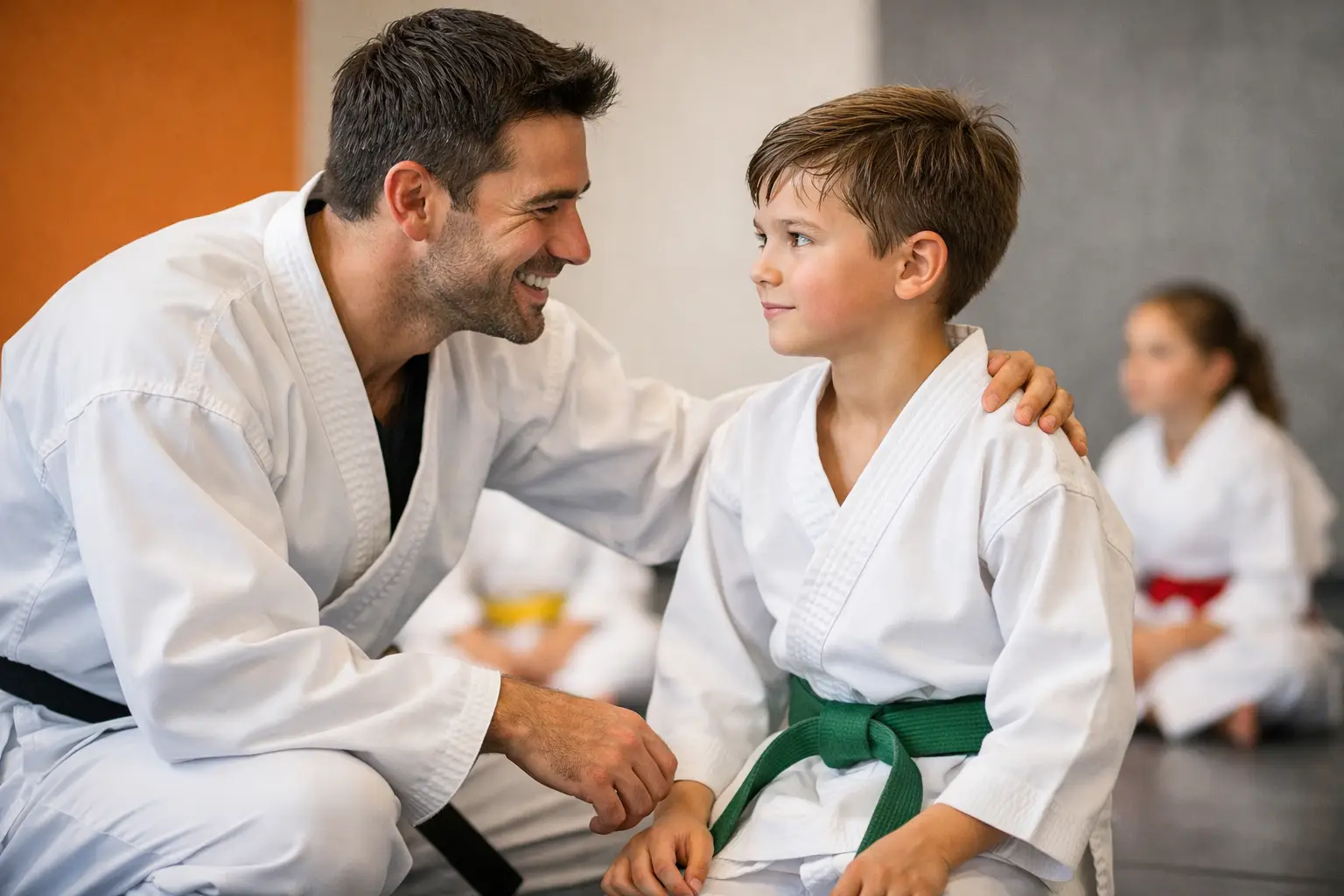
A child does not need another adult telling them to sit still, try harder, or make better choices. They need someone who will learn their name, hold a clear standard, notice their effort, and keep showing up. That is where youth mentorship through martial arts can become far more meaningful than an afterschool activity.
For many parents, the concern is not whether their child has enough to do. It is whether the hours after school are helping them become more capable, more confident, and more connected to the people around them. A strong martial arts program gives children a place to move, learn, be challenged, and receive guidance from adults who expect something from them because they believe in what they can become.
What Youth Mentorship Through Martial Arts Looks Like
Mentorship is not a speech at the end of class. It is built through repeated, ordinary moments. It is an instructor greeting a student who had a hard day at school. It is correcting a rushed technique without embarrassing the child. It is asking a student to help a newer classmate when they are ready for that responsibility.
On the mat, children receive immediate feedback. They see that showing up prepared changes how class feels. They learn that listening carefully helps them understand the next step. When a movement is difficult, they are encouraged to try again with patience instead of quitting or blaming someone else.
Those lessons are not limited to martial arts. A child who learns to pause, listen, and respond to coaching has a practical skill they can carry into a classroom, a team, and their home. Growth is rarely one dramatic transformation. More often, it looks like a child beginning to speak up, taking ownership after a mistake, or walking into a new situation with less hesitation.
The mentor is present, not just in charge
Children can tell the difference between an adult who is simply managing a room and one who is truly invested in them. Good instructors set boundaries, but they also pay attention. They know when a student is ready for a bigger challenge and when that student needs a calm reminder to reset.
That balance matters. Some children arrive with plenty of energy and need a constructive place to direct it. Others are quiet, unsure, or used to stepping back when something feels difficult. Neither child needs to be put in a box. They need a consistent environment where effort is seen and where expectations are clear.
A mentor does not lower the standard to make a child feel successful. They break the standard into manageable steps and stay close enough for the child to believe they can reach it.
Why Structure Helps Children Feel More Secure
Parents often see the effects of a predictable routine before their child can explain them. Class begins with a familiar process. Students know where to stand, when to listen, how to work with a partner, and what is expected when instruction is being given. That rhythm can be especially valuable after a long school day filled with transitions and demands.
Structure is not about making children robotic. It gives them a reliable foundation from which they can take healthy risks. When a child knows the rules of the space, they have more room to participate, ask questions, attempt a challenging skill, and recover when they get something wrong.
At TUFF Martial Arts Academy, this belief began at home. The family behind the program was not searching for a business opportunity. A father was looking for a meaningful outlet for his son and chose to train alongside him. That lived experience still shapes how the school approaches children and families: progress matters, but the person a child is becoming matters more.
Small Responsibilities Create Real Confidence
Confidence is often misunderstood as being loud, fearless, or naturally outgoing. Real confidence is quieter. It is the belief that, even when something feels uncomfortable, a child can take the next right step.
Martial arts gives children regular chances to build that belief. They may demonstrate a skill in front of classmates, partner with someone new, help organize equipment, or lead part of a warmup. Each responsibility says, without making a big show of it, “You are capable of contributing here.”
That message has weight when it is earned. Children do not need constant praise for every small action. They need honest encouragement connected to real effort. When an instructor says, “You stayed with that even when it was frustrating,” a child begins to understand that persistence is something they can practice.
Growth should not be rushed
Rank recognition can be a meaningful part of a child’s journey, but it should reflect development, not a race. The deeper value is found in the work between milestones: practicing when nobody is watching, learning to accept correction, and returning to class after a disappointing day.
There will be students who progress quickly in one area and need more time in another. That is normal. The right program does not compare children in ways that shrink them. It helps each student understand that steady effort has a place and that character shows up in how they handle both success and setbacks.
A Community Where Children Are Known
Children need peers, but they also need a community that gives peer relationships direction. In a well-led class, students learn that their partner is not an obstacle or an audience. Their partner is someone they are responsible for treating with care while they train.
That changes the atmosphere. The strongest student has an opportunity to become more thoughtful. The newest student has a place to belong before they feel fully confident. Students begin to see leadership as more than being first in line or receiving attention. It becomes the choice to encourage someone else, follow through, and set a good example when it would be easier not to.
This is also why families matter. When parents, instructors, and children are working toward the same kinds of habits, children receive a clearer message. They are not expected to be perfect. They are expected to learn, repair mistakes, and keep growing.
Questions Parents Should Ask About Mentorship
Not every martial arts class provides the same kind of guidance. Before enrolling, parents should look beyond the schedule or the uniform and pay attention to how adults interact with students.
Ask how instructors handle a child who is having a difficult day. Ask how they recognize effort, how they teach older students to lead, and what happens when a student needs correction. Watch whether children are spoken to with firmness and dignity. Notice whether the adults seem to know the students as individuals.
It is also worth asking how a program fits into your family’s actual life. Working parents may need dependable afterschool care, safe transportation, and a structured place where a child can finish the day with purpose. A quality program can meet that practical need while still offering more than supervision.
For competition-minded families, the questions shift slightly. Competition can teach composure, preparation, and accountability, but only when a child’s worth is not tied to a result. Look for a culture that celebrates hard work and growth alongside achievement. A medal can be exciting. The ability to handle both winning and losing with maturity lasts longer.
The Long View Matters Most
No program can promise that every difficult moment at home or school will disappear. Children are still children. They will test limits, lose patience, and have days when they do not want to try. Mentorship works because it provides a steady place to practice a better response over time.
The goal is not to create a child who never struggles. It is to help raise a young person who knows how to meet struggle with more courage, more self-awareness, and more responsibility than they had before.
If you are looking for a next step for your child, watch for the place where adults know how to challenge them without losing sight of them. The right mentor will not try to make your child someone else. They will help them recognize the strength, leadership, and potential that are already waiting to be developed.