
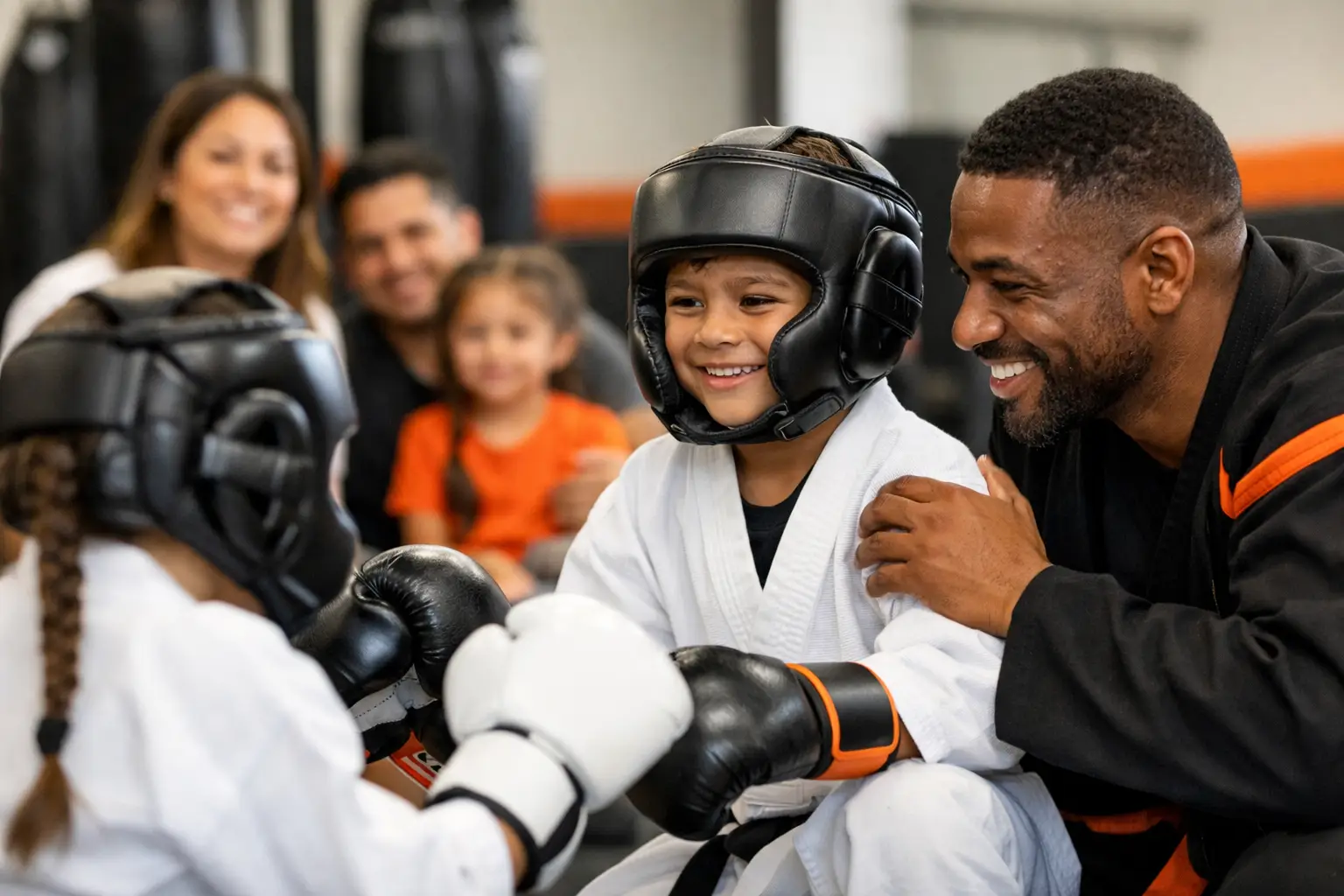
A lot of parents search beginner sparring classes near me when their child is ready for more than basic drills but they are not ready to throw them into something chaotic. That instinct is a good one. Sparring can build confidence, timing, and self-control, but only when it is introduced the right way, with the right pace, and under coaches who understand that beginners need structure before they need pressure.
That matters even more if your child has a lot of energy, gets frustrated easily, or needs a stronger outlet than another afterschool activity can provide. The goal is not to make them aggressive. The goal is to help them learn how to stay calm, make decisions under pressure, and grow comfortable doing hard things without shutting down.
What beginner sparring classes near me should actually look like
When parents hear the word sparring, they often picture kids swinging wildly or trying to win at all costs. Good beginner sparring should look nothing like that.
A strong program introduces contact in layers. Students learn stance, distance, movement, and control before they ever worry about intensity. Coaches should be stopping rounds, correcting habits, and matching students carefully. For a beginner, that kind of pacing is not a bonus. It is the whole point.
The best classes also teach students what sparring is for. It is not punishment, and it is not a free-for-all. It is a training tool. It teaches awareness, composure, and accountability. A child who learns that early usually grows faster and safer than one who is rushed.
Signs a program is built for beginners, not just open rounds
One of the biggest differences between a beginner-friendly class and a room that simply allows beginners is how intentional the instruction feels. You can usually tell in the first visit.
If coaches spend time explaining expectations, pairing students by size and experience, and correcting behavior immediately, that is a good sign. If beginners are standing around confused while advanced students set the tone, that is a very different environment.
Look at how the class handles nerves too. New students often freeze, overreact, or get emotional the first few times they spar. That is normal. A healthy program expects that and coaches through it. The right instructor does not embarrass a student for feeling overwhelmed. They help them settle down, reset, and keep going.
Protective gear, clear rules, and close supervision matter, but culture matters just as much. A class can have all the equipment in the world and still feel unsafe if the room rewards ego over growth.
Ask how beginners are introduced
This one question can tell you a lot: How do you bring a brand-new student into sparring?
A thoughtful answer should include preparation, not just participation. You want to hear that students learn fundamentals first, that contact is introduced gradually, and that coaches watch closely. If the answer sounds rushed or vague, trust that feeling.
Watch how coaches correct students
Correction should be direct, calm, and useful. In a beginner class, students need feedback they can act on right away. “Hands up,” “slow down,” and “control your distance” are clear. Yelling from across the room without teaching is not.
For many kids, especially those who have struggled in other settings, the way they are corrected determines whether they rise or retreat.
What your child may gain from sparring
Parents often come in thinking sparring is mainly physical. Some of it is. Kids improve coordination, balance, and reaction time. But the changes families notice first are often emotional.
Sparring asks a student to stay composed in uncomfortable moments. That can be hard for a child who tends to rush, panic, or shut down when things do not go their way. Over time, with the right coaching, many kids begin to handle those moments better on and off the mat. They start recognizing frustration before it takes over. They recover faster from mistakes. They carry themselves differently.
Not every child changes on the same timeline. Some take to sparring quickly. Others need weeks just to get comfortable making contact or being in front of a partner. That does not mean it is not working. It usually means they are building something real instead of performing confidence before they feel it.
How to judge whether a class is the right fit
Finding beginner sparring classes near me is easy. Finding the right one takes a little more attention.
Start by thinking about your child, not just the program. Does your child need a room with more encouragement or firmer structure? Do they do better in smaller groups? Are they excited by challenge, or do they need time before they open up? A class can be excellent and still not be the right fit for your family.
Then pay attention to the room itself. Is it organized? Are students engaged? Do instructors know how to lead children, not just teach technique? Families looking for real growth should care as much about the environment as the curriculum.
If you are a working parent, logistics matter too. A great program has to fit real life. Class times, consistency, and reliable routines can make the difference between something your child starts and something they stick with.
The first class should tell you plenty
Your child does not need to look perfect in a first class. In fact, most beginners will not. What you want to see is whether they are being guided well.
Did the instructor notice when they got hesitant? Did someone explain the drill in a way they understood? Did the class feel like it had standards without feeling cold? Those details tell you more than a flashy facility ever will.
Beginner sparring classes near me for families in South Miami-Dade
For families in South Miami-Dade, the search is often about more than one class a week. Parents are looking for a place that can support growth consistently, especially when a child needs stronger structure after school and a community that feels steady.
That is why location and routine matter when they genuinely serve the family. In communities like Princeton, Homestead, Cutler Bay, and the surrounding South Dade area, parents are often balancing work, school pickup, and the need for something their child can count on. A program that is built around families, not just around the instructor’s schedule, tends to make a bigger impact over time.
At TUFF Martial Arts Academy, that family-first mindset came before the business itself. It was built by parents who were searching for an outlet for their own child and stepped onto the mat themselves. That history matters because it shapes how beginners are seen. Not as sign-ups. As kids who need guidance, and as families who need something they can trust.
A few concerns parents have, and why they are fair
Some parents worry that sparring will make their child more aggressive. In a poorly guided environment, any activity can reinforce the wrong habits. In a well-run class, sparring usually does the opposite. It teaches students that control comes first, that emotions have to be managed, and that skill means knowing when to slow down.
Other parents worry their child is too timid, too inexperienced, or too sensitive for sparring. Sometimes that is exactly why a gradual introduction helps. Not because every child should be pushed into contact right away, but because learning to handle challenge in a supportive setting can change how they see themselves.
And yes, some kids simply are not ready yet. A good program will tell you that. Readiness is not about toughness. It is about whether a student can follow direction, stay safe, and build from the basics.
What to do next if you are still deciding
Visit in person if you can. Watch a class. Listen to how instructors speak to students and to parents. Ask how beginners are brought in, how safety is handled, and what growth should realistically look like in the first few months.
Do not feel pressured to judge everything by one round or one visit. Sometimes the clearest sign is simple: your child walks out feeling challenged, respected, and eager to come back.
That is usually where the real progress starts – not with a big speech, not with instant confidence, but with one good class in the right room and a family that finally feels like they found a place worth trusting.