
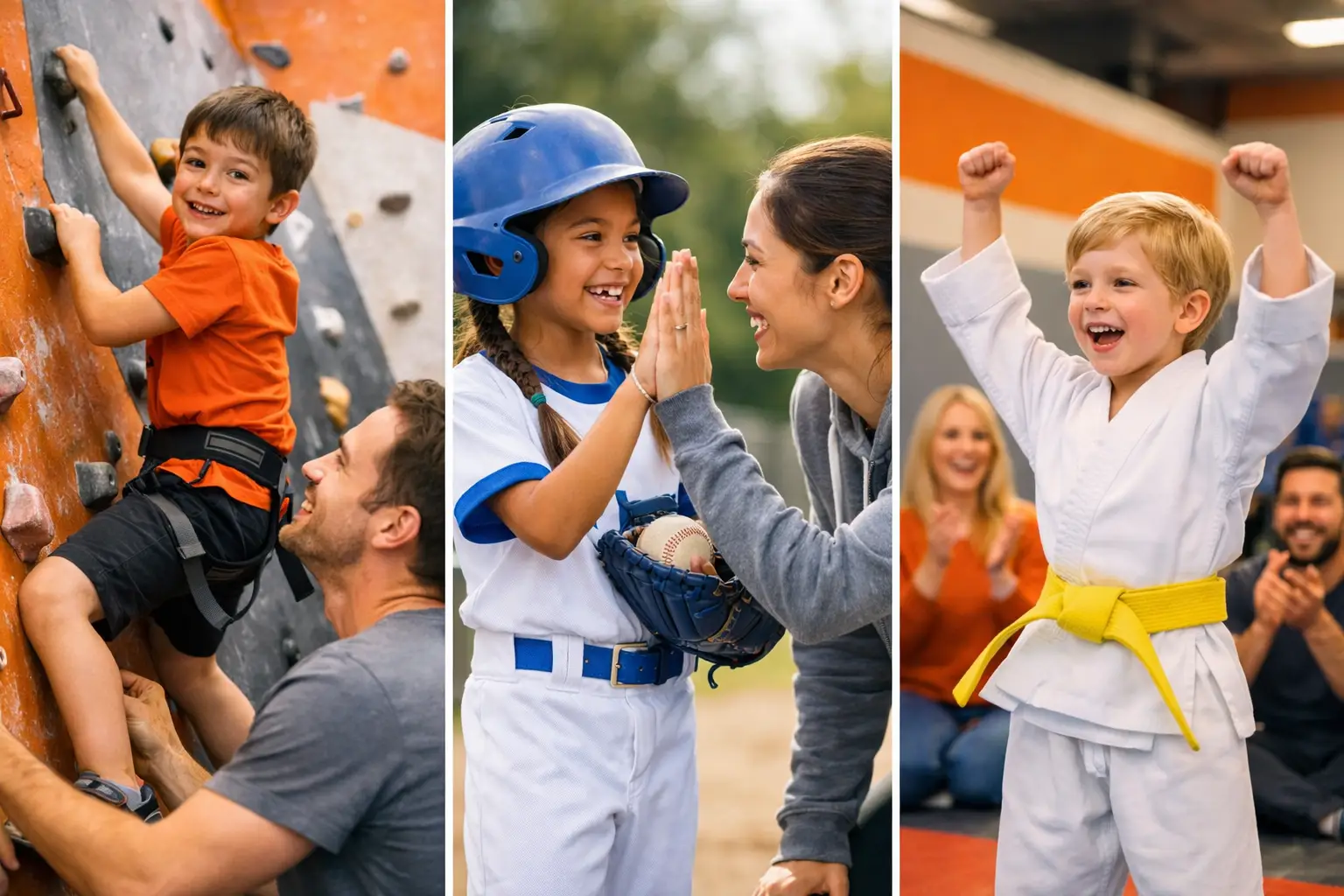
The best activities for energetic kids do more than wear them out for an hour. They give big energy somewhere meaningful to go. For many parents, the hard part is not finding something to do. It is finding an activity that helps a child come home feeling capable, calmer, and proud of how they used their energy.
A child who is always climbing the couch, racing down the hallway, or turning every waiting period into a wiggle session is not necessarily asking for more screen time or stricter rules. Often, they need regular movement, clear boundaries, and a challenge that feels worth meeting. The right activity can turn “too much energy” into persistence, courage, and a growing sense of responsibility.
What Energetic Kids Need From an Activity
Not every high-energy child enjoys the same thing. Some want a team and a cheering crowd. Others need a smaller setting where they can practice, make mistakes, and try again without feeling watched. The goal is not to keep every minute of their day packed. Kids also need unstructured play, rest, and family time.
Still, a dependable activity can create a helpful rhythm. Look for one with a clear beginning and end, adults who give specific guidance, and progress your child can feel. “Great job” is nice, but “You kept trying even after that was difficult” teaches a child what they did well and how to repeat it.
12 Best Activities for Energetic Kids
1. Backyard obstacle courses
A few cones, chalk marks, jump ropes, laundry baskets, and a safe place to run can become an obstacle course in minutes. Ask your child to help design it, then let them time themselves and try to improve without making speed the only goal. Include balancing, crawling, hopping, and carrying something light to work different kinds of movement.
2. Martial arts classes
Martial arts gives active kids a place to move with purpose. They learn to listen for a cue, control the pace of their body, practice techniques with care, and keep showing up when a skill takes time. For a child who has plenty of energy but needs a stronger routine around it, that structure can be especially valuable.
At TUFF Martial Arts Academy, this belief comes from lived experience. The family behind the school started with a father looking for a meaningful outlet for his own son, then built a place where children can grow as students, teammates, and leaders. The point is never simply to keep kids busy. It is to give effort a direction.
3. Swimming and water play
Swimming is a strong choice for kids who love full-body movement but need a lower-impact activity. Lessons add safety skills and a predictable routine, while open swim can be a great family outlet. Consider your child’s comfort level first. A child who is nervous in water may do better with a gentle introduction than a loud, crowded pool day.
4. Bike and scooter skill courses
Instead of sending kids around the block with no plan, create a simple course in a clear, safe area. Practice stopping at a line, weaving around markers, signaling turns, and riding slowly through a narrow path. These small challenges build body awareness and make the activity feel fresh long after the novelty of a new bike wears off.
5. Dance classes or living-room dance breaks
Dance works well for kids who want movement with music, imagination, and expression. A class provides coaching and a group routine, while short dance breaks at home can reset a difficult afternoon. Let your child choose the playlist sometimes. Ownership matters, especially for kids who are used to adults directing every part of their day.
6. Nature scavenger walks
A walk feels very different when it has a mission. Make a short list: something smooth, something shaped like a circle, a bird sound, three different leaf colors, or a place where ants might travel. In South Miami-Dade, even a neighborhood walk can offer plenty to notice. Keep it simple enough that the walk remains fun, not another assignment.
7. Team sports with the right fit
Soccer, basketball, baseball, flag football, and other team sports can help children practice communication and recover after a missed play. But the right fit matters more than the popular choice. Some children thrive in a fast-paced game; others feel overwhelmed by constant noise and competition. Try a season, talk honestly afterward, and pay attention to whether your child is eager to return.
8. Relay races and family challenges
Relay races are useful because they channel energy without requiring expensive equipment. Carry a ball from one point to another, crab-walk to a wall, stack cups, then tag the next person. Family challenges work best when adults join in. Kids notice when the rules apply to everyone, and they love seeing parents laugh at their own missed step.
9. Rock climbing or playground climbing
Climbing asks children to plan their next move, grip carefully, and trust their bodies. A playground can work for younger kids, while an indoor climbing facility may appeal to older children who want a bigger challenge. Supervision and age-appropriate equipment are essential, but the payoff is more than physical effort. Reaching a spot that looked impossible from the ground can change how a child sees themselves.
10. Gardening with real jobs
Gardening may not sound like a high-energy activity until your child is hauling soil, digging holes, watering plants, and checking what has changed each day. Give them a real responsibility, such as caring for one pot or choosing what to grow. It combines movement with patience, which is a useful balance for children who are always ready for the next thing.
11. Household movement missions
Turn necessary chores into active, achievable missions. Have your child carry folded towels to rooms, sort socks by color, wipe a low table, or help bring groceries inside. Avoid presenting this as punishment for having energy. The message should be, “You are capable, and your contribution matters in this family.”
12. Afterschool programs with a dependable routine
For working families, the afternoon can be the most difficult stretch of the day. A quality afterschool program gives children a safe transition from school into movement, homework time, social connection, and adult guidance. The best programs do not treat care as simple supervision. They help children practice being part of a group, following through, and ending the day with something positive to show for it.
How to Choose Without Overloading Your Child
Start with one or two consistent movement opportunities each week rather than signing up for everything at once. An energetic child may look like they can handle a full calendar, but too many transitions can create more frustration, not less. Give an activity enough time to become familiar, usually several weeks, unless your child is clearly distressed or the environment is not a healthy fit.
Watch what happens after the activity, not just during it. Does your child talk about something they learned? Are they sleeping better, carrying themselves with more confidence, or using a new skill when they get frustrated? Progress can look quiet before it looks dramatic.
It also helps to ask one direct question: “What part made you feel proud?” Their answer may surprise you. It may not be scoring a goal or finishing first. It could be making a friend, trying something scary, or remembering instructions without a reminder.
Make Movement Part of the Family Rhythm
The most effective activities are rarely the flashiest ones. They are the ones a child can count on. A weekly class, a ten-minute bike course after homework, a Saturday morning walk, or a family dance break before dinner can become a steady message: your energy has a place here.
When children are given room to move and support to grow, they begin to see their energy differently. It is not something they need to apologize for. With the right guidance, it can become one of the strengths they carry forward.