
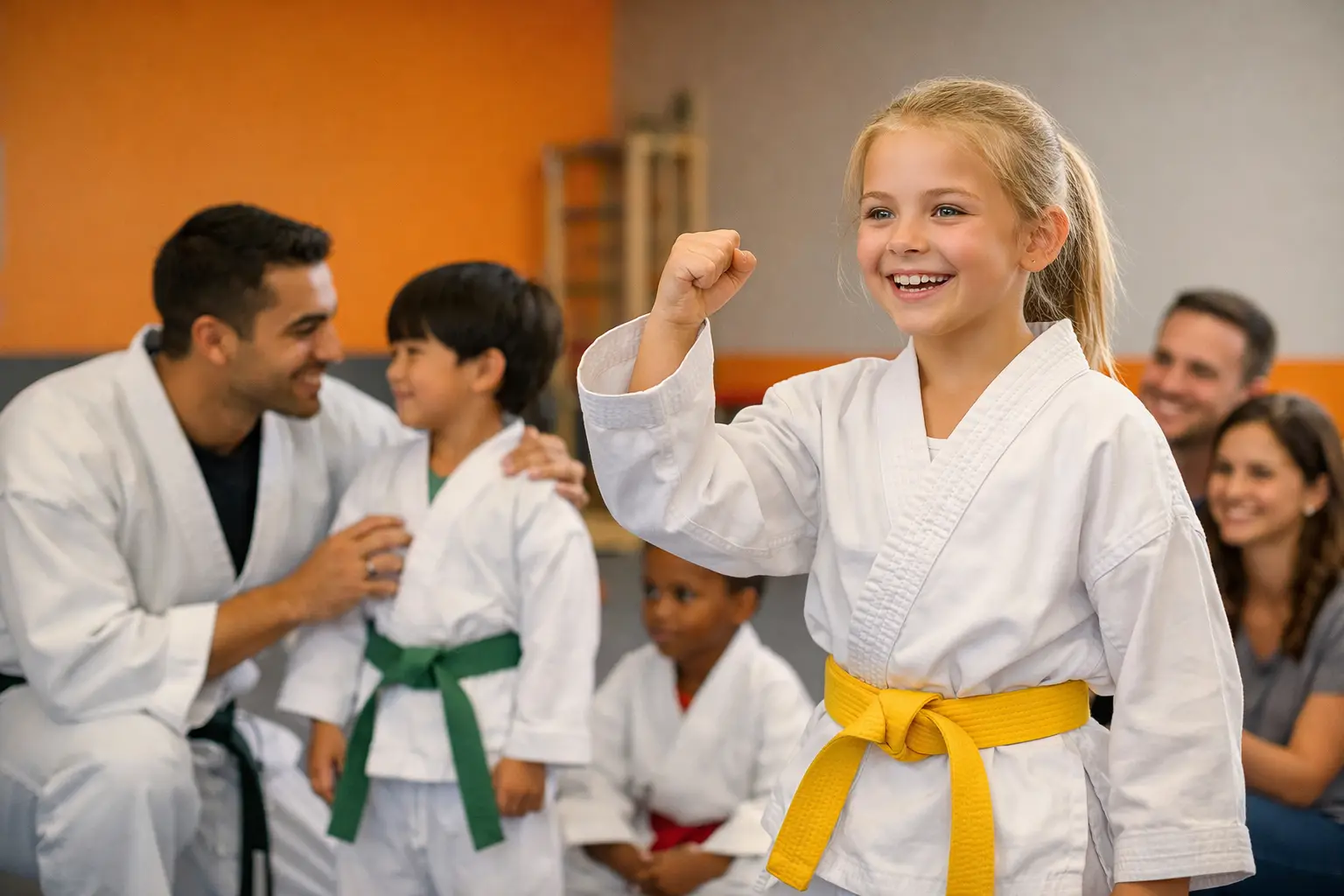
A child does not become a leader because someone gives them a title. Leadership shows up in smaller moments first: speaking clearly when they are nervous, helping a younger student, taking responsibility after a mistake, and returning to a hard task instead of walking away. That is what many parents are really looking for when they search for kids leadership classes near me.
Maybe your child has plenty of energy but needs a better place to direct it. Maybe school is going fine, but you want them to build confidence that does not disappear when something feels difficult. Or maybe you are a working parent who needs afterschool care to be more than a place where time passes until pickup. A meaningful leadership program should meet those needs with structure, encouragement, and real expectations.
What Kids Leadership Classes Should Actually Teach
Leadership for children is not about making every child loud, competitive, or eager to be in front of a room. Some children lead by encouraging others. Some lead by becoming dependable when a task needs to be done. Some lead by learning to manage disappointment with maturity.
The right environment gives children repeated chances to practice these habits. They learn how to listen before responding, follow through on responsibilities, accept coaching, and contribute to a group. Those lessons are more valuable when they happen consistently, not just during a one-time workshop or an occasional motivational talk.
That consistency matters because children grow through repetition. A child who is reminded once to stand tall may feel good for an afternoon. A child who is expected to show up prepared, participate with purpose, and improve week after week starts to see themselves differently. They begin to understand that confidence is built through action.
Why Martial Arts Can Be a Strong Leadership Setting
A well-run martial arts program gives leadership a practical place to live. Students are not only told to make good choices. They are asked to make them in real time: when class begins, when a partner needs support, when correction is given, and when a skill takes longer to learn than expected.
For some families, that structure can be especially meaningful. Eleven years ago, TUFF Martial Arts Academy began with a father looking for a positive outlet for his own son. He trained beside him, learned alongside him, and saw firsthand that growth does not come from being pushed through a program. It comes from being part of a community that asks more of a child while making sure they are supported.
Martial arts is not a cure for every challenge a family may face. No program can promise that. But it can offer a steady setting where children have room to move, clear boundaries to work within, and instructors who recognize progress beyond performance. For a child who has struggled to settle into other activities, that combination can make a real difference.
Leadership Is More Than a Belt or a Trophy
A uniform, a rank, or a medal can mark a milestone. They should not be the whole point. The deeper value is the person a child becomes while working toward that milestone.
A child may earn recognition after learning a new skill, but the leadership lesson is in the effort behind it: practicing when no one is watching, handling feedback without shutting down, and staying connected to the team even after a disappointing day. Those are the habits that carry into school, friendships, family life, and eventually the workplace.
Competition can also be a valuable experience for students who want it. It gives them a chance to test their preparation and face pressure in a controlled setting. Still, a character-first program keeps the goal in perspective. Winning feels good, but how a student prepares, responds, and supports others matters longer.
How to Choose Kids Leadership Classes Near Me
When you are comparing local options, look past the schedule and the promises on the flyer. The best questions are often simple: Who will know my child? What happens when they struggle? How does this program define progress?
Start by watching a class if possible. Notice whether instructors are actively engaged or simply managing a room. Look at how they correct students. Children need clear expectations, but they also need to feel that an adult is paying attention to who they are, not only whether they performed a move perfectly.
A program that develops leadership should also have an age-appropriate structure. Young children need lessons that are active, clear, and encouraging. Older children need greater responsibility, stronger accountability, and opportunities to set an example. One approach should not be forced on every age group.
It also helps to ask how the program communicates with parents. You should not have to guess whether your child is participating, improving, or having a hard time. Honest communication builds trust, especially when a parent is trying to support growth at home without turning every evening into another lecture.
Here are four signs you may have found a program with substance:
- Instructors learn students’ names, strengths, and areas where they need support.
- Expectations are clear, consistent, and explained in a way children can understand.
- Students are encouraged to help one another rather than only compete for attention.
- Progress is recognized through effort, responsibility, and growth, not just outward achievement.
The Practical Side Matters to Working Families
A leadership program has to fit real family life. Parents in South Miami-Dade are balancing jobs, school schedules, transportation, and the daily question of how to make afternoons productive and safe. An excellent program that cannot work within a family’s routine may not be the right answer, no matter how good it looks on paper.
That is why afterschool programming deserves careful attention. Ask what happens from pickup through the end of the day. Is there a predictable routine? Is time organized with purpose? Are children supervised by adults who understand that the afternoon is not simply downtime, but an opportunity to build habits?
For families near Princeton, Homestead, and Cutler Bay, transportation can be the deciding factor. Direct school pickup can remove a major barrier for parents who want their child in a structured program but cannot leave work for daily drop-off. Convenience alone is not leadership development, of course. But when reliable transportation connects children to a place where they are challenged and known, it becomes part of the support system a family can count on.
Give Growth Enough Time to Become Real
Parents naturally want to see a change quickly. Sometimes they do. A child may come home after the first few classes standing a little taller or talking excitedly about what they learned. Those early moments matter, but the most lasting growth usually comes later.
It comes after a child has had a difficult class and returned anyway. After they have been asked to try again. After they have learned that being corrected is not the same as failing. This is where a trusted instructor and a consistent routine matter most.
The goal is not to create a perfect child. It is to give your child a place where they can become more capable, more accountable, and more confident in their ability to handle what comes next. When you find that kind of leadership class, you are not just filling an afternoon. You are giving your child practice in becoming someone others can depend on.