
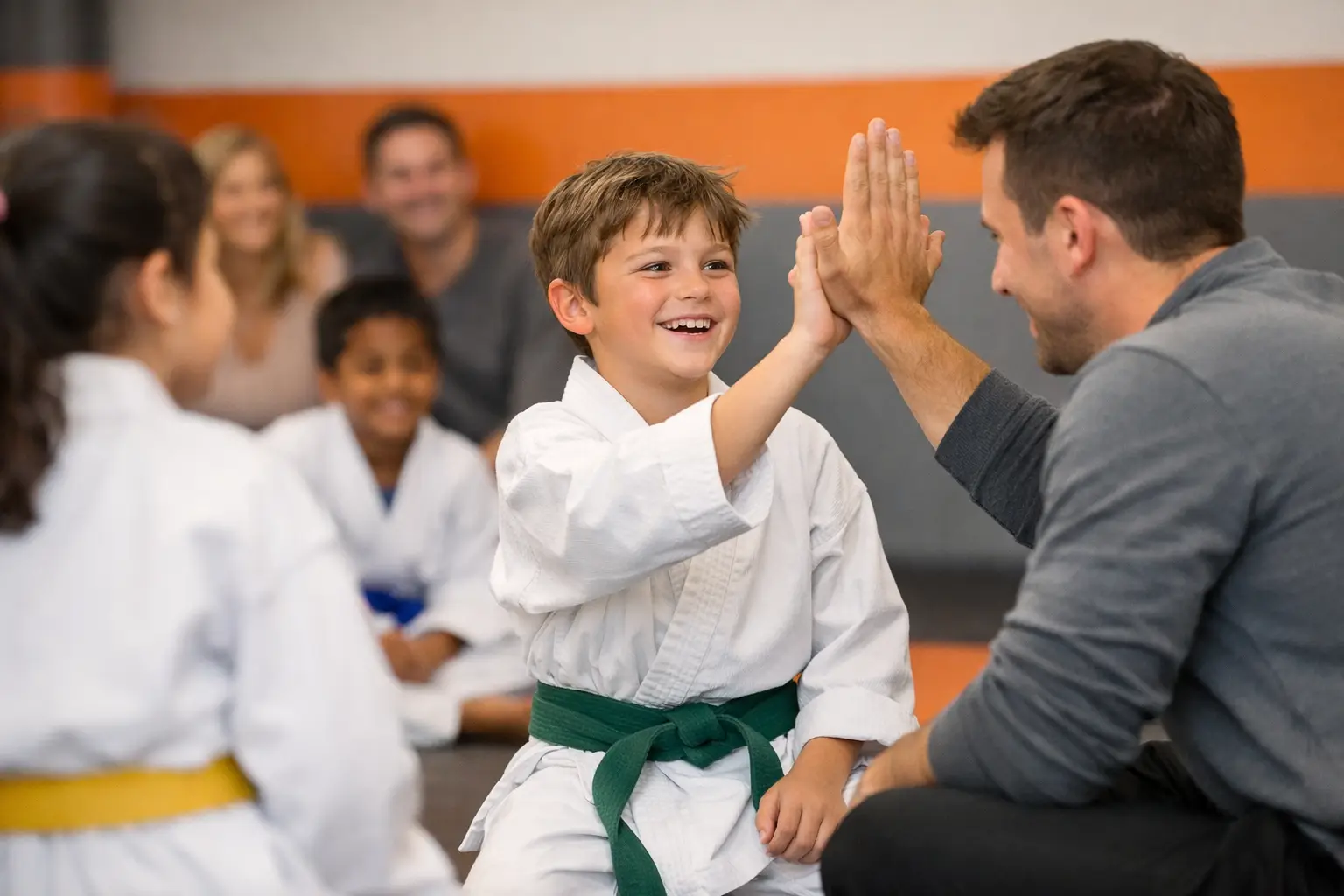
Some kids naturally step forward. Others hang back, second-guess themselves, or act out before they ever speak up. Most parents have seen both sides. That is why leadership training for kids matters so much – not as a title, and not as a personality trait a child either has or does not have, but as a skill set that can be built over time.
Real leadership in childhood does not look like giving speeches or telling other kids what to do. It looks more like taking responsibility when something goes wrong, staying steady when emotions run high, helping a younger child feel included, and making a better choice when no one is hovering. Parents are usually not looking for a child who wants attention. They are looking for a child who can handle it.
What leadership training for kids really means
A lot of programs use the word leadership loosely. Sometimes it just means confidence. Sometimes it means participation. Sometimes it means a child gets praised for being outgoing. But leadership is broader than that, and quieter too.
Good leadership training for kids teaches children how to manage themselves before they try to influence anyone else. A child has to learn how to listen, follow through, stay accountable, and recover from mistakes. Without those pieces, leadership becomes performance instead of character.
That is why the strongest programs do not start by asking kids to lead others. They start by asking them to carry themselves differently. Show up on time. Pay attention. Finish what you started. Speak with respect. Help without being told. These are simple behaviors, but they are not small ones. They are the foundation of trust.
Why parents are looking for more than another activity
A lot of families are not searching for one more thing to put on the calendar. They are searching for something that changes the way their child moves through the world.
Maybe your child is bright but inconsistent. Maybe they have energy that turns into frustration when it has nowhere to go. Maybe school tells you they are capable, but you are not seeing that confidence at home. Or maybe your child is doing fine academically, but you can tell they need structure, responsibility, and stronger habits before the teen years make everything harder.
That is where leadership development becomes different from basic enrichment. The goal is not just to keep kids busy after school or give them a fun hour. The goal is growth you can actually see – in how they respond to correction, how they speak to adults, how they treat younger peers, and how they handle pressure.
Parents usually know when something is missing. They may not always have the perfect language for it, but they know. Their child needs more confidence, but not arrogance. More independence, but with guidance. More accountability, but in a way that builds them up instead of shutting them down.
The best leadership training for kids is built on repetition
Children do not become leaders because someone gave a motivational talk or handed them a badge. They grow into leadership by practicing the same core habits over and over in a structured environment.
That repetition matters. A child who is reminded once to stand tall and speak clearly may do it for a minute. A child who is expected to do it every class, every week, over months and years begins to internalize it. The behavior stops being something they are told to do and starts becoming part of who they are.
This is one reason physically structured programs often work so well for leadership development. Kids are not only hearing expectations. They are living them. They learn to stay composed while challenged, pay attention when instructions come quickly, and keep going when something is difficult. That process builds more than skill. It builds self-command.
And self-command is usually the first sign a child is growing into leadership.
Where kids actually learn to lead
Leadership is not built in theory. It is built in moments.
A child helps set the tone for the group instead of distracting it. An older student notices a younger one struggling and encourages them. A student gets corrected, feels embarrassed, and chooses to adjust instead of shut down. A child who used to avoid responsibility begins taking pride in being counted on.
Those moments are easy to miss if you only think of leadership as a big, dramatic trait. In reality, children learn leadership in environments that ask something of them consistently.
That is also why not every child grows the same way or at the same pace. Some children need time before they are comfortable speaking up. Others are comfortable speaking up but need to learn humility and follow-through. Some look confident until they are corrected, and then you see how much resilience still needs to be built. It depends on the child, the environment, and the consistency of the adults leading them.
What to look for in a leadership-focused youth program
Parents do not need a program with the loudest promises. They need one that can show how leadership is developed in everyday practice.
Look for an environment with clear standards and warm accountability. Kids should know what is expected, and those expectations should stay consistent from week to week. Leadership cannot grow in chaos, and it also cannot grow where adults are so harsh that children become afraid to try.
It also helps to look for programs where older students are expected to model behavior, not just perform well. That matters. There is a difference between a child who is talented and a child who is trusted. If a program values leadership, it will care about how children carry themselves, how they support others, and how they respond when no spotlight is on them.
Parents should also pay attention to whether the program creates real responsibility or just talks about it. Are kids given chances to help, guide, assist, and grow into trust? Are they being stretched in age-appropriate ways? Leadership development should feel earned. If everything is praise with no challenge, the lessons usually stay shallow.
Why martial arts fits this work so well
For many families, martial arts becomes the setting where leadership starts to click because it gives children structure, challenge, and visible progress all at once.
Kids are asked to control their bodies, manage their emotions, and stay engaged even when a task is hard or repetitive. They learn that effort matters, that attitude matters, and that how they show up affects the room around them. Over time, that creates a different kind of confidence – not the kind built on being told they are amazing, but the kind built on knowing they can do hard things and keep improving.
That is especially meaningful for parents who have watched their child struggle in more traditional settings. Sometimes a child does not need more talking. They need a place where expectations are clear, movement is part of the learning, and growth is measured through action.
At TUFF, that belief has always come from lived experience. This was not built around theory. It was built by a family who needed something real for their own child first, then spent years turning that experience into a place where other families could find the same kind of growth.
Leadership at home matters too
No program can do this work alone. Children grow fastest when the expectations around them line up.
That does not mean parents need to run their home like a boot camp. It means leadership lessons have to keep showing up after class ends. Let kids take responsibility for small things. Expect them to follow through. Give them room to solve problems before stepping in too quickly. When they make mistakes, hold the line with calm, not chaos.
It also helps to notice leadership when it appears in ordinary ways. Not every win is public. Sometimes the biggest sign of growth is a child who corrects themselves faster, speaks more respectfully after being frustrated, or starts helping without being asked. Those changes may not be flashy, but they are the ones that last.
The long-term value of leadership training for kids
Children who build leadership early often carry those habits into every other part of life. They become more dependable in group settings. They communicate better. They handle setbacks with more maturity. They are less likely to be pushed around by every emotion, every distraction, or every outside influence.
That does not mean they become perfect. It means they become steadier. And for many parents, that is exactly the hope – not a child who never struggles, but a child who can rise to meet the struggle with stronger character.
Leadership is not something kids age into automatically. It has to be practiced, expected, and reinforced by adults who mean what they say. When that happens, children do not just learn how to stand in front. They learn how to stand strong.
If you are looking for leadership training for kids, look beyond the slogans. Look for the place where your child will be known, challenged, and taught to carry themselves with real responsibility. That kind of growth does not happen overnight. But when it happens the right way, it shows up everywhere else too.