
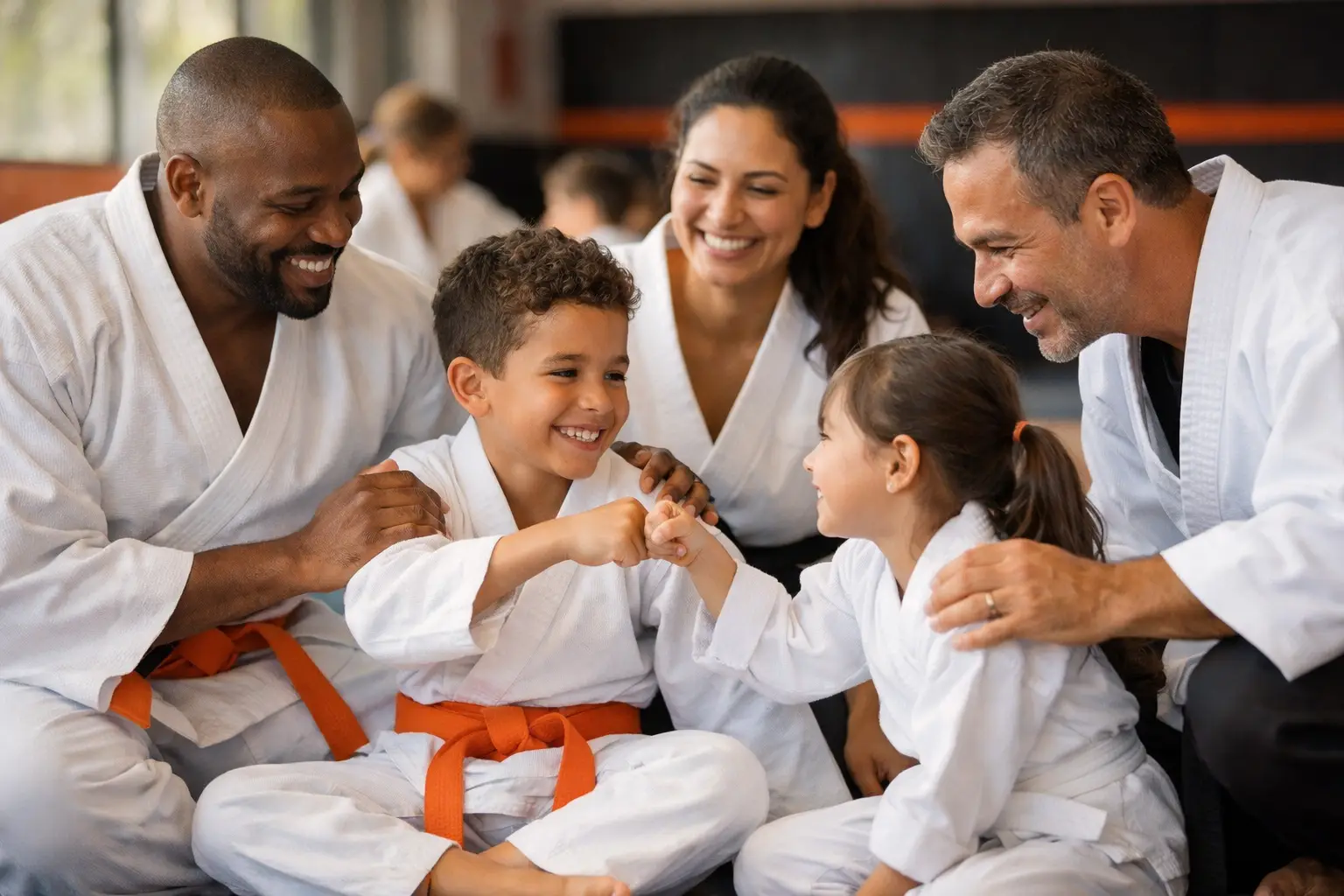
Some families don’t need another activity on the calendar. They need something that actually changes the temperature at home.
That’s why family martial arts classes matter. When a parent and child train in the same environment, the benefits don’t stay on the mat. The lessons carry into car rides, homework battles, bedtime routines, and the way a child responds when life gets frustrating. For many families, that shared experience becomes the first thing that feels like real forward movement.
What makes family martial arts classes different
A lot of kids’ activities are built around drop-off. Parents watch from the side, clap at the right moments, and hope something sticks. There’s nothing wrong with that, but family martial arts classes create a different kind of investment. Instead of asking a child to grow on their own, they invite the whole family into the process.
That changes the dynamic in a meaningful way. A child sees mom or dad trying, sweating, listening, and improving too. A parent gets a firsthand look at how progress really happens – not in one big breakthrough, but in small, repeated efforts. That shared perspective builds trust faster than lectures ever could.
It also gives parents something many have been missing: a place to lead by example without having to have all the answers. You don’t have to be athletic. You don’t have to know martial arts already. You just have to be willing to show up and grow alongside your child.
Why families often get more from training together
Parents usually start looking at martial arts because something feels off. Maybe their child has plenty of energy but nowhere productive to direct it. Maybe confidence is shaky. Maybe afternoons feel unstructured, or routines at home have turned into constant negotiation. In those moments, families are not searching for entertainment. They are searching for something steady.
Training together can provide that steadiness because it creates shared standards and shared language. When a child hears consistency at home and experiences consistency in class, change tends to feel more real. Not instant, and not perfect, but real.
There is also a practical side that matters. When the whole family values the program, attendance improves. Progress improves too. Children are more likely to stick with something when they know it matters to the people they trust most.
For working parents, this can be especially valuable. A strong program is not just another stop after school. It becomes part of the family’s weekly rhythm – one that supports growth while also giving parents confidence that their time is being spent on something with substance.
Family martial arts classes and the parent-child relationship
One of the biggest strengths of family martial arts classes is that they create positive moments of shared challenge. That may sound simple, but it’s easy for parent-child interactions to get dominated by correction. Get your shoes on. Finish your homework. Put the phone away. Hurry up.
On the mat, the interaction shifts. You’re learning together. You’re both being coached. You’re both working through frustration. That gives families a chance to connect in a way that doesn’t revolve around chores, grades, or discipline at home.
Kids notice when a parent is fully present. They also notice when that parent keeps showing up. Over time, that consistency sends a powerful message: we do hard things together.
For some families, that becomes the turning point. Not because martial arts magically fixes every challenge, but because it creates a repeated pattern of effort, encouragement, and accountability that starts to reshape the relationship.
What parents should look for in a family program
Not every program is designed with families in mind, even if it says it is. Some offer occasional parent participation. Others truly understand how to teach across ages while keeping the experience structured and meaningful.
Look closely at how the environment feels. Is it organized without feeling cold? Are instructors able to connect with children while still holding a clear standard? Do parents feel like partners in the process, or just spectators?
A good family program also understands that growth looks different at different ages. A younger child may be learning how to follow direction in a group. A teen may be working through confidence and consistency. A parent may be rebuilding patience, stamina, or simply trying to be more present. The right program respects all of that without making anyone feel behind.
It should also be honest about the pace of progress. Real development takes time. If a program talks more about quick results than lasting change, that’s usually a sign to slow down and look deeper.
The benefits are real, but they are not all the same
This is where honesty matters. Family martial arts classes can be powerful, but they are not a one-size-fits-all answer.
Some children thrive right away because they love movement, routine, and clear expectations. Others take longer to settle in. Some parents enjoy training alongside their child from day one. Others realize they prefer supporting from close range while letting their child have their own space. Both experiences can still be valuable.
The goal is not to force a picture-perfect family activity. The goal is to find a structure that helps your household grow stronger.
For many families, the biggest early win is not a dramatic change. It’s a quieter one. A child starts carrying themselves differently. Instructions do not have to be repeated as many times. A parent feels less like they are dragging everyone through the week and more like they have support. Those shifts matter because they build momentum.
Why consistency matters more than intensity
Parents often wonder how often a family should train to see results. The honest answer is that consistency usually matters more than going all in for two weeks and disappearing the next month.
Children grow through repetition. So do adults. The families who benefit most are usually the ones who make training part of their routine and protect that time. Not because every class is perfect, but because long-term habits shape long-term outcomes.
This is one reason community matters so much. When a school is built around real families, not just transactions, people feel supported enough to stay the course. They are more likely to keep showing up through busy seasons, rough weeks, and slow progress.
That kind of environment doesn’t happen by accident. It comes from leadership that understands what families are actually carrying. At TUFF Martial Arts Academy, that understanding came long before the business itself. It started with parents on the mat, trying to help their own child find a better outlet and a better path forward. Families can feel the difference when a program was built from lived experience instead of marketing language.
A strong program should support the whole family
The best family martial arts classes do more than fill an hour. They support the bigger picture of family life.
That may mean giving a child a place to reset after school in a way that is active, structured, and meaningful. It may mean helping parents create better weekly rhythms. It may mean giving siblings a shared activity that brings out the best in each other instead of constant conflict. In some cases, it simply means one less battle over how the afternoon is going to go.
And yes, children gain skills. They become more composed under pressure. They learn how to handle correction. They build confidence that comes from doing hard things, not from being told they are amazing for showing up. But for many parents, the deeper value is what happens around those skills. The child who once resisted challenge starts leaning into it. The family that felt disconnected starts sharing wins again.
That’s when martial arts stops feeling like an extracurricular and starts feeling like a foundation.
Is it the right fit for your family?
That depends on what you need.
If you want a casual activity with no expectations, family training may feel like more commitment than you want right now. But if you’re looking for structure, leadership, and a shared experience that can strengthen both your child and your home environment, it’s worth serious consideration.
The right family martial arts classes will never promise perfection. What they can offer is something more useful – a place where growth is earned, where parents and kids can move in the same direction, and where progress becomes visible in everyday life.
Sometimes the most meaningful change in a family starts with one simple decision: showing up together.