
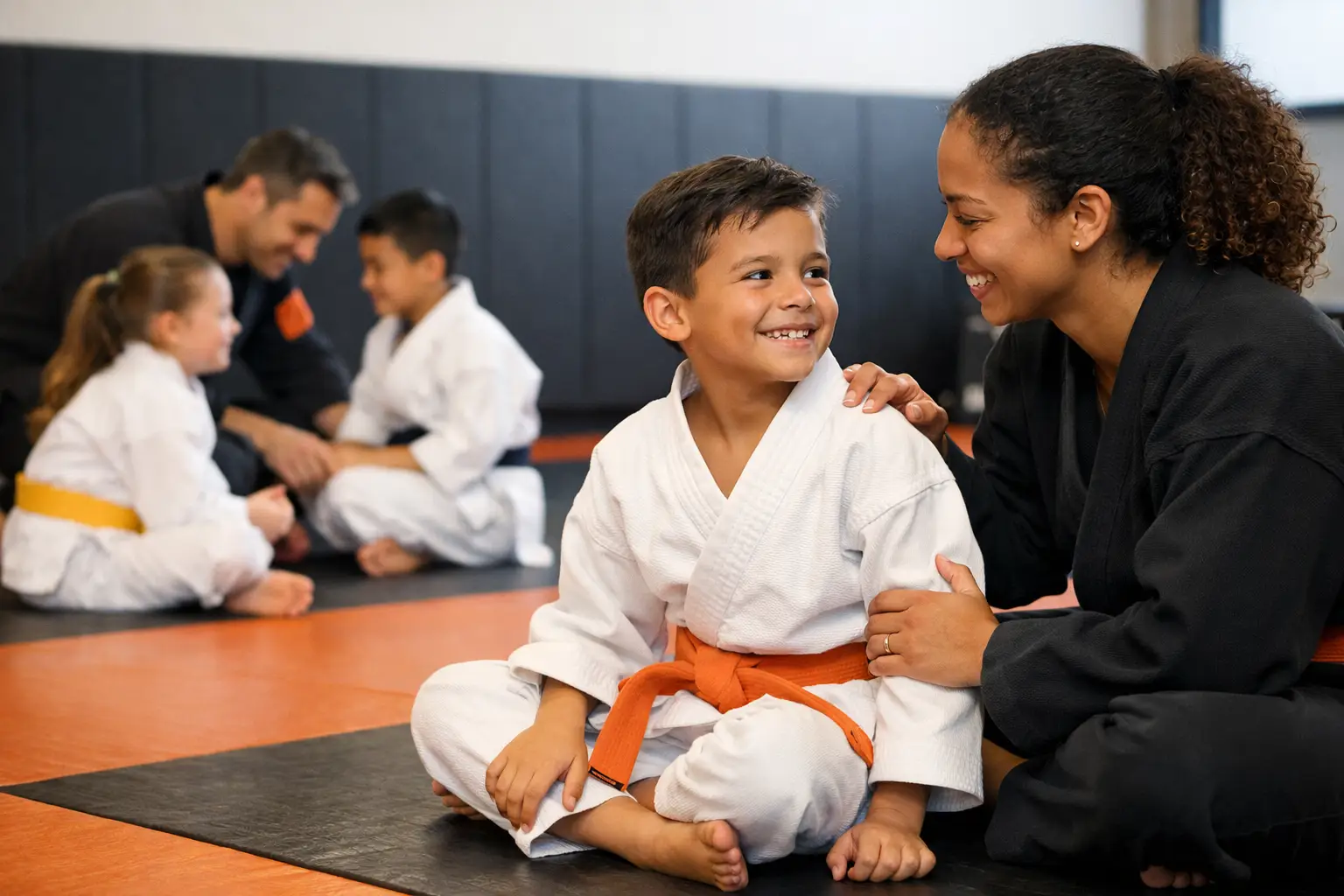
Most parents do not start looking for martial arts because they want their child to learn how to punch or kick. They start looking because something feels off. Maybe their child has energy that never seems to settle. Maybe confidence is low, frustration is high, or afternoons have become the hardest part of the day. That is why martial arts classes for beginners matter so much. A good beginner program is not about throwing a child into something intense. It is about giving them structure they can grow inside.
For beginners, the first experience shapes everything that comes after. If the environment feels too chaotic, too rigid, or too advanced, kids shut down fast. If it feels clear, steady, and supportive, they begin to trust the process. That trust is where real change starts.
What beginners really need from martial arts classes
A lot of beginner programs talk about technique first. Parents usually care about something deeper. They want to know whether their child will be seen, guided, and challenged in a way that fits who they are right now.
The best martial arts classes for beginners do not assume every child walks in with the same needs. One child may be shy and hesitant to join the line. Another may be enthusiastic but struggle to slow down and follow directions. Another may simply need a place where effort is noticed and progress is consistent. A strong beginner class makes room for those differences without lowering the standard.
That balance matters. Kids need warmth, but they also need boundaries. They need encouragement, but they also need to learn that growth comes from showing up, listening, and trying again when something does not click the first time. Beginners do not need perfection. They need a system that helps them build confidence honestly.
How to tell if a beginner program is the right fit
The first thing to watch is not the flashiest move in the room. Watch how instructors handle the moments in between. How do they redirect a distracted child? How do they welcome a nervous one? How do they keep the class moving without embarrassing kids who are still learning?
A beginner class should feel organized from the moment it starts. That does not mean cold or stiff. It means kids know where to stand, what comes next, and what is expected of them. Clear structure helps beginners relax because they are not guessing their way through the hour.
It also helps to pay attention to how progress is framed. In a healthy class, the goal is not to make a beginner look advanced overnight. It is to help them become more steady, more coachable, and more confident over time. Parents should feel like the program is building a foundation, not rushing a result.
There is also a practical side that families cannot ignore. If a program creates more stress around scheduling, transportation, or consistency, even the strongest class can become hard to sustain. For many working families, the right beginner program is one that supports the whole routine, not just the hour on the mat. In South Miami-Dade, that is one reason families often look for programs that understand the reality of busy afternoons, school pickup, and the need for reliable structure after the final bell.
Martial arts classes for beginners should feel challenging, not overwhelming
There is a difference between a child being challenged and a child being flooded. Good beginner instruction knows that difference.
A well-run class asks kids to rise. It may ask them to stand still when they would rather fidget, speak clearly when they would rather hide, or repeat a movement several times when they would rather give up. That kind of challenge is healthy. It teaches kids that they can do hard things without everything being handed to them.
But if every class feels confusing or beyond their level, beginners start to associate effort with failure. That is usually not a child problem. It is a program fit problem.
This is where age-specific instruction matters. A six-year-old beginner does not learn like a twelve-year-old beginner. Their attention span, coordination, and emotional maturity are different. The class should reflect that. When programs group beginners in a way that makes sense developmentally, kids are more likely to experience early wins that keep them coming back.
What parents often notice first
The first changes are not always dramatic. Sometimes they show up quietly.
A child who usually avoids eye contact starts answering more clearly. A child who gets frustrated quickly starts resetting faster. A child who struggles with transitions begins handling the move from school to afterschool activity with less resistance. These shifts matter because they show that the lessons are traveling beyond class.
That is one reason families stay with martial arts when the fit is right. It does not feel like just another activity on the calendar. It starts to feel like a place where their child is being shaped in a positive, steady way.
Parents often come in hoping for better behavior, stronger confidence, or more consistency. Those are fair hopes. But progress is rarely instant, and it rarely looks the same for every child. Some kids grow quickly once they feel connected. Others take longer. The key is whether the program has enough patience and enough structure to keep working with them through both stages.
Why the instructor matters more than the style at the beginning
Parents new to martial arts often worry about choosing the perfect style. That can matter later, but for beginners, the instructor and the culture usually matter more.
A child will remember how they felt in class long before they understand the technical differences between programs. Did they feel safe? Did they feel challenged with care? Did they feel like the adults leading them meant what they said and followed through? Those questions tell you more about beginner success than a list of martial arts terms ever could.
This is especially true for children who have had a hard time finding the right outlet. They do not need hype. They need consistency. They need adults who can hold a standard without making the class feel punitive. They need a place where growth is expected and support is real.
That kind of culture does not happen by accident. It usually comes from people who have walked through these parenting questions themselves and built their program around what actually helps families stay the course.
Starting strong without expecting instant transformation
Parents are right to want results. If you are adding one more commitment to your week, it should have substance behind it. But beginner martial arts works best when families think in terms of direction, not overnight transformation.
The first goal is often consistency. Can your child enter class, participate, and finish with effort? From there, you look for small but meaningful gains. Are they listening more closely? Recovering better after mistakes? Carrying themselves differently? Those are the signs that a child is not just attending class but being shaped by it.
It also helps when parents understand their role. Kids do better when the adults around them treat class as something important, not optional when the mood is right. Growth usually comes from repetition. Showing up matters. So does reinforcing the values of effort, coachability, and follow-through at home.
That does not mean every week will be smooth. Some kids test boundaries before they settle in. Some have a great first week and a hard third week. That is normal. The question is whether the program knows how to work through those moments instead of pretending they will never happen.
Choosing a place your family can trust
When parents search for martial arts classes for beginners, they are often looking for more than instruction. They are looking for a place they can believe in.
That belief comes from watching how a school treats families, how it handles kids on hard days, and whether its mission feels real once class begins. In communities like Homestead, Princeton, and Cutler Bay, that trust matters even more because families are not just choosing an activity. They are choosing people who may become part of their child’s weekly routine for years.
At TUFF Martial Arts, that understanding runs deep because this mission started the same way it does for many parents – with a family trying to find the right outlet for their own child and staying on the mat long enough to see what steady guidance can do.
If you are considering a beginner class, do not just ask whether your child can start. Ask whether the environment deserves their start. The right program will not promise a new child overnight. It will offer something better – a clear path, the right support, and a place where growth can actually take hold.