
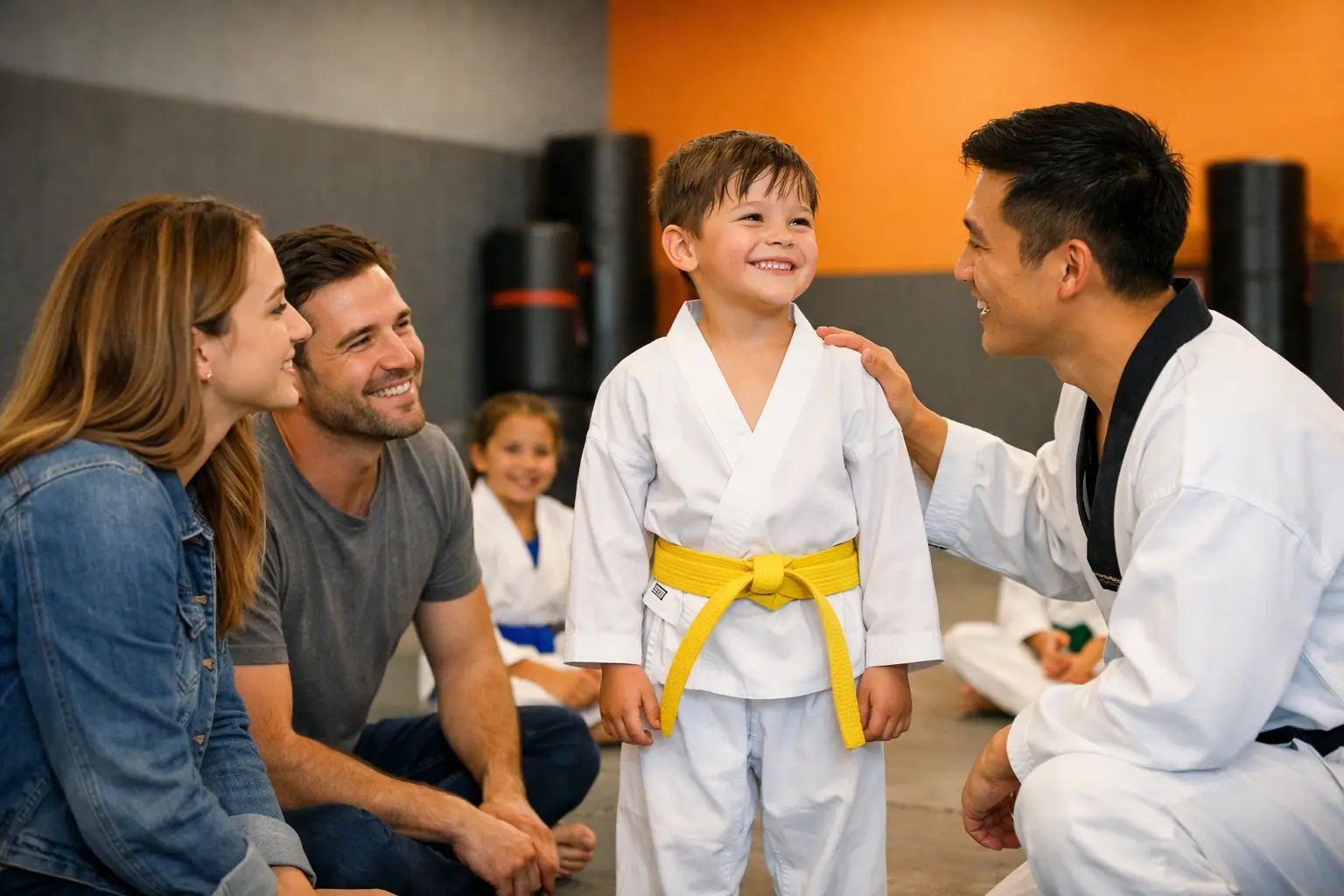
If you are reading a kids martial arts program review, chances are you are not just shopping for an activity. You are looking for something that can help your child grow in ways school, sports, or screen time have not fully delivered. Maybe your child needs more structure. Maybe they have energy that needs a better outlet. Maybe you are simply tired of programs that sound good on paper but do not lead to real change at home.
That is where a good review needs to be honest. Not every martial arts program is built for the same family, the same child, or the same goal. Some are great for fitness. Some are strong on competition. Some are really afterschool programs with martial arts added in. The right fit depends on what you need the program to do in your child’s life.
A kids martial arts program review starts with the right question
Most parents begin by asking, “Is this a good school?” That matters, but it is not the first question. The better question is, “Is this the right environment for my child right now?”
A polished facility and a friendly front desk can make a strong first impression. What tells you more is what happens on the mat. Are students actively engaged, or are they standing around? Do instructors know how to redirect a child without embarrassing them? Are expectations clear? Does the room feel structured and encouraging at the same time?
Kids do not all walk in with the same needs. One child needs help settling their body and attention into the moment. Another needs confidence to speak up and take space. Another is already driven and needs a place that will challenge them without feeding ego. A real review should look at whether a program can meet children where they are and move them forward.
What parents should actually look for
The strongest programs are usually not the flashiest. They are consistent. They know what they are trying to build in children, and that shows up in how classes are run.
Start with age grouping. A four-year-old does not learn the same way a ten-year-old does. When programs separate classes by developmental stage, instruction tends to be stronger and expectations are more realistic. Younger kids need movement, repetition, and simple wins. Older kids can handle more detail, responsibility, and accountability.
Next, pay attention to instructor presence. Not just credentials, but presence. Can they hold a room without yelling? Can they correct firmly without making kids shut down? Parents often know within one class whether an instructor has real command or just a loud voice.
Then look at progression. Good programs have a clear path, but they do not make rank the whole point. If every conversation is about the next belt, be careful. Children stay longer and grow more when the program values effort, consistency, and personal development over constant reward chasing.
Finally, notice communication. Parents should understand what the program expects, how attendance works, and what growth looks like beyond promotions. A school that communicates well tends to run well.
The trade-offs every family should understand
A fair kids martial arts program review should talk about trade-offs, because there are always some.
A high-energy class can be great for kids who need movement and engagement, but it may feel overwhelming for a child who takes longer to warm up. A program with strong structure can help kids settle into better habits, but it may not feel easy at first for a child who is used to looser environments. That does not mean it is the wrong fit. It means parents should expect an adjustment period instead of instant comfort.
The same goes for frequency. Two classes a week may be enough for one child to build momentum. For another, especially one who benefits from routine, more regular attendance may make the biggest difference. Results are rarely about the program alone. They come from the match between the program, the child, and the family’s consistency.
Competition is another area where families should think carefully. For some kids, competing builds grit, composure, and goal-setting. For others, the best early win is simply learning to show up, listen, and finish class stronger than they started. A good program knows how to support both without making every student feel they need to chase medals to belong.
Kids martial arts program review – class culture matters more than marketing
Parents often ask about curriculum, but class culture is what children feel first and remember most.
In a healthy class culture, students are challenged, but they are not shamed. They are expected to improve, but they are not compared in a way that tears down confidence. Stronger students help set the tone. New students are welcomed without the class losing its structure.
You can usually see this in small moments. When a child struggles, does the instructor guide them back in with calm authority? When a student does well, is praise tied to effort and growth, or just talent? Does the class feel like a community where kids are learning how to carry themselves better, or does it feel like controlled chaos with uniforms?
That difference matters. Parents are not just enrolling in lessons. They are placing their child in a culture.
What makes a program valuable for working families
For many parents, this decision is not purely developmental. It is practical too. The best program in the world does not help much if it creates stress your family cannot sustain.
That is why schedule, reliability, and support matter. If you need afterschool care, transportation, or a program that gives your child a strong place to land between school and home, those details are not extras. They are part of whether the program can truly serve your family.
A dependable setup often leads to better outcomes for kids because consistency becomes possible. Children thrive when expectations are stable and their afternoons have purpose. For working parents, that kind of structure is not a luxury. It is part of how family life holds together.
In South Miami-Dade, many families need both meaningful youth development and a daily solution they can count on. That is one reason programs built around real family needs tend to earn trust faster than programs built only around class sales.
Signs a program is built from experience, not just business
Parents can usually tell when a school understands children because it has lived with the same questions they are carrying.
The difference shows up in tone. There is less hype and more clarity. Less pressure and more confidence. Programs built from real family experience tend to talk about children as individuals, not as leads in a pipeline.
At TUFF Martial Arts, that matters because the mission came before the business. It grew out of a father trying to find a better path for his own son and stepping onto the mat himself. That kind of origin changes how a school sees families. It tends to create a program that understands what parents are really asking for when they walk through the door – not perfection, but progress they can feel.
How to tell if your child is in the right program
You do not need to wait for a belt test to know whether a program is working. Watch what changes over the first few months.
Does your child walk in with more confidence than they had at the start? Are they learning how to handle correction better? Do they seem more settled after class instead of more wound up? Are they beginning to take pride in doing hard things, even when they do not get them right away?
Some changes show up at home. A child may start following directions with less resistance. They may recover faster after frustration. They may stand a little taller, speak a little clearer, or carry themselves with more self-control. None of that happens overnight, and no honest program should promise instant transformation. But growth has a way of becoming visible when the environment is right.
If, on the other hand, the program feels like entertainment with uniforms, trust what you are seeing. Kids can enjoy something without being changed by it. Fun matters, but substance matters more.
The best review is not about perfection
The most helpful kids martial arts program review is not the one that says a program is perfect. It is the one that helps you see whether the school has the values, structure, and leadership to support your child’s next season of growth.
A strong program will not do your job as a parent. It will support it. It will give your child a place to be challenged, guided, and believed in. And when that fit is real, you usually know. Not because someone gave you a sales pitch, but because your child starts becoming more of who they are capable of being.
When you find a place that does that consistently, you are not just filling up afternoons. You are giving your child a stronger foundation to build on.