
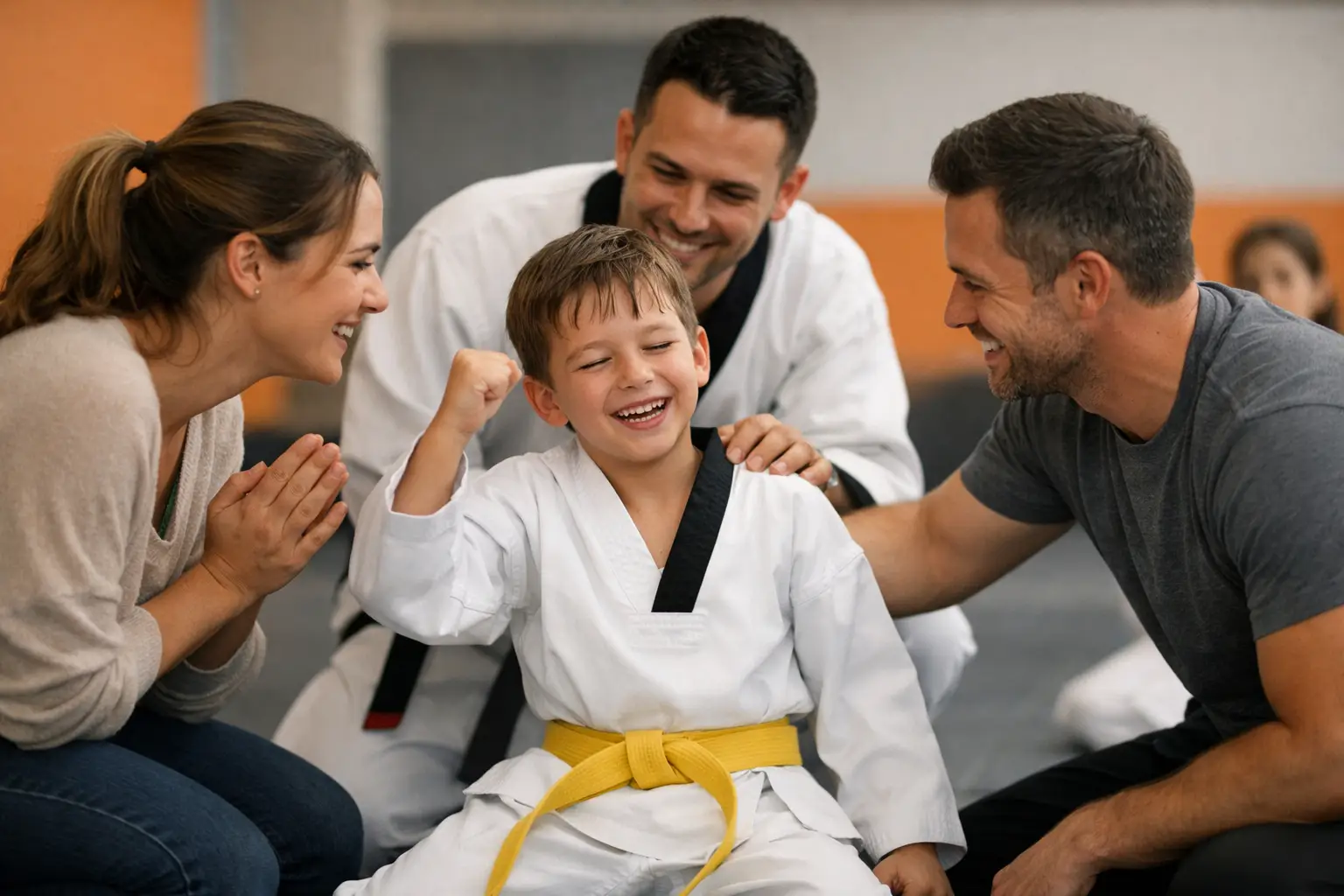
Some kids melt down fast. Some shut down. Some go from zero to overwhelmed before a parent can even figure out what set it off. When families start looking into martial arts for emotional regulation, they usually are not looking for a hobby. They are looking for a better way to help their child handle frustration, pressure, disappointment, and big reactions without feeling like every day is a battle.
That matters because emotional regulation is not just about behavior. It affects friendships, school, confidence, and the atmosphere at home. When a child has a hard time recovering after getting upset, the whole family feels it. Parents feel it in the morning rush, during homework, at pickup, and at bedtime.
What many families find is that martial arts gives kids something they are often missing – a structured place to practice control while their body is moving, their attention is engaged, and expectations are clear. For some children, that works better than being told to calm down after they are already flooded.
Why martial arts for emotional regulation can help
A lot of emotional struggles in kids do not come from a lack of intelligence or effort. They come from the gap between what a child feels and what they know how to do with those feelings in real time. That gap shows up as yelling, quitting, arguing, crying, impulsive choices, or complete shutdown.
Martial arts helps narrow that gap because it turns self-control into something physical and repeatable. A student has to pause, listen, wait their turn, adjust when corrected, and keep going after making a mistake. None of that happens once. It happens over and over in every class.
That repetition is where growth starts. A child who struggles with frustration does not become calm because someone gave a speech about attitude. They improve because they keep practicing what it feels like to reset. They miss a step, regroup, and try again. They lose a round in a drill, breathe, and continue. They feel their body speed up, then learn how to bring it back under control.
This is also why the right environment matters. Martial arts is most helpful when expectations are consistent and coaches know how to challenge kids without shaming them. Some children respond well to intensity. Others need a firmer structure delivered with more patience. It depends on the child, their age, and what kind of support helps them stay engaged instead of spiraling.
The connection between movement and emotional control
Parents often notice the same pattern: their child is not just emotional, they are physically charged. Their body is already running hot. They are bouncing, clenching, fidgeting, pacing, crashing, or reacting before they have words for what they feel.
That is one reason movement matters so much. Martial arts gives that energy somewhere to go. It is not random activity. It is organized movement with purpose. The student is not just burning energy off. They are learning how to direct it.
There is a big difference between a child being told to sit still and a child being taught how to use their body with control. One feels like constant correction. The other feels like progress. Over time, kids start recognizing the signals in themselves earlier. They learn the difference between being excited and being out of control, between feeling frustrated and acting on that frustration.
That kind of awareness is a real milestone. Emotional regulation usually improves when kids can catch themselves sooner, not only after the damage is done.
What kids are really practicing in class
From the outside, martial arts can look like kicks, drills, and forms. But underneath that, kids are practicing something much bigger.
They are learning how to handle correction without falling apart. They are learning what effort feels like on a hard day. They are learning how to stay present when something does not come easy. They are learning how to be responsible for their response, even when they are disappointed.
That last part is big. Many children are used to emotions leading the moment. If they feel embarrassed, they stop. If they feel frustrated, they argue. If they feel nervous, they avoid. A strong martial arts program teaches that feelings are real, but they do not have to be in charge.
That does not mean kids become emotionless. It means they build a little more space between the feeling and the reaction.
For younger children, this may look simple at first. Standing in line correctly. Following directions the first time. Resetting after a mistake without tears taking over the whole class. For older students, it may look like staying composed during partner work, accepting feedback, and responding to pressure without letting ego run the show.
These are not flashy wins, but they are the ones parents remember. They are the moments when a child starts carrying themselves differently at home, at school, and with other people.
Martial arts for emotional regulation at different ages
The way emotional regulation develops in a 5-year-old is not the same as it does in a 12-year-old. That is why age matters.
Younger kids usually need shorter instructions, fast transitions, and lots of chances to succeed before frustration builds. At that stage, progress often comes from routines. They begin to understand what is expected, what happens next, and how to recover from small mistakes without getting stuck.
Elementary-age kids can usually handle more challenge, but they still need coaching that is direct and steady. This is often the stage where parents begin to see stronger carryover. A child starts pausing before reacting. They bounce back faster after disappointment. They begin taking pride in controlling themselves, not just in performing well.
Teens are different again. For them, emotional regulation is tied closely to identity, peer pressure, confidence, and stress. Martial arts can be especially valuable here because it gives them a place where accountability is clear and growth is earned. Teens usually know when adults are giving them empty encouragement. They respond better to standards that are real and leadership that is consistent.
What parents should look for
Not every program supports emotional growth the same way. If a parent is hoping martial arts will help their child become more steady, the teaching approach matters as much as the activity itself.
Look for instructors who can balance structure with connection. Kids need clear expectations, but they also need to feel seen. A child who is constantly corrected without support may shut down. A child who is only praised without standards may not grow. The best programs hold both.
It also helps to watch how the class handles mistakes. Are students expected to recover and continue, or does everything stop when a child gets frustrated? Are instructors calm under pressure? Do they know how to redirect without making things worse?
Parents should also be realistic about timing. Emotional regulation does not change in two classes. It is built over time through repetition, trust, and consistency. The children who grow the most are usually the ones who keep showing up long enough for better habits to take root.
At TUFF, that belief has always come from lived experience. This was built by a family who needed more than an activity for their own child and found that the mat could become a place where growth showed up one response at a time.
What martial arts can do – and what it cannot
Martial arts can be a powerful outlet and a strong developmental tool. It can help a child build better body control, stronger recovery after frustration, and more confidence in stressful moments. It can give parents a setting where expectations are clear and progress is visible.
But it is not magic, and it is not the same for every child. Some kids respond quickly to the structure. Others take longer. Some need martial arts alongside changes at home and school before families start seeing real consistency.
That does not mean it is not working. It usually means the process is real.
The goal is not a perfectly calm child who never gets upset. That is not realistic. The goal is a child who can feel big emotions without being completely ruled by them. A child who can recover faster, make better choices under pressure, and start believing, I can handle this.
For a lot of parents, that is the shift they have been hoping for all along. Not perfection. Not a quick fix. Just a path that gives their child more control, more confidence, and a better way forward when life gets loud.