
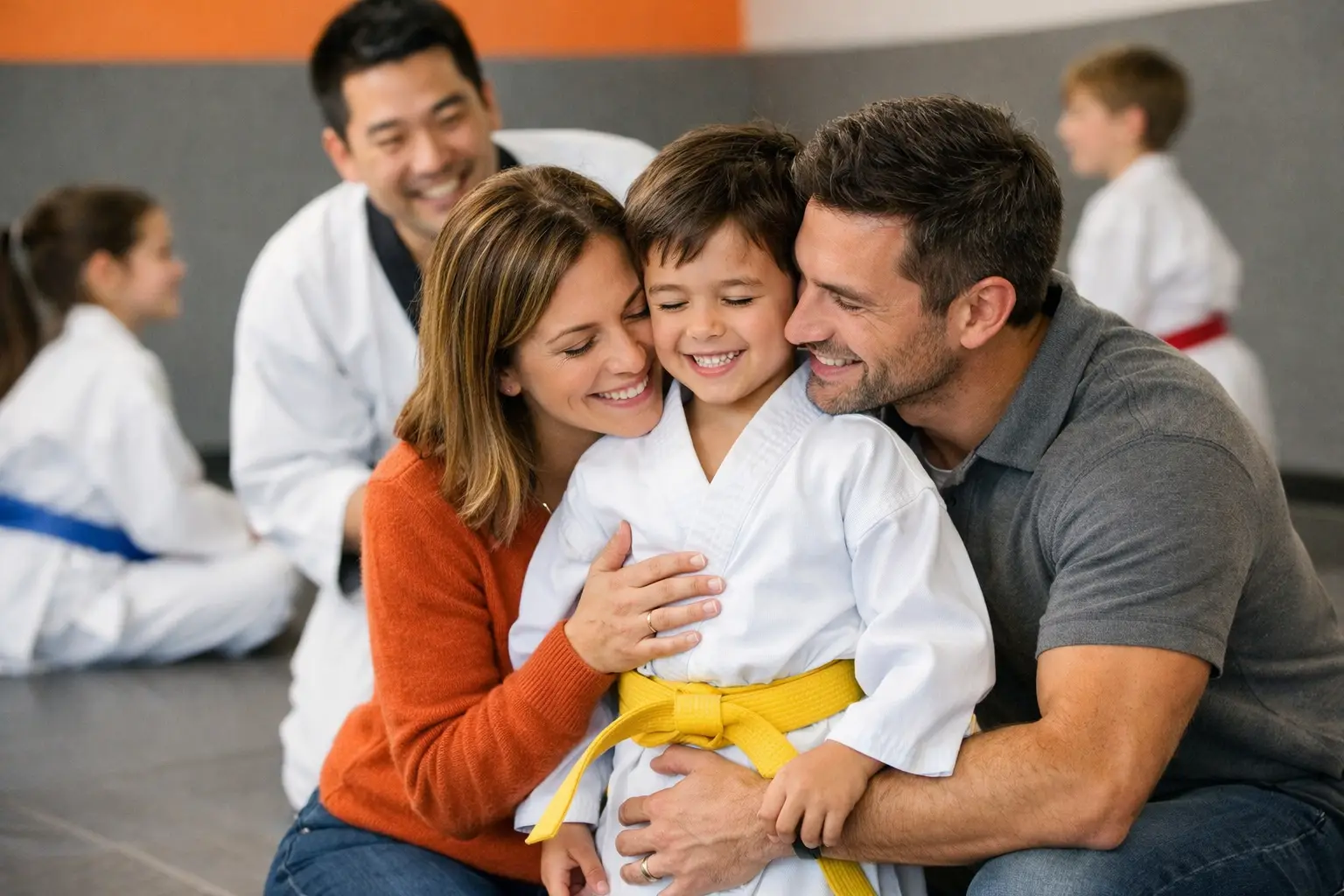
If you are searching for a real guide to kids martial arts, you are probably not just looking for an activity to fill an hour. You are looking for something that helps your child grow stronger on the inside, not only busier on the calendar. Maybe your child has a hard time settling in, maybe they need a healthier outlet for big energy, or maybe you simply want them in an environment that asks more of them in the best way.
That is where martial arts can be different.
For many families, the value is not in the kicks, punches, or uniforms. It is in what happens over time. A child learns how to walk into a room with more confidence. They learn how to stay with something when it gets hard. They start seeing themselves as capable. For parents, that shift matters a lot more than whether a technique looks impressive.
What a good guide to kids martial arts should really answer
Most parents are not asking, Which style is best? They are asking, Will this help my child? Will they be safe here? Will this be structured enough to make a difference? Those are the right questions.
A strong martial arts program gives kids clear expectations, consistent routines, and coaches who know how to challenge them without losing them. That balance matters. Some children need encouragement first. Others need boundaries they can trust. Most need both.
The best programs also understand that progress does not look the same for every child. One student may need help speaking up. Another may need help slowing down and listening. Another may already be confident but needs a place to turn that confidence into leadership. Martial arts can support all of those goals, but only when the teaching is intentional.
Why parents choose martial arts in the first place
Very few families wake up one day and say, Our child needs a roundhouse kick. What they usually mean is, Our child needs something solid.
They want an environment where effort counts, where excuses do not run the room, and where adults follow through. They want their child around positive peers and strong role models. They want a place that can handle personality, emotion, and energy without turning every challenge into a problem.
That is why martial arts tends to connect with families who have already tried other activities and felt underwhelmed. Team sports can be great, but some kids get lost in the crowd. Other programs may keep kids entertained without really asking them to grow. Martial arts is more personal than that. A child cannot hide in class. They have to show up, pay attention, try again, and earn their progress.
That process is often where the real change starts.
What kids gain from martial arts
The obvious answer is physical skill, and yes, that matters. Kids improve coordination, balance, body awareness, and general athletic ability. They learn how to move with purpose. They also build stamina and strength in a way that feels engaging instead of forced.
But parents usually notice the non-physical changes first.
A child who once avoided challenges may begin sticking with difficult tasks longer. A child who used to shut down after correction may start recovering faster and trying again. A child who struggled to carry themselves with confidence may start making better eye contact, speaking more clearly, and taking more pride in how they show up.
Those changes do not happen in one class. They happen through repetition, standards, and relationships. Kids grow when they are consistently expected to do hard things in a supportive environment.
How to know if a program is the right fit
This part matters more than many parents realize. Martial arts can be powerful, but the right program for your child depends on how it is taught.
When you visit a school, pay attention to the energy in the room. Are instructors engaged, or are they going through the motions? Do they know how to redirect kids without tearing them down? Is the class organized? Are students learning in a way that feels structured and purposeful?
Look beyond the sales pitch and watch how children respond. You want to see a room where expectations are clear and students are being coached, not just managed. You also want to see warmth. Strong standards and genuine care should live in the same place.
It also helps to ask how classes are grouped. Age-specific instruction makes a big difference. A five-year-old and a twelve-year-old do not learn the same way, and they should not be taught as if they do. Young children need more movement, more redirection, and simpler goals. Older kids can handle more detail, more responsibility, and a higher level of accountability.
What to expect in the first few months
Parents sometimes worry because the first class does not instantly transform their child. That is normal. Growth in martial arts is usually steady, not dramatic.
In the beginning, many kids are just learning the routine. Where to stand. How to listen. When to move. How to stay with the group. For some children, that alone is a major step. They are learning how to operate inside a structured environment that asks for both effort and self-control.
After that, confidence starts to build through small wins. A child remembers a sequence. They complete class with better focus. They respond more quickly. They carry themselves differently. These moments may seem small from the outside, but they are often the foundation for much bigger growth.
Parents should also expect some ups and downs. Kids are still kids. Some days they will be locked in. Other days they will test limits, get frustrated, or lose steam. What matters is whether the program knows how to work through those moments in a way that keeps the child growing.
Martial arts and children who need an outlet
Some children are not lacking ability. They are lacking the right container.
They have energy, emotion, and intensity, but not enough places where those things are guided well. Parents know this feeling. You can see the potential in your child, but you also know they need more structure than school or casual activities are giving them.
Martial arts can be a strong outlet because it channels effort instead of just trying to suppress it. Kids are asked to move, think, respond, and regulate. They are not expected to sit still for long stretches and call that success. They are taught how to control their energy, use it well, and take pride in doing hard things the right way.
For many families, that is the difference. The child is not being told they are too much. They are being shown how to turn what they have into something strong.
A few signs that your child may be ready
You do not need to wait for a major issue before starting. Martial arts can be a good fit for kids who need more confidence, more structure, more challenge, or simply a better use of their afternoons.
It may be worth exploring if your child gives up easily, struggles to follow through, seems to need a stronger routine, or would benefit from more positive accountability outside the home. It can also be a strong choice for kids who are doing well already but need an environment that keeps raising the standard as they grow.
For working parents, it can mean something practical too. A well-run program gives children a safe, structured place to be while also helping them develop. That combination matters when families need more than supervision. They need consistency they can trust.
The parent’s role in the process
A good martial arts program will do its part, but parents still matter a lot.
The biggest mistake is treating martial arts like a quick fix. Real growth takes time. Children need consistency, encouragement, and room to develop without being pressured to become someone new overnight. Celebrate effort. Ask what they learned. Stay connected to the process instead of only watching for perfect behavior.
It also helps to let instructors coach. Kids often rise faster when the adults in their life are working together instead of competing for control. When home and training reinforce the same message about effort, responsibility, and follow-through, the results are stronger.
At TUFF Martial Arts, that belief runs deep because it was built by a family who started from the same place many parents are standing now – looking for something real that could help a child grow.
The right program should change more than a schedule
The best martial arts experience does more than keep a child occupied. It gives them a place to be seen clearly and challenged well. It helps them build habits that carry into school, home, friendships, and every room they walk into after that.
If you are weighing your options, trust what matters most. Look for a program that feels steady, purposeful, and invested in who your child is becoming. The right fit will not promise instant change. It will offer something better – a place where growth is earned, supported, and built to last.