
Some kids are ready at four. Some are better off waiting until seven or eight. And some teenagers walk onto the mat for the first time and absolutely thrive. If you’re wondering about the best age to start martial arts, the honest answer is this: there isn’t one perfect number. There is, however, a right starting point for your child.
That matters because most parents are not really asking about age alone. They’re asking whether their child is ready for structure, whether they’ll be safe, whether they’ll stick with it, and whether this is finally the activity that does more than just fill an hour. Those are the right questions.
What is the best age to start martial arts?
The best age to start martial arts depends less on a birthday and more on maturity, temperament, and the kind of program your child is entering. A well-designed class for preschoolers looks very different from a class for elementary students or teens. That’s how it should be.
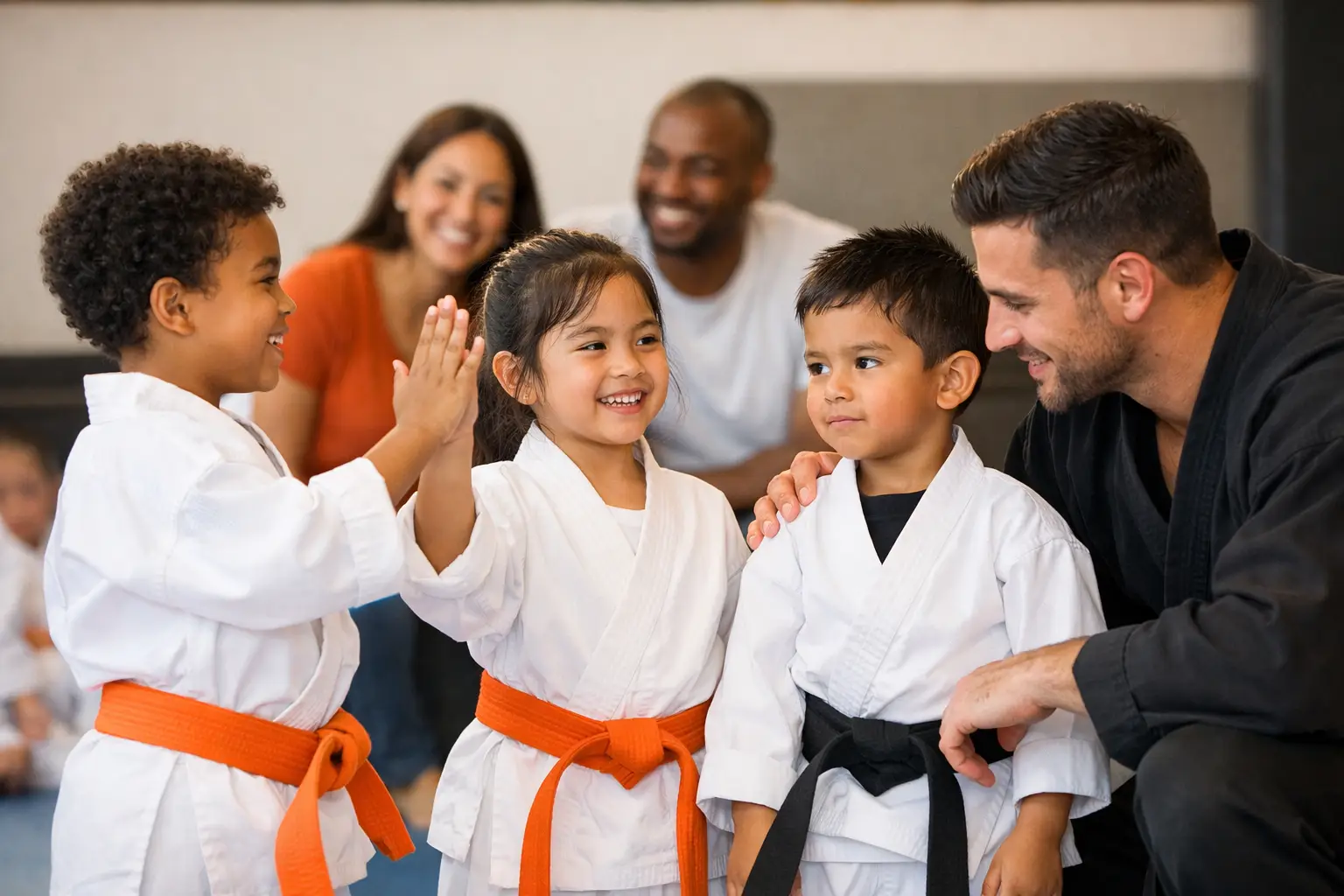
For many children, ages 4 to 6 are a strong starting window. At that stage, they can begin learning how to participate in a group, follow directions from another adult, and move with purpose instead of pure chaos. They are not showing up to become expert martial artists overnight. They are learning how to be in the room, how to try again after getting something wrong, and how to build confidence through repetition.
That said, younger is not always better. A three-year-old who cannot separate comfortably from a parent, struggles with transitions, or melts down in group settings may need more time. Starting too early can turn a good long-term fit into a frustrating first experience.
On the other end, starting later does not mean starting behind. We’ve seen plenty of older kids and teens come in with more body awareness, more patience, and more willingness to be coached. They often progress quickly because they understand the purpose behind the training.
Best age to start martial arts by stage
Ages 3 to 4
This can work, but only if the program is built for very young children. At this age, classes should focus on listening, basic coordination, taking turns, and short bursts of movement. Expectations need to be realistic. A great class for this age group is not trying to force mini adults into a formal training environment.
If your child is energetic, curious, and able to participate in a group for a short period, this can be a healthy introduction. If not, waiting six months to a year may lead to a much better outcome.
Ages 5 to 7
For many families, this is the sweet spot. Kids in this range are usually old enough to understand routine and young enough to absorb habits quickly. They still love to play, but they can also start connecting effort with improvement.
This is often when parents begin to see changes that matter outside the academy. A child starts carrying themselves differently. They handle correction better. They become more willing to keep going when something is hard. Not perfect, just stronger in the ways that count.
Ages 8 to 12
This is another excellent time to begin. Children at this age often have the attention span to handle more technical instruction and the self-awareness to understand responsibility. If they’ve bounced between activities without finding the right fit, martial arts can feel different because progress is earned, visible, and personal.
For some kids, this is also the age when confidence needs reinforcement. School gets more social, more demanding, and sometimes more discouraging. Training gives them a place to work through challenge in a healthy, structured way.
Teens
Teenagers can be outstanding beginners. They may arrive with nerves, especially if they think everyone else started years ago, but that concern usually fades fast in the right environment. Teens often appreciate that martial arts gives them something real to work toward. It is physical, demanding, and honest.
If a teen wants to start, let them. They are not too late. In fact, many begin at the perfect time for who they are now.
Signs your child is ready, even if the age looks “early”
A child is usually ready for beginner martial arts when they can participate in a group setting, follow simple directions, transition from one activity to the next, and recover from small frustrations without completely shutting down. They do not need to be calm all the time. They do not need athletic experience. They just need enough readiness to benefit from the structure.
It also helps when the child shows interest, even if it’s small. That interest might look like wanting to move, asking questions, copying what they see, or simply being excited to try something new. Enthusiasm is not required on day one, but openness matters.
Parents should also pay attention to their own goals. If you are looking for an activity that can help your child channel energy, build confidence, and grow into more responsibility over time, martial arts can be a strong fit. If you are expecting instant transformation in two weeks, that expectation needs adjusting. The real value comes from consistency.
When waiting is the better choice
Not every child should start right away, and that is not failure. Sometimes the best decision is to give a child more time to develop socially or emotionally before introducing a structured class.
If your child cannot yet participate without constant one-on-one help, becomes overwhelmed by noise or transitions, or resists any direction from adults outside the home, they may need a little more runway. That does not mean martial arts is off the table. It may just mean the timing is not right today.
This is where honest guidance matters. A good program should be able to tell the difference between a child who is nervous but ready and a child who will benefit from waiting. Parents deserve that honesty.
The program matters as much as the age
A lot of confusion around the best age to start martial arts comes from assuming all classes are the same. They are not. A five-year-old in a class designed for older kids may struggle, not because martial arts is wrong for them, but because the environment is.
Age-appropriate instruction changes everything. Younger children need movement, repetition, clear boundaries, and instructors who know how to teach the child in front of them, not the one they wish they had. Older kids need challenge, accountability, and a sense that their effort means something.
That’s why parents should look beyond the simple question of age and ask better ones. Is the class structured for this stage? Are expectations realistic? Does the teaching build kids up while still holding standards? Can the instructors connect with children, not just demonstrate technique?
Those answers will tell you more than a minimum starting age ever could.
What parents often notice first
The first wins are not always flashy. Usually, they show up in ordinary moments. A child starts walking into new spaces with less hesitation. They handle correction without falling apart. They begin finishing what they start.
For working families, there is another layer that matters just as much – consistency. When a child has a place they can count on, a routine they understand, and adults who expect something from them in a caring way, that steadiness has value. It gives shape to the week. It gives kids something solid to stand on.
That is one reason so many parents are not just searching for an activity. They are searching for a place that helps their child grow while also fitting real family life. In communities across South Miami-Dade, that practical side matters every bit as much as the developmental side.
So when should your child start?
If your child is around 4 to 6, can participate in a group, and seems ready for a structured introduction, this may be a great time to begin. If they are older, they are absolutely not late. If they are younger and not quite there yet, waiting can be the smartest move.
The best age to start martial arts is the age when your child can step onto the mat, be supported well, and grow from the experience. That might be preschool. It might be elementary school. It might be the teenage years.
What matters most is not starting early. It’s starting at the right time, in the right environment, for the right reasons.
And if you’re a parent trying to make a careful decision, trust this: you do not need to chase perfect timing. You just need to look for the moment when your child is ready to begin building something that lasts.