
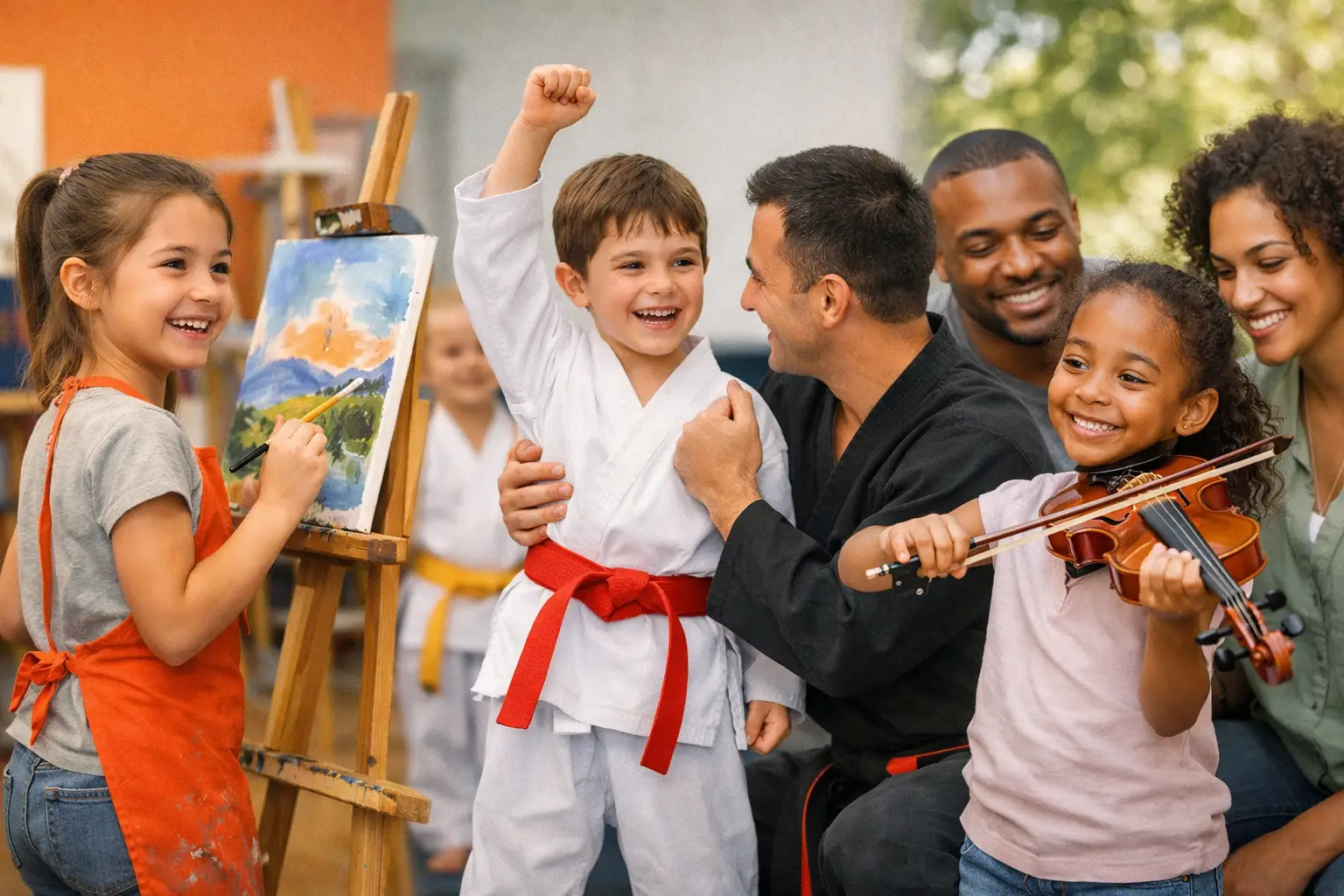
The hardest part of choosing an after-school activity is not finding options. It is knowing which option will still matter when the excitement of the first week wears off. The best kids enrichment activities give children more than a way to fill the afternoon. They give them a place to belong, a challenge they can grow into, and adults who expect something meaningful from them.
For many parents, the search starts because something feels unfinished. A child has energy that needs a better outlet. They seem hesitant to try new things. The school day ends, work is still going, and the hours between pickup and dinner need more than screen time. The right program can become a steady part of a child’s week – not because it keeps them busy, but because it helps them practice who they are becoming.
What Makes an Enrichment Activity Worth Your Time?
A good activity is enjoyable. A worthwhile enrichment experience also asks something of a child. It gives them small responsibilities, clear expectations, chances to recover from mistakes, and encouragement that is earned rather than handed out.
That does not mean every child needs the same kind of program. A child who loves performing may thrive on the stage. A child who needs movement may come alive in a structured physical activity. Another may need the quiet concentration of art, music, or building projects. The goal is not to choose the most impressive activity. It is to choose one your child can return to consistently and grow within.
Parents should also consider the practical side. Is the schedule dependable? Are the adults attentive and prepared? Does the program create a clear rhythm for the afternoon, especially when school gets out before the workday does? A great activity that creates daily stress for the family is harder to sustain.
10 Best Kids Enrichment Activities to Consider
1. Martial arts
Martial arts can be especially meaningful for children who benefit from clear routines, active learning, and a strong sense of progress. Students learn to listen, follow a sequence, work with a partner, and keep showing up when a skill takes time to learn.
The value is not simply in learning techniques or earning a new rank. It is in the moment a child realizes they can stand a little taller, regroup after a difficult class, or lead by example for a newer student. For a child with a lot of energy or a parent who wants more structure after school, that kind of environment can be powerful.
2. Team sports
Soccer, basketball, baseball, volleyball, and similar sports give children a shared goal and regular opportunities to contribute to something bigger than themselves. They learn that effort affects the group, that teammates need encouragement, and that a tough game does not define them.
Team sports work well for children who enjoy fast-paced play and social connection. The trade-off is that practice and game schedules can become demanding, particularly during a competitive season. Families should look for coaches and programs that value effort, preparation, and good teammate habits alongside the scoreboard.
3. Music lessons or ensemble programs
Music teaches children how to make progress in small pieces. A new song rarely sounds polished on the first try. It takes repetition, patience, and the willingness to hear where improvement is needed.
Private lessons can suit a child who enjoys individual attention, while band, choir, and group classes add connection and accountability. Music may not be the right fit for every child, especially if daily practice becomes a point of conflict at home. But for a child who responds to rhythm, sound, or performance, it can become a lasting source of confidence.
4. Art classes
Art gives children room to make choices, solve problems creatively, and see an idea become something real. Painting, drawing, ceramics, photography, and design projects can be a welcome counterbalance to a school day filled with right-or-wrong answers.
The strongest art programs do more than hand children supplies. They teach techniques, invite experimentation, and help students talk about their work with pride. This can be a wonderful choice for children who are observant, imaginative, or more comfortable expressing themselves through what they create.
5. Dance or movement classes
Dance combines movement, memory, timing, and self-expression. For some children, it is the first place they feel comfortable taking up space in a room. They learn choreography, work through corrections, and become part of a group that depends on everyone knowing their role.
Parents may want to ask whether the studio’s culture feels supportive as well as organized. Performance opportunities can be exciting, but the day-to-day experience matters more. A child should feel challenged without feeling diminished.
6. Theater and public speaking
Theater helps children use their voice in front of others, respond to direction, and take creative risks. Even the child who does not want the lead role can gain something valuable from working backstage, reading lines, or participating in an ensemble.
Public speaking programs offer a similar benefit in a more direct format. Children practice organizing thoughts, speaking clearly, and staying composed when all eyes are on them. Those are skills that carry into classrooms, future interviews, and everyday conversations.
7. STEM and robotics programs
Robotics, coding, engineering, and science clubs give children a hands-on way to ask, “How does this work?” They build, test, revise, and try again. When a design fails, the lesson is not that they are incapable. The lesson is to look closer, make an adjustment, and keep working.
These programs can be a great fit for children who enjoy puzzles and problem-solving. Still, parents should look beyond the label. A quality STEM class should make room for collaboration and curiosity, not just worksheets or isolated screen time.
8. Community service and youth leadership
Children grow when they see that their time and effort can help someone else. Service projects, youth councils, mentoring opportunities, and neighborhood cleanups teach them to notice needs beyond their own routine.
Leadership is not just being the loudest person in the room. It can look like arriving prepared, helping a younger child understand a task, or doing the right thing when nobody is handing out praise. Programs that combine service with reflection can help children connect their actions to real impact.
9. Outdoor and nature-based programs
Gardening, hiking groups, fishing, environmental clubs, and outdoor education programs give children a break from indoor routines. They learn patience, observation, practical problem-solving, and care for shared spaces.
Outdoor programs are often a strong option for children who spend most of the school day seated. Weather, transportation, and seasonal schedules can affect consistency, so it may work best as a complement to a year-round activity rather than the only one.
10. Structured after-school programs
For working families, a well-run after-school program can be one of the most valuable enrichment choices available. It can provide homework time, physical activity, supervised connection with peers, and a predictable routine until pickup.
The difference is in the structure. Ask what happens after students arrive, how transitions are handled, how staff communicate with families, and whether children are merely supervised or genuinely engaged. In South Miami-Dade, TUFF Martial Arts Academy’s after-school program is built around that larger purpose: giving children a dependable place to learn, move, and grow after the school bell rings.
How to Choose the Right Activity for Your Child
Start with what you see at home. Does your child constantly build, draw, perform, move, compete, ask questions, or look for ways to help? Their interests are useful clues, but do not let one difficult first class decide everything. New environments can feel uncomfortable before they feel exciting.
Give a program enough time to reveal its rhythm. In many cases, a few weeks of consistent attendance tells you more than one enthusiastic trial day. At the same time, pay attention to the emotional signal. A child can be challenged without dreading every visit. They should feel safe with the instructors, welcomed by the group, and proud of some part of their effort.
It also helps to choose one primary activity before stacking the calendar with too many commitments. Children need time for schoolwork, rest, family dinners, and unstructured play. More activities do not automatically create more growth. Often, consistency in one meaningful program does more than rushing between three.
Questions Worth Asking Before You Enroll
When you visit a program, watch how adults speak to children when they make mistakes. Notice whether instructors know students by name and whether older children are guided to set a positive example. Ask about attendance expectations, communication, safety procedures, and what progress looks like beyond awards or performances.
You are not just choosing an activity. You are choosing a community that will have your child’s attention for hours each week. That deserves more thought than a colorful flyer or a convenient time slot.
The right enrichment activity will not turn every afternoon into a perfect one. But it can give your child a reliable place to be known, challenged, and encouraged – and sometimes that steady place is exactly where the next version of them begins to show up.