
A child does not become a leader because they are the loudest in the room, the captain of a team, or the first to raise a hand. Leadership starts much earlier and much closer to home. It shows up when a child resets after a hard day, takes ownership of a mistake, helps a newer student feel welcome, or keeps a commitment when no one is reminding them.
That is what meaningful leadership programs should help children practice. For parents, especially those watching a child struggle with big energy, uncertainty, or the pressure of growing up, the goal is not to create a perfect kid. It is to give them a place where they can build steady habits, be held to a standard, and learn that their choices affect the people around them.
Leadership Is Learned Through Repetition
Children hear plenty of good advice. They are told to be kind, make good choices, listen, and try their best. But hearing those words is different from having regular opportunities to live them.
A strong leadership program gives children a role in their own growth. They arrive prepared. They participate even when an activity feels difficult. They learn to accept coaching without shutting down. Over time, they begin to see that confidence is not something a person waits to feel. It grows after they take action, again and again.
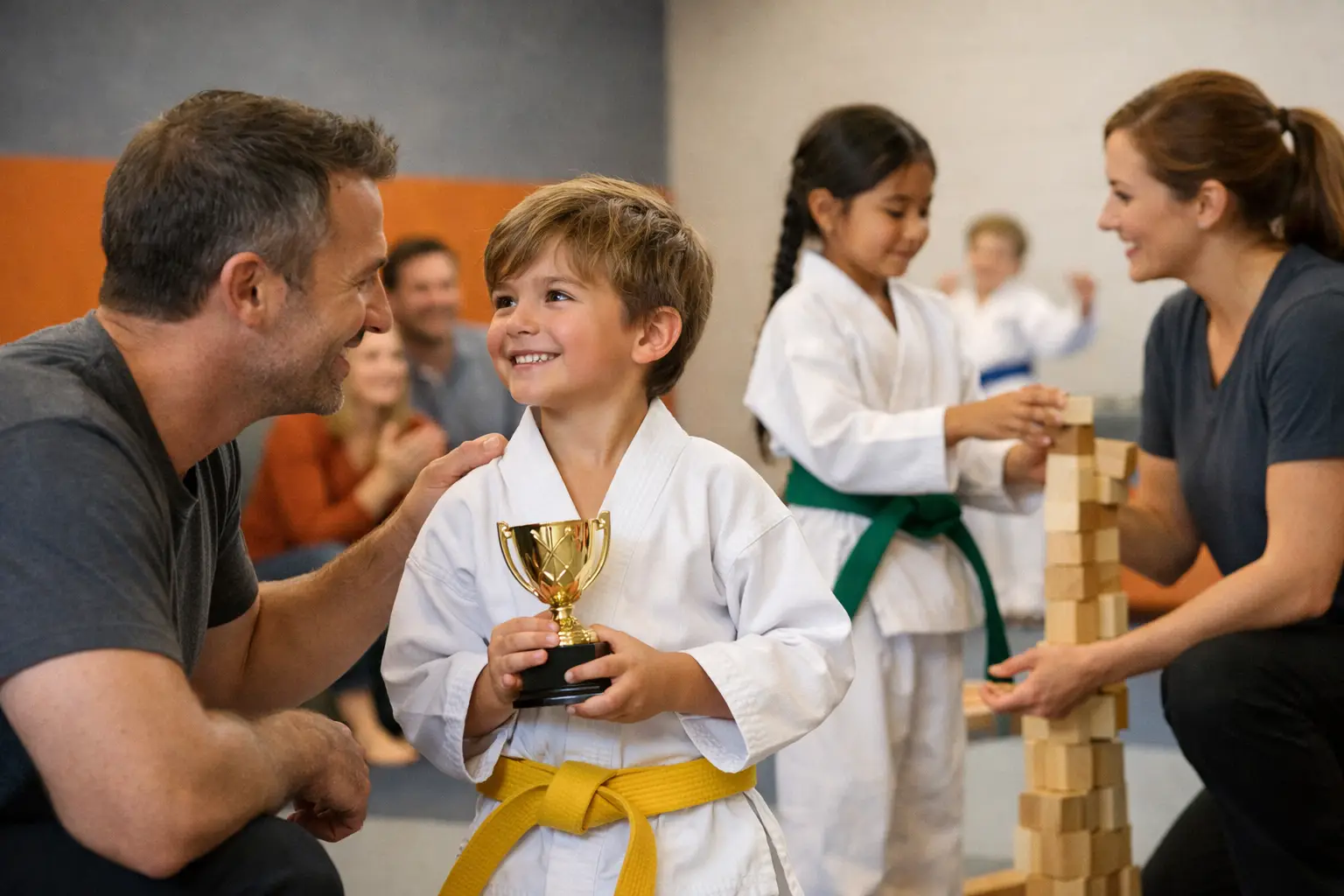
This is one reason structured martial arts training can be such a meaningful setting for leadership development. Every class creates small moments of responsibility. A student has to pay attention to instruction, manage their space, work safely with a partner, and continue when a new skill does not come easily. None of those moments may look dramatic from the outside. Together, they build a child who knows how to show up.
Leadership is rarely one big speech or one big win. More often, it is the quiet decision to keep going, make an adjustment, and return ready to try again.
What Great Leadership Programs Give Children
Not every activity that uses the word “leadership” creates leadership. A child may be busy, entertained, or even talented without being given real opportunities to grow in responsibility. The difference is in the environment and the expectations.
A clear standard with real encouragement
Kids need adults who believe they can rise to the occasion. That does not mean expecting them to get everything right on the first try. It means being clear about how they are expected to participate, speak to others, respond to correction, and handle setbacks.
Encouragement matters most when it is specific. Instead of telling a child they are amazing, a coach or instructor might point out that they stayed composed after a mistake, remembered to help a teammate, or returned to the task after feeling frustrated. This helps children connect progress to their own actions.
A place to make mistakes safely
Parents often want their children to have confidence, but real confidence cannot be built by protecting a child from every difficult moment. A leadership environment should let kids make manageable mistakes, receive guidance, and try again without being embarrassed.
That process is especially valuable for children who have had a hard time finding their footing in other settings. Some children need more movement. Some need a clearer routine. Some simply need adults who see more than one rough moment and keep calling them forward. The right program does not label a child by their hardest day. It gives them a better next repetition.
Responsibility to a community
Leadership becomes real when children understand that they are part of something bigger than themselves. In a class or team setting, their effort affects the group. Their attitude can make a new student feel included or left out. Their example can help set the tone for younger children who are watching.
This is not about putting too much pressure on a child. It is about showing them that they matter. When a student is trusted to line up with purpose, partner thoughtfully, or encourage someone who is learning, they begin to recognize their own influence.
Adults who model the behavior they expect
Children notice whether the adults around them mean what they say. They notice how instructors handle frustration, how they correct mistakes, and whether they know each child as a person.
At TUFF Martial Arts, leadership has always been personal. The school was founded from a family’s search for a constructive outlet for their own son, and that experience still shapes how students are seen. Growth is not treated as a slogan. It is something instructors work toward with families, one class, one conversation, and one hard-earned step at a time.
Leadership Development Should Look Different at Every Age
A five-year-old does not lead the same way a middle schooler does. Younger children may be learning to wait for a turn, follow a routine, use a strong voice, and recover after disappointment. Those are meaningful first steps. They are learning that they can be part of a group without needing every moment to revolve around them.
As children get older, leadership can include more ownership. They can welcome new students, demonstrate a skill, take feedback with maturity, and learn how their preparation affects their performance. Teens can begin to understand that leadership is not about controlling others. It is about being dependable, setting an example, and making room for other people to succeed.
The expectations should grow, but the support should remain. A program that asks too little of children sends the message that they are not capable. One that asks too much, too soon can leave them discouraged. The right balance depends on the child’s age, temperament, and current season of life.
How Parents Can Spot Substance Over Slogans
When considering leadership programs, parents do not need a long list of promises. They need to see how the program operates when a child is having a difficult day, when a new student walks in nervous, or when effort is uneven.
Pay attention to whether instructors offer correction with care. Notice whether students are expected to contribute to the culture of the room, not just follow commands. Ask how progress is recognized. Is every child being pushed toward the same outcome, or are instructors paying attention to the habits that will help each student grow?
It also helps to look for consistency. A one-time leadership workshop can be inspiring, but children change through repeated practice. Programs that meet regularly create a rhythm of accountability. A child gets another chance to improve how they respond, communicate, and carry themselves. Parents get to see those lessons move beyond the class and into home, school, friendships, and everyday responsibilities.
For working families, consistency also has a practical side. A dependable afterschool environment can give children more than supervision between dismissal and pickup. When that time includes movement, mentorship, structure, and a community that knows their name, it can become one of the most valuable parts of their week.
The Goal Is Not a More Impressive Child
It is easy for adults to measure children by visible outcomes: awards, grades, rankings, or the roles they earn. Those moments can be meaningful, but they are not the full picture.
The deeper goal is a child who can handle responsibility without crumbling under it. A child who knows how to receive feedback, speak up with care, and keep their word. A child who can celebrate another person’s success without feeling smaller themselves. Those qualities will serve them in a classroom, on a team, at home, and eventually at work.
Some weeks, growth will be obvious. Your child may come home standing taller, talking about helping someone else, or taking ownership of something they once avoided. Other weeks, it may be quieter. They may simply recover faster from frustration or need one less reminder before starting a task. Those changes count.
The best leadership programs do not ask children to become someone else. They help them see what is already possible when they are given structure, meaningful responsibility, and people who refuse to give up on their potential.