
The hard part of the school day is often not the final bell. It is the stretch between dismissal and dinner, when working parents need to know their child is safe, picked up, engaged, and supported. The right afterschool care South Miami-Dade families choose should do more than fill those hours. It should give children a place to reset, move, learn, and grow into who they are becoming.
For many parents, this search starts with a practical need. Someone has to be there after school. But it quickly becomes a bigger question: What will my child be doing every afternoon, and who will be helping shape that time?
What Meaningful Afterschool Care Looks Like
A dependable program begins with the basics. Parents deserve clear pickup plans, consistent supervision, organized routines, and communication they can rely on. Those details are not small. They are what allow a parent to finish a workday without wondering whether their child made it safely from school to the program.
But children need more than a supervised room and a snack. After sitting through a full school day, they need a healthy transition. Some need an active outlet before they can settle into homework. Some need a patient adult who notices they had a rough day. Others need a setting where they can feel capable, included, and seen.
That is why a strong afterschool experience balances structure with encouragement. There is time to handle responsibilities, time to move their bodies, and time to practice showing up for themselves and the people around them. The goal is not to keep children busy until pickup. The goal is to make the afternoon count.
Afterschool Care in South Miami-Dade Has to Work for Real Families
South Miami-Dade parents manage long commutes, changing work schedules, school pickup lines, and the everyday pressure of getting everyone where they need to be. A program can have good intentions, but if transportation is unclear or pickup is too difficult, it may not solve the problem a family actually has.
Direct school pickup can make a meaningful difference. It removes the daily handoff that working parents may not be able to manage and gives children a familiar routine: school ends, their transportation is ready, and they arrive at a place where adults are expecting them.
At TUFF Martial Arts Academy, established pickup routes serve students from schools in the Princeton, Homestead, and Cutler Bay areas, including Somerset Academy Silver Palms, Coconut Palm K-8 Academy, Goulds Elementary, Mater Academy Cutler Bay, Gulfstream Elementary, and others. For a parent, that kind of planning is not just convenient. It can be the difference between an afternoon that feels scrambled and one that feels secure.
Transportation alone is not the whole answer, though. Parents should ask what happens after their child arrives. Is there a predictable check-in process? Is homework time supported? Are children separated or grouped in ways that make sense for their ages? Is physical activity guided by instructors who know how to keep a group engaged? The answers tell you whether a program has been built around children or simply around a schedule.
Why Structure Can Change the Feel of an Afternoon
Children do not all walk in after school feeling the same way. One may be excited and ready to talk. Another may be carrying frustration from a difficult class, a friendship issue, or a long day of trying to hold it together. A well-run program makes room for both without letting the afternoon become chaotic.
A consistent routine helps children understand what comes next. They can complete schoolwork, have time to eat, participate in guided activities, and move through a clear progression toward pickup. That rhythm matters because children often do better when expectations are understandable and adults follow through with calm consistency.
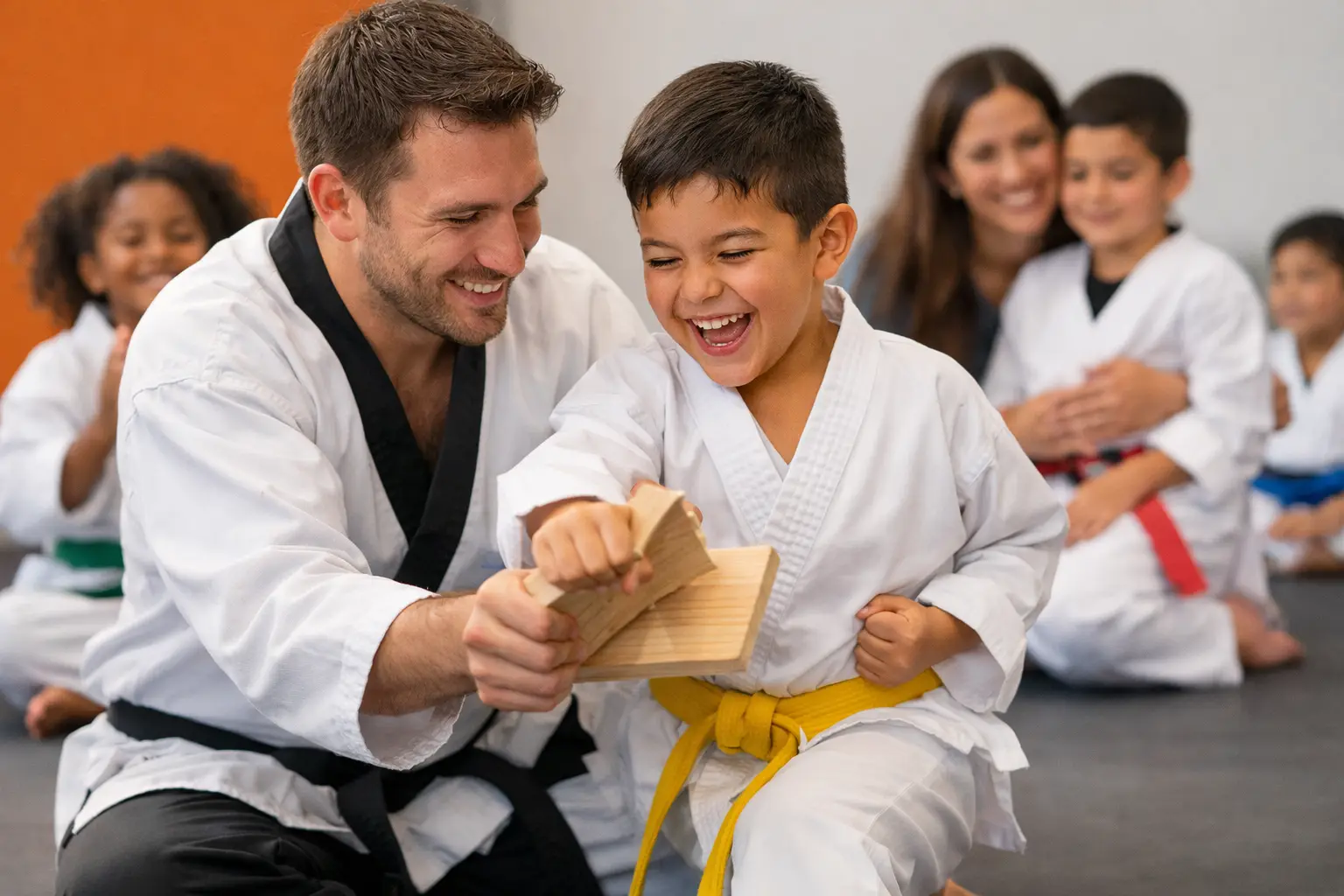
For families whose children have extra energy or sometimes struggle to stay engaged, martial arts-based activities can offer a constructive outlet. This is not a cure or a label for any child. It is a chance to practice listening, taking turns, working toward a goal, and responding when something feels challenging. For the right child, that experience can carry into home, school, and friendships over time.
The change is rarely dramatic in a single week. More often, parents notice small signs first. Their child talks more confidently about their day. They are proud of a skill they practiced. They begin to understand that effort matters, even when something does not come easily. Those moments add up.
The Adults in the Room Matter Just as Much
Programs are often described by their activities, but parents are trusting people, not brochures. The adults leading an afterschool program set the emotional temperature. Children notice whether an instructor is paying attention, whether expectations are fair, and whether they can recover from a mistake without being embarrassed.
Look for a team that communicates with families honestly. No program can promise that every day will be perfect. Children will have difficult afternoons. What matters is how staff responds, how they redirect behavior, and whether they keep parents informed when something needs attention.
The strongest youth programs are built by people who understand that parents are not handing over a schedule problem. They are handing over their children at a tender, formative part of the day.
Questions Worth Asking Before You Enroll
A visit should give you more than a quick tour. It should help you picture your own child there. Ask how pickup works from your child’s school and what happens if schedules change. Ask how homework time is handled, what the daily routine looks like, and how staff communicates with parents.
It is also wise to watch how children are treated during the visit. Are they being redirected with patience? Do they have opportunities to participate instead of waiting around? Do instructors know names and speak to students with both warmth and clear expectations?
If your child is quiet, energetic, cautious, or still finding their footing socially, say so. A good program will not make broad promises. It will listen to what you are seeing at home and explain how its environment may support your child’s growth.
Beyond Child Care: A Place to Build Capability
There is a real difference between watching children after school and investing in their afternoons. Supervision keeps a child occupied. Purposeful enrichment gives them opportunities to become more responsible, more resilient, and more confident in their own ability to handle challenges.
Martial arts can be a powerful part of that environment because progress is visible but earned over time. Children practice a skill, receive coaching, try again, and see that steady effort changes what they can do. They learn that being part of a group means contributing to the tone of the room. They learn that leadership is not just being the loudest voice, but being prepared, encouraging others, and making better choices when no one is reminding them.
That does not mean every child needs the same pace or the same path. Some will love the physical challenge right away. Others will need time before they feel comfortable stepping forward. A thoughtful afterschool program gives children room to grow without expecting them to become someone else.
When you are choosing afterschool care, trust the questions that keep coming back to you: Will my child be safe? Will they be known? Will this make our family’s day work better? And will these hours help them become stronger in ways that matter?
The right answer is not simply a place that covers the time between school and pickup. It is a community where your child can end the school day with support, purpose, and a reason to feel proud of who they are becoming.