
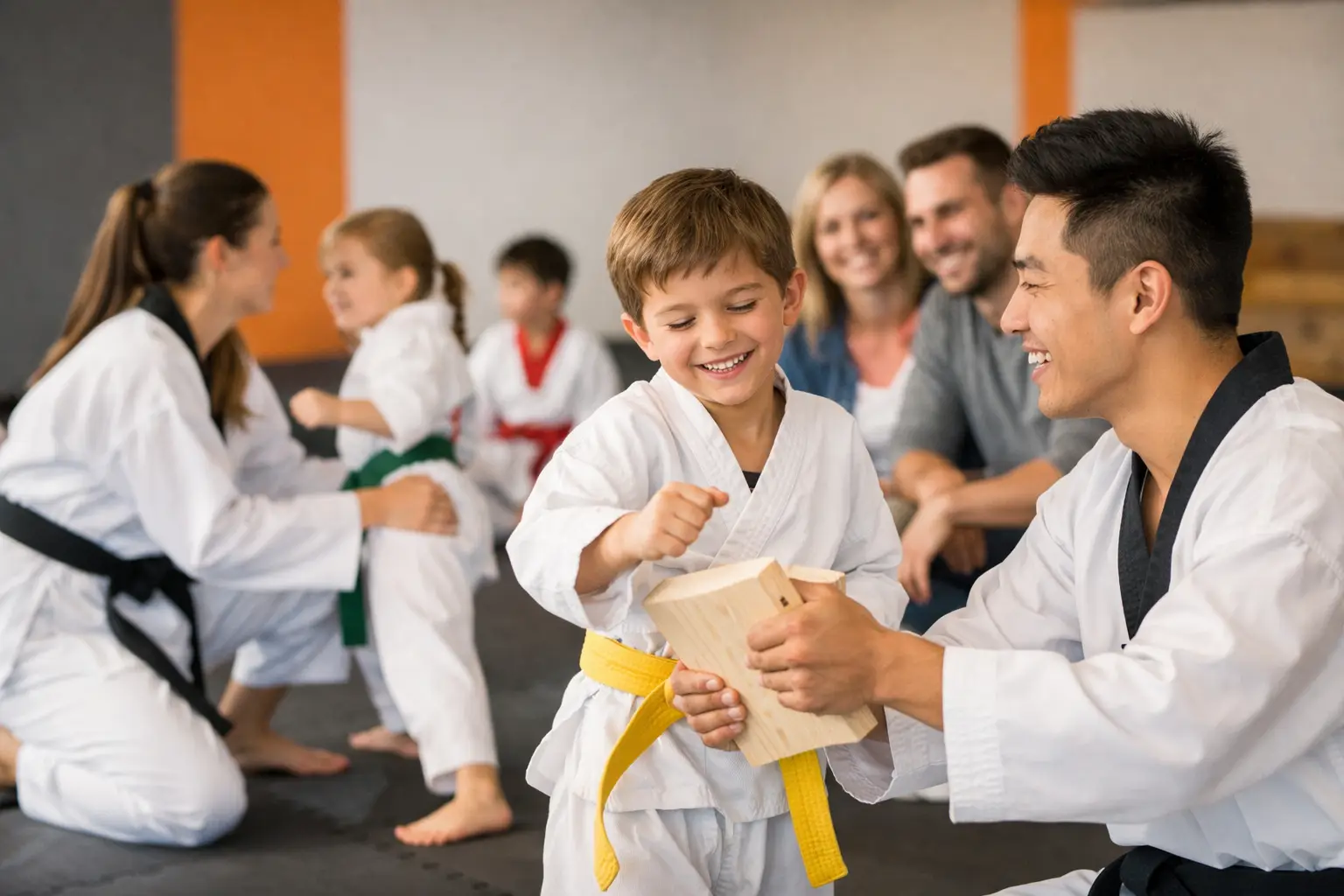
At 3 p.m., the question is rarely just, “What will my child do until I get home?” For many parents, it is also, “Will they be safe, supported, moving, learning, and in good hands?” That is why parents ask, can martial arts replace daycare? The honest answer is that it can be a far better fit than traditional daycare for some school-age children, but only when the program is built to provide dependable care as well as meaningful development.
A martial arts class by itself is not daycare. One hour of training a few afternoons a week does not solve the coverage gap between the final school bell and the end of a workday. A true martial arts afterschool program is different. It combines transportation or arrival support, supervised time, routines, physical activity, mentorship, and pickup you can count on.
For the right family, that combination can turn afterschool hours from time to get through into time that helps a child grow.
Can Martial Arts Replace Daycare? It Depends on the Program
The word “daycare” can mean many things. For a preschooler, it often means full-day care centered on meals, naps, early learning, and constant hands-on supervision. Martial arts is not a replacement for that kind of early-childhood setting.
For elementary-aged children, though, afterschool needs change. They are no longer napping. They need a safe place after school, a consistent routine, help transitioning out of the school day, and adults who can hold clear expectations with care. They also need something more purposeful than simply waiting for pickup.
That is where a well-run martial arts afterschool program can serve the same practical role as daycare while offering a different experience. Children have supervised time, but they are also learning how to listen in a group, manage their energy, work through frustration, and follow through on a goal. Those lessons do not arrive in a lecture. They happen in the small moments: lining up when it is time to begin, trying again after a missed technique, encouraging a teammate, and carrying themselves with more confidence over time.
The difference matters. Care is the foundation. Growth is what can make the arrangement feel worthwhile for the whole family.
What a Parent Should Look for Beyond a Martial Arts Class
Not every martial arts program is designed to carry the responsibility of afterschool care. Before treating one as your child’s daily solution, look closely at how the hours actually work.
First, ask about the schedule from school dismissal to pickup. Is there a clear routine? Is there time for a snack, homework, quiet decompression, movement, and instruction? Children do better when they know what comes next, especially after a full school day that may have already required a lot from them.
Second, ask who is with your child throughout the afternoon. A strong program does not only bring out instructors when it is time to train. It has adults who are present during transitions, who know the children in their care, and who understand that a child may arrive tired, overstimulated, hungry, excited, or upset.
Third, get specific about transportation. For many working parents, transportation is not a small detail. It is the entire decision. If a program picks children up directly from school, ask which schools are served, how the route is managed, and what communication looks like if plans change. Reliable transportation can remove the daily scramble that keeps families from choosing enrichment they genuinely want for their child.
Finally, pay attention to the culture. Does the program make room for children to be children while still expecting them to participate? Are expectations clear without being harsh? Do the adults speak to students in a way that builds them up? Your child will spend many afternoons in that environment. The feeling of the place is not an extra. It is part of the care.
Why Movement Can Change the After-School Hours
Many children leave school with energy still bottled up. Others come home mentally worn out from sitting, listening, testing, socializing, and trying to keep up all day. Neither response is wrong. It simply means the afterschool setting needs to meet children where they are.
Martial arts gives that energy somewhere constructive to go. Training has a rhythm: warm up, learn, practice, reset, and try again. For a child who has had a difficult day, that rhythm can be grounding. For a child who is ready to run through the house at full speed, it offers a structured place to move with purpose.
Parents often notice changes that are less dramatic than a movie-style transformation but more meaningful in everyday life. A child may start speaking up more clearly. They may take correction without immediately shutting down. They may understand that effort is not the same as instant success. They may come home tired in the best way: proud of what they practiced and ready for the evening routine.
Martial arts does not erase every tough afternoon, and it should never be presented as a cure for a child’s challenges. But a consistent environment, supportive coaching, and purposeful movement can become a powerful outlet for many children. TUFF Martial Arts Academy was built from that kind of lived experience, by a father who trained alongside his own son while searching for a positive place for his energy and growth.
The Practical Benefits Matter Too
Parents do not need to apologize for needing afterschool care that works with real life. You may have a commute, a younger child to pick up, a shift that runs late, or simply no way to leave work at 2:45 every day. Dependability is not a luxury. It is what allows a family to function.
A martial arts afterschool program can offer a steady handoff from school to evening. Instead of coordinating different babysitters, screen time, and last-minute transportation, parents have one organized plan. Their child is not just occupied. They are in a setting with a routine, peers, and adults who know the standards of the program.
This can be especially valuable during the elementary-school years, when children want more independence but still need close guidance. They may be old enough to carry a backpack and explain their day, but they are not ready to manage several unstructured hours alone. Afterschool martial arts can give them a sense of responsibility within boundaries that are appropriate for their age.
For families in South Miami-Dade, direct school pickup can make this option possible rather than merely appealing. The best plan is the one your family can actually sustain Monday through Friday, not the one that sounds good until transportation falls apart.
When Traditional Daycare May Still Be the Better Choice
There are times when martial arts afterschool care is not the right replacement. A young child who needs naptime, highly individualized care, or a full-day setting during non-school hours may be better served by a traditional daycare environment. Some children also need a slower transition after school before joining a group activity, and that is worth respecting.
Schedule matters, too. If you need care later than the program’s pickup window, or your child’s school is not on a transportation route, the logistics may not work. A program can have a wonderful mission and still not be the right fit for your particular family.
The goal is not to force martial arts into the role of daycare. The goal is to find a place where your child is cared for well and where the structure of the day supports who they are becoming.
A Better Question to Ask
Instead of asking only whether martial arts can replace daycare, ask what you want your child’s afternoons to give them. Safe supervision is essential. Reliable pickup is essential. But perhaps you also want your child to have a place where effort is noticed, where they are expected to contribute, and where they can leave each day a little stronger than when they arrived.
The right afterschool program should make your workday easier without asking your child to merely pass the time. It should give you confidence at your desk or on your commute, because you know the hours after school are being used with care, purpose, and a plan.