
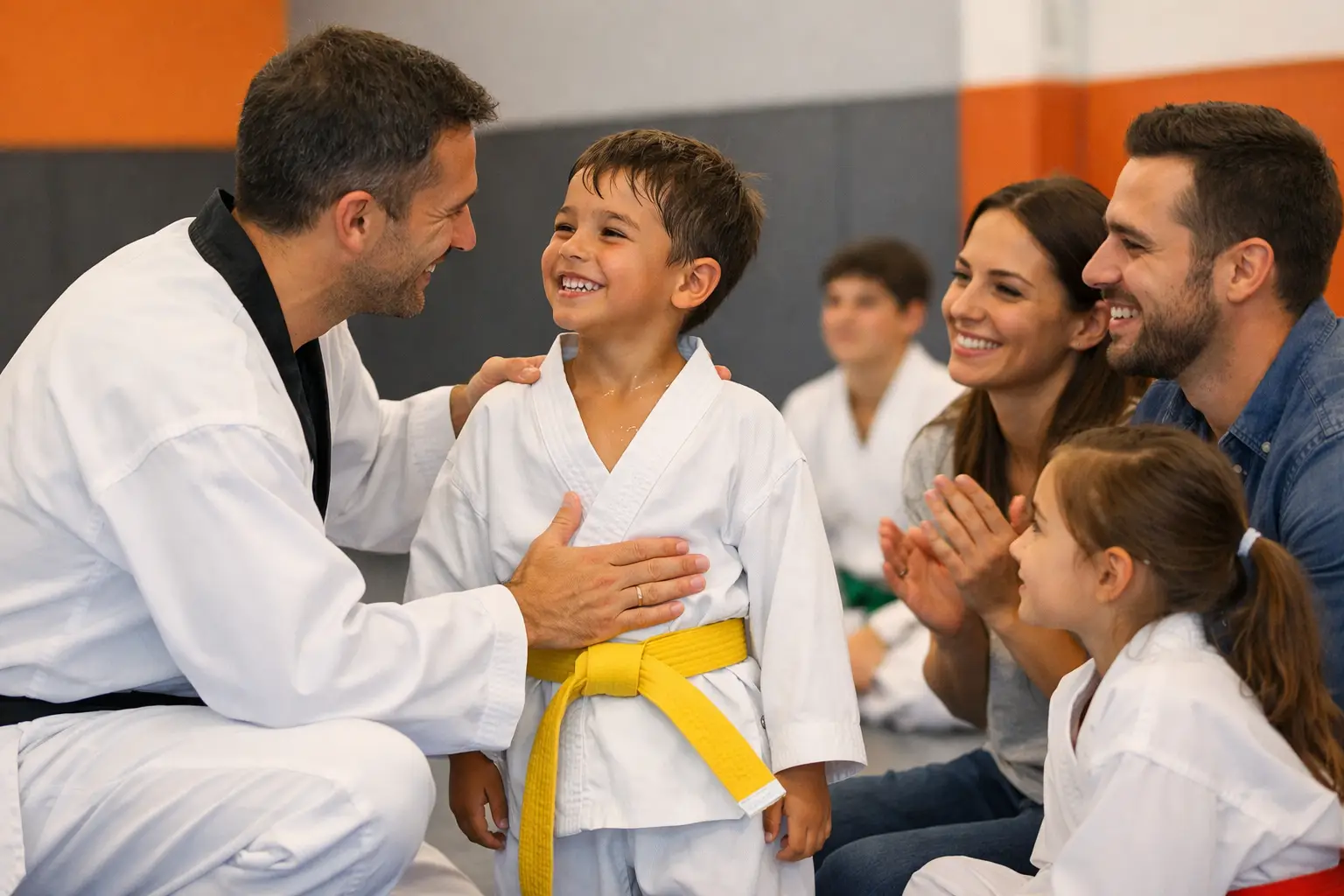
A lot of parents start searching for martial arts Cutler Bay after a hard week, not a perfect one. Maybe school has felt like a struggle. Maybe your child has plenty of energy but nowhere healthy to put it. Maybe you are not looking for another activity at all – you are looking for structure, consistency, and a place that can help your child grow without asking them to become someone else first.
That is usually the real question behind the search. Not, “Where can my child learn kicks and punches?” but, “Where can my child be challenged, guided, and believed in?” In a community like Cutler Bay, where families are balancing work, school schedules, and real everyday pressure, that difference matters.
What families really want from martial arts in Cutler Bay
Most parents are not searching for a flashy program. They are searching for change they can recognize at home. They want to see their child walk into a room with more confidence. They want mornings to feel less chaotic. They want their child to handle correction better, recover faster from frustration, and build the kind of self-control that carries into school, friendships, and family life.
That is why the best martial arts programs do more than teach technique. They create a routine kids can count on. They give students standards to rise to and adults who hold those standards with care. For some children, that means finally finding an outlet that matches their energy. For others, it means finding a place where they can come out of their shell and start believing they are capable.
The truth is, not every child walks in for the same reason. Some need confidence. Some need challenge. Some need consistency after school because their parents need a dependable plan that is doing more than simply filling time. A strong program can meet those different needs without treating kids like they all learn the same way.
How to evaluate martial arts Cutler Bay programs
If you are visiting programs, pay attention to what happens beyond the warm-up. The first thing to look for is structure. Kids do well when expectations are clear, routines are steady, and instructors know how to lead a room without constant chaos. A class can be energetic and still be organized.
Next, watch how instructors speak to students. Are they simply correcting technique, or are they coaching character in real time? Do they know when to push and when to encourage? Parents can usually tell within one visit whether a school is built around genuine development or just keeping everyone moving.
It also helps to look at the age groups and how they are taught. A five-year-old needs something very different from a middle school student. Younger children need classes that channel attention in short, purposeful bursts. Older kids often respond better when expectations rise and leadership is part of the experience. The strongest schools understand that progression and build around it.
Then there is the practical side, which matters more than many parents admit at first. If the schedule does not work, if transportation is a constant stress, or if the program creates more logistical pressure than it relieves, even a great class becomes hard to sustain. Consistency is where growth happens, so the right fit has to work for your family, not just look good for one trial lesson.
Why consistency changes more than talent does
Some children walk onto the mat naturally confident. Others do not. Some catch on quickly. Others need repetition, patience, and time. What matters most over the long run is not who starts strong. It is who keeps showing up.
That is one reason martial arts can become such a powerful part of a child’s week. It gives them a place to practice effort in a visible way. They learn that progress comes from returning, listening, trying again, and earning improvement one step at a time. For kids who are used to feeling behind, that can be a major shift.
Parents often notice the difference outside of class before they can describe exactly why. A child starts taking correction with less resistance. They carry themselves differently. They seem more settled. Not perfect, and not overnight, but steadier. Real growth usually looks like that – small changes that build into a different version of the same child.
More than an activity after school
For many families, the value of martial arts is not limited to class time. The hours after school can shape the whole mood of the household. When that part of the day feels rushed, unstructured, or inconsistent, it affects everything from homework to bedtime.
That is why afterschool martial arts can be so meaningful when it is done well. It gives children a productive transition between school and home. They are not just being watched. They are being led. They have a place to move, reset, and continue growing in an environment with clear expectations.
For working parents, this matters in a very real way. You need something dependable. You need to know your child is safe, engaged, and spending those hours in a program with purpose. In Cutler Bay, families often need more than a destination they drive to occasionally. They need something woven into real life, with the consistency to support both child development and the daily schedule.
The role of leadership in a kids martial arts program
Parents usually start by asking whether their child will gain confidence. That is a good question, but confidence by itself is not enough. What families really want is confidence with responsibility. The kind that helps a child speak up, stay composed, and make better choices when no one is standing right over them.
That is where leadership matters.
A meaningful martial arts program gives students chances to grow into responsibility, not just receive instruction. Younger kids begin by learning how to participate with intention. Older students can start modeling consistency, helping set the tone, and understanding that how they carry themselves affects others. Those moments matter because they teach children that growth is not only personal. It has impact.
In a family-centered school, leadership is not reserved for a few outspoken kids. It is built over time. Quiet students can become steady examples. High-energy students can learn how to direct that energy instead of being directed by it all day long. Kids who once needed constant reminders can become the ones who understand what is expected and rise to it.
What makes a program feel trustworthy
Trust is a big word for parents, but it usually comes down to simple things. Does the school feel consistent? Do the instructors seem invested? Does the environment feel like it was built with families in mind, not just enrollment numbers?
Parents can feel the difference when a program comes from lived experience. When the people leading it understand what it means to search for help, to want more for your child, and to keep showing up because the mission is personal. That kind of foundation changes the atmosphere. It creates a place where expectations are high, but support is real.
TUFF Martial Arts Academy was built from that kind of story – by a family who started on the mat for personal reasons, saw what martial arts could do for a child’s growth, and built something around serving other families with the same honesty they needed themselves. That matters because parents do not just want a program that sounds good. They want one they can believe in.
Choosing the right fit for your child
The best martial arts program for your child is not necessarily the loudest, the busiest, or the one promising the fastest visible result. It is the one where your child is seen clearly, challenged appropriately, and guided by people who know how to turn effort into growth.
Sometimes that means a child needs time to settle in. Sometimes it means a parent has to trust the process long enough to see small wins add up. And sometimes it means recognizing that the right environment can do more for a child than another short-term fix ever could.
If you are looking into martial arts in Cutler Bay, trust your instincts – but look deeper than surface impressions. Watch how the room is led. Notice how students respond. Pay attention to whether the program feels rooted in purpose.
Because the right place does not just teach children how to move. It helps them learn who they can become, one class at a time.