
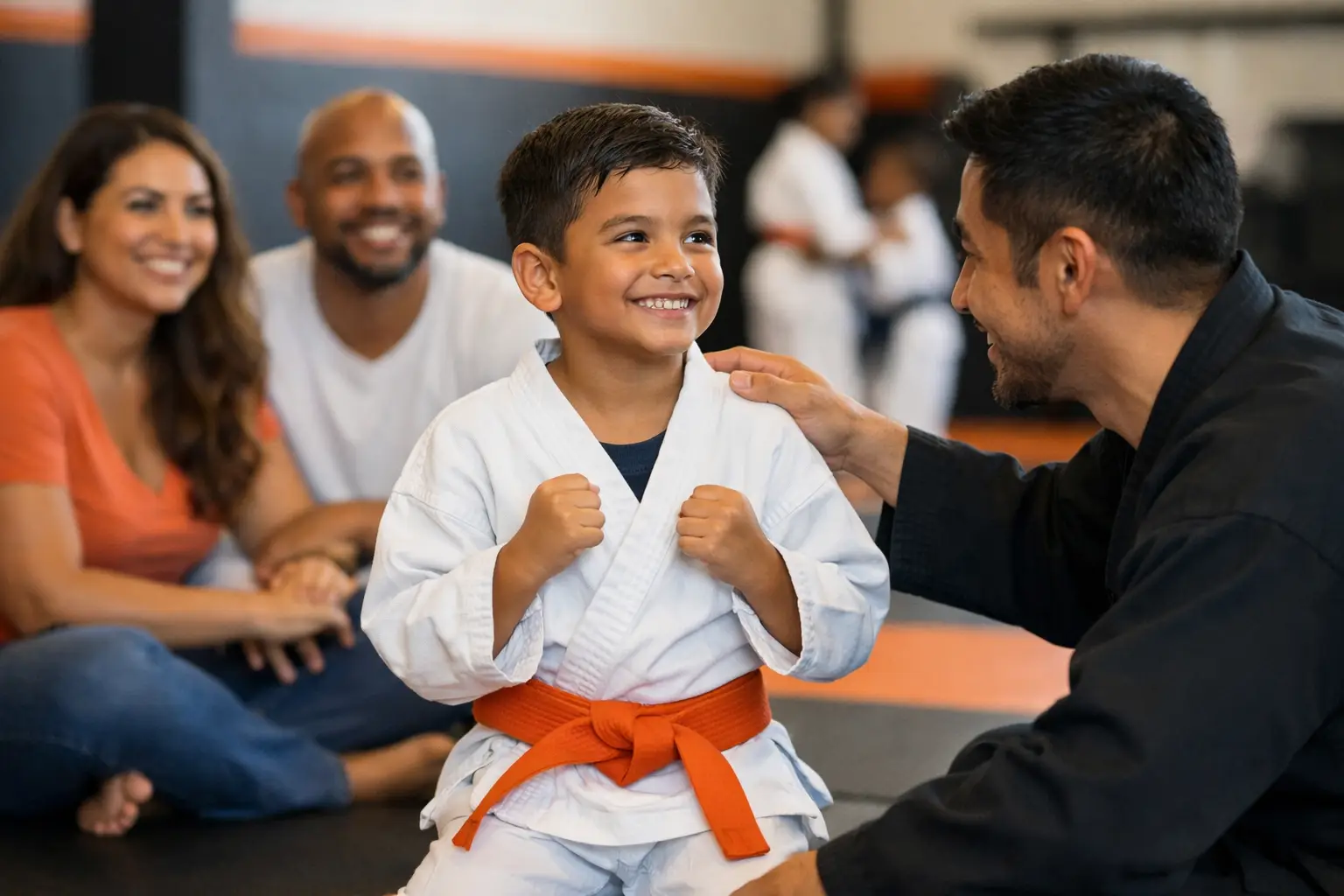
A lot of parents don’t start searching for martial arts because they want their child to throw a perfect kick. They start because home feels harder than it should. Mornings are a fight. Homework turns into a battle. A child who is bright, caring, and full of potential still struggles to listen, regulate emotions, or stay on track. That is usually where the conversation around martial arts for child discipline begins.
What parents are really asking is not, “Can my child learn to defend themselves?” It is, “Can my child learn to pause, follow through, and carry themselves differently when life gets frustrating?” That is a much deeper question, and it deserves an honest answer.
The short answer is yes – but not by magic, and not at every school.
Why martial arts for child discipline works differently
Discipline gets talked about like it is something adults hand to children. In real life, lasting discipline is something children build through repetition, accountability, and small wins that teach them they are capable of more than their impulses.
That is why martial arts can be so effective. A good class gives kids immediate structure. They line up. They listen for instruction. They wait their turn. They practice the same movement until it improves. They learn that effort matters, that correction is normal, and that progress comes from consistency.
For some children, especially those with a lot of energy or a hard time settling themselves, that kind of environment feels different from school and different from home. It is active, physical, and clear. Expectations are not vague. Kids know what is being asked of them, and they feel the result of meeting that standard.
Over time, that changes more than behavior during class. It can change how a child handles correction, how quickly they recover from frustration, and how they see themselves when something feels hard.
Child discipline is really about self-control
Most parents are not looking for stricter children. They are looking for children who can manage themselves.
That matters because punishment and discipline are not the same thing. Punishment can stop behavior in the moment. Self-discipline helps a child make a better choice even when no one is standing over them.
Martial arts supports that process because it connects actions to consequences in a way kids can understand. If they rush, the technique falls apart. If they stop paying attention, they miss the next instruction. If they stay steady, they improve. The lesson is not abstract. It is right there in front of them.
This is also why parents often notice changes outside the mat before they can explain exactly what changed. A child may start responding faster when called. They may become more coachable. They may not melt down as quickly when corrected. Those shifts usually come from repeated practice in staying composed, resetting, and trying again.
What to look for in martial arts for child discipline
Not every martial arts program builds the same kind of growth. Some are loud and flashy but thin on accountability. Others are so rigid that children shut down instead of developing confidence. The sweet spot is a program that combines warmth with standards.
Kids need instructors who can hold the line without humiliating them. They need consistency. They need routines that make sense. They need to be seen as individuals, not managed as a group. And they need expectations that rise with them over time.
A strong program does not just correct children when they mess up. It teaches them how to recover. That piece matters. Real discipline is not perfection. It is learning how to reset after a poor choice, refocus, and do better on the next attempt.
Parents should also pay attention to whether the program talks only about belts and achievements or whether it clearly values character, follow-through, and leadership. The right environment makes children feel proud of growth, not just rank.
When parents see the biggest changes
The biggest changes usually do not happen in the first class. They happen after a child has been asked, over and over, to show up with effort and carry responsibility in small ways.
At first, many kids are simply adjusting. They are learning how class works, how to listen in a new environment, and how to handle correction from an instructor they want to impress. Then something starts to shift. The routine becomes familiar. Their body starts to cooperate. Their confidence rises. Once that happens, children often become more open to guidance because they no longer feel like they are failing every time they are corrected.
That is a major reason martial arts can help with behavior at home. A child who has experienced earned progress starts to believe they can control more than they thought. That belief matters. Children who feel capable are often less reactive than children who feel constantly overwhelmed.
It is not instant, and it is not the same for every child. Some children respond quickly to structure. Others need time before they trust it. But growth built slowly tends to hold.
The parent’s role in child discipline through martial arts
This part gets missed too often. Martial arts can support child discipline, but it works best when parents and instructors are pulling in the same direction.
That does not mean parents need to become coaches at home. It means the language around effort, accountability, and follow-through should feel connected. If a child is learning to stand still, listen fully, and finish what they start in class, those same expectations should be reinforced at home in age-appropriate ways.
It also helps when parents measure the right things. Instead of asking only, “Did you win?” or “Did you get promoted?” ask, “Did you stay focused today?” “Did you keep trying when it got hard?” “Were you coachable?” Those questions teach a child what matters.
Children are incredibly quick at spotting mixed messages. If class teaches patience but home rewards shortcuts, progress gets muddy. But when both environments value consistency, children tend to grow faster and with more stability.
When martial arts helps – and when it depends
Parents deserve honesty here. Martial arts is not a switch you flip. It is a framework. The results depend on the child, the instructors, the consistency of attendance, and the support around them.
Some children come alive in structured movement right away. Others resist structure before they benefit from it. Some need a gentle introduction. Others need firm expectations from day one. Age matters too. A four-year-old and a twelve-year-old will show growth differently, and that is normal.
It also depends on what parents mean by discipline. If the goal is silent compliance, martial arts may not be the right lens. If the goal is stronger self-control, better follow-through, emotional steadiness, and growing confidence under pressure, then martial arts can be a powerful fit.
A healthy program does not try to erase a child’s personality. It helps shape that energy into something more productive. A strong-willed child does not need to become smaller. They need to learn how to channel that strength with control.
Martial arts for child discipline at home and school
The best sign that a program is working is not what happens during class. It is what starts happening in regular life.
Parents may notice fewer reminders are needed. Teachers may report better participation. A child may begin handling disappointment with less drama. None of that means they become a different person overnight. It means they are developing tools.
Those tools matter because childhood is full of moments that test self-control – transitions, correction, disappointment, peer pressure, boredom, responsibility. Martial arts gives children repeated practice in handling those moments with more maturity than they had before.
That is one reason families stay with programs that are built around development, not just activity. They are not only filling an hour after school. They are investing in the kind of habits that make everyday life more manageable and a child’s future more promising.
For many families in South Miami-Dade, that is the real value. They are not looking for noise, hype, or empty promises. They want a place where a child can be challenged, supported, and steadily shaped into someone who carries themselves with more control and confidence.
If you are considering martial arts for your child, look beyond the uniform and the excitement of the first class. Watch how instructors correct. Notice whether children are learning to respond, reset, and keep going. That is where lasting discipline starts – not in fear, but in practice, trust, and growth that a child can feel for themselves.