
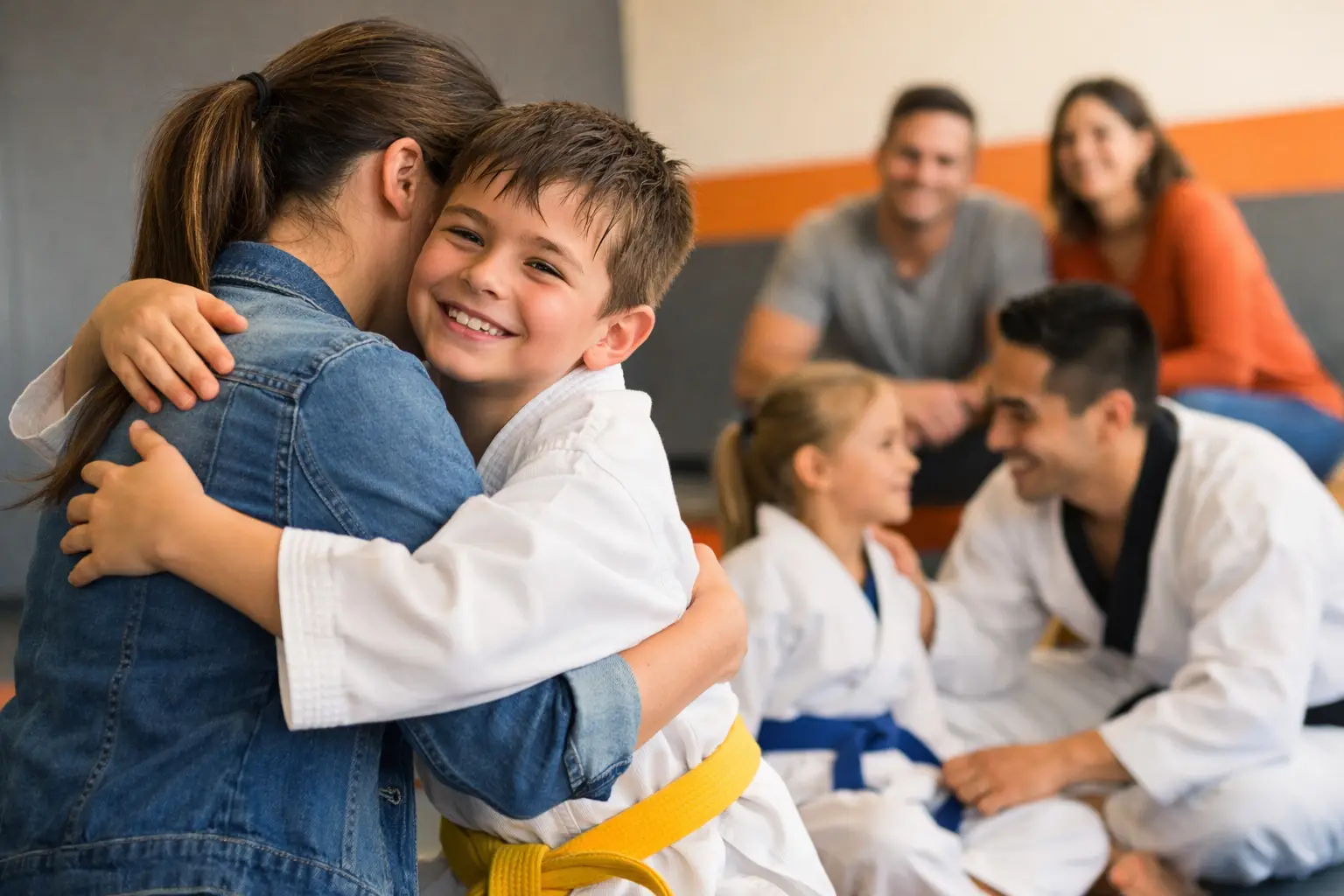
A child walking onto the mat after a long school day may arrive carrying more than a backpack. They may have extra energy, a hard day behind them, uncertainty around new people, or the feeling that they have not quite found their place yet. Thoughtful youth martial arts gives that energy somewhere purposeful to go. It offers children a clear routine, caring expectations, movement, and the chance to see themselves improve one small step at a time.
For parents, that matters because childhood is not a highlight reel. It is made up of rushed mornings, homework battles, changing friendships, busy work schedules, and the quiet hope that your child will grow into someone who can handle a hard moment without giving up. The right martial arts environment does not promise to solve every challenge. It can, however, become a steady place where children practice showing up, listening, trying again, and belonging to something bigger than themselves.
Why Youth Martial Arts Can Matter So Much
Martial arts is often viewed from the outside as kicking, punching, uniforms, and belts. Those pieces are real, and children enjoy them. But the lasting value usually comes from what happens between the techniques: waiting for instruction, taking a correction without shutting down, encouraging a teammate, and returning to a skill that did not work the first time.
Children need places where effort is visible. At school, progress can feel abstract or delayed. On the mat, a student can feel the difference when their stance is stronger, their balance improves, or they remember a sequence they once found confusing. That evidence builds a more grounded kind of confidence. It is not confidence based on being told they are great. It is confidence built through experience.
For a child who has a lot of energy or has trouble settling into unstructured time, the rhythm of class can be especially valuable. There is a beginning, a purpose, a challenge, and a finish. Coaches set the tone, but children are still expected to participate in their own growth. That combination of support and accountability is where real development begins.
The Best Programs Build Character in Real Moments
Words like discipline, respect, and focus are easy to print on a wall. They mean more when children have opportunities to practice them in real situations.
Respect might look like greeting an instructor, partnering carefully with another student, or learning that a smaller teammate deserves the same attention as the strongest athlete in the room. Focus might mean returning to the group after a distraction and hearing the next instruction. Discipline can be the decision to finish class with good effort even after a frustrating drill.
Those moments are not always neat. Children have off days. They may test boundaries, get discouraged, or need a reminder that their choices affect the group. A strong youth program does not shame them for that. It gives clear correction, follows through calmly, and lets them experience the value of making a better choice next time.
That is one reason parents should look beyond the surface of a class. A high-energy room is not automatically a positive room, and a quiet room is not automatically a productive one. Watch how instructors speak to students when they struggle. Notice whether children are known by name. Pay attention to whether the atmosphere feels organized, encouraging, and appropriately challenging.
Progress Should Be Earned, Not Rushed
Belts and rank can give children meaningful goals. They mark time, effort, skill development, and growing responsibility. But rank should never be the whole story.
When advancement is treated as something to collect, children can miss the deeper lesson: progress requires patience. A meaningful program helps students understand what they are working toward and why repetition matters. They learn that a setback is not proof they cannot do something. It is information about what to practice next.
This lesson carries well beyond training. A child who learns to stay engaged during a difficult drill is building a habit they can use in school, on a team, at home, and eventually at work. The skill itself matters, but so does the way they learn it.
Choosing Youth Martial Arts for Your Child
There is no single perfect activity for every child. Some children thrive in a larger, energetic group. Others need a smaller setting or a little more time to warm up. Age, temperament, schedule, and the quality of instruction all matter.
Start by asking what your family truly needs right now. Maybe your child needs an active outlet after sitting in school all day. Maybe they are looking for a community where they can make friends outside their classroom. Maybe you want an activity that asks something of them while still meeting them with patience.
Then look for a program with structure that fits the child’s age. Younger students need classes that use movement, simple directions, and frequent encouragement without expecting them to behave like teenagers. Older children need more ownership. They want to be challenged, trusted with responsibility, and recognized for the work they put in.
A good introductory experience should help you see more than whether your child can perform a technique on day one. Look for signs that they are engaged. Do they respond to the instructor? Do they leave feeling proud, curious, or eager to return? A child can be nervous at first and still be in the right place. The question is whether the environment helps them move through that nervousness with support.
The Instructor Relationship Is a Big Deal
Children often remember the adults who saw potential in them before they fully saw it in themselves. In martial arts, instructors can become important mentors because they consistently witness the student’s effort, setbacks, and growth.
That relationship should be built on more than praise. Children need adults who can celebrate a good day and also tell them, kindly and directly, when they need to reset. They need expectations that do not change based on mood. Over time, that consistency creates trust.
Parents should not be left out of that process. The healthiest programs treat families as partners. They communicate clearly, welcome questions, and understand that what happens on the mat is connected to the rest of a child’s life. A parent may notice more willingness to help at home, greater comfort speaking up, or a stronger ability to regroup after disappointment. Those changes often begin quietly.
Competition Has a Place, But It Is Not the Point
For students who enjoy competition, events can offer a valuable challenge. Preparing for an event asks a child to train with intention, manage nerves, and perform in front of others. Winning can feel exciting. Losing can be difficult. Both experiences can teach something when adults keep the perspective right.
The goal is not to build a child who believes their worth rises and falls with a medal. The goal is to help them become an athlete and teammate who can prepare fully, compete with character, and learn from the result. Some children will love that environment. Others may find their confidence grows more in regular class, leadership opportunities, or helping newer students. Both paths are valid.
A Place That Supports the Whole Family
For working parents, the practical side matters too. An afterschool program is not just a line on the calendar. It is the answer to a real question: Where will my child go between dismissal and the end of my workday, and who will they become while they are there?
When transportation, supervision, homework time, physical activity, and purposeful instruction are thoughtfully connected, parents gain more than convenience. They gain peace of mind. In South Miami-Dade, TUFF Martial Arts Academy has built its youth programming around that reality, including transportation routes that help families access a structured place after school.
The goal is not to fill every hour with activity. Children need room to breathe, connect, move, and be guided. The best programs understand that dependable care and meaningful development belong together.
Growth Is Often Quieter Than You Expect
Not every milestone comes with applause. Sometimes growth is a child walking into class without needing a parent at their side. Sometimes it is taking a deep breath after a mistake instead of melting down. Sometimes it is choosing to help a newer student, finishing a hard drill, or telling you in the car that they want to try again tomorrow.
Those are the moments worth watching for. Youth martial arts can give children a strong foundation not because it makes life easy, but because it gives them repeated chances to meet challenges with courage, guidance, and a community that believes they can grow. For a parent, that may be the most meaningful outcome of all.