
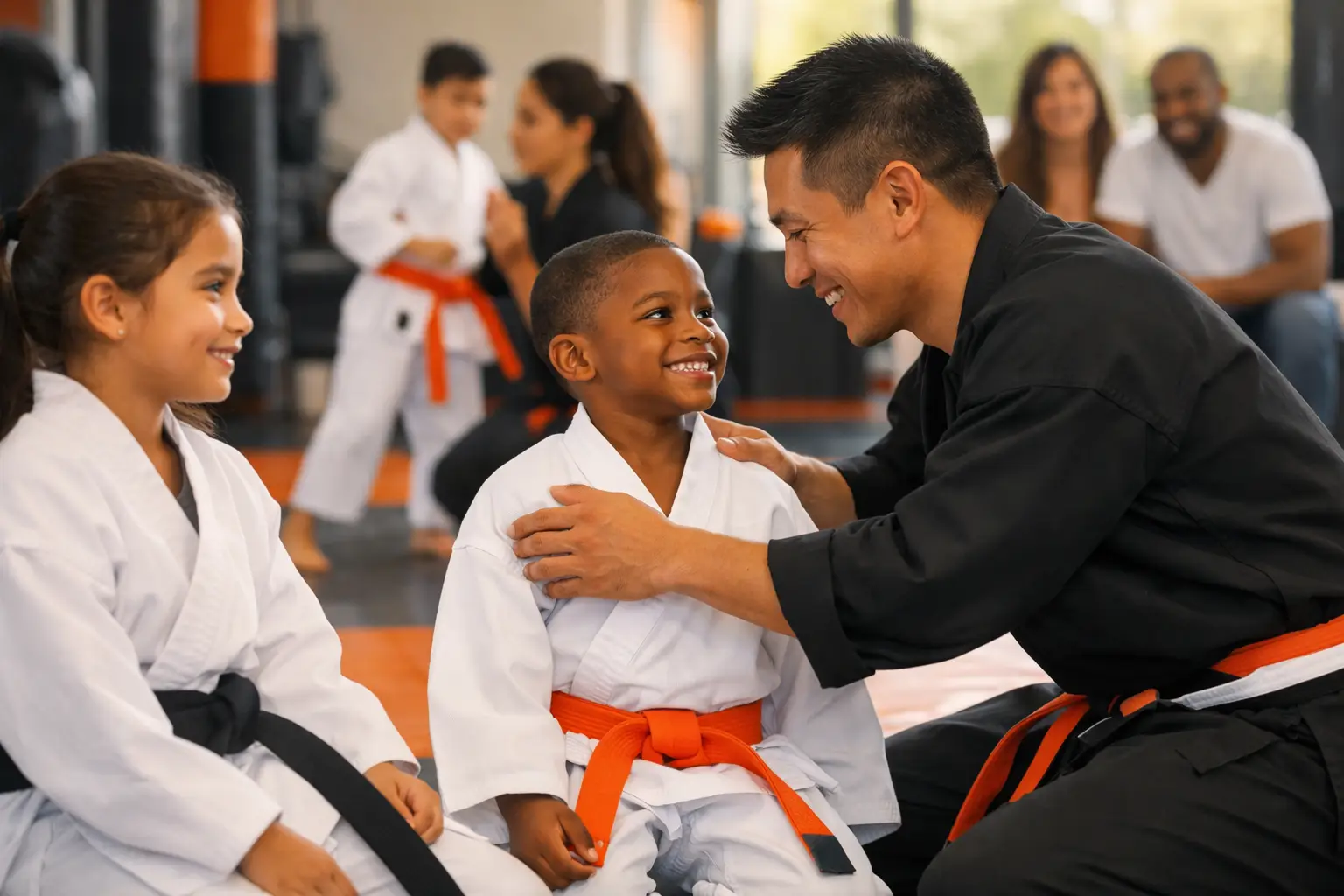
Summer has a way of exposing what the school year was covering up. A child who does fine with a bell schedule, classroom routines, and constant structure can start to unravel once the days get wide open. For parents, that often looks like too much screen time, too much energy with nowhere to put it, and too many hours trying to piece together care that actually helps their child grow. That is exactly why a summer camp martial arts program can make such a difference.
For some families, summer camp is mostly about coverage. You need your child somewhere safe, active, and supervised while you work. That matters, and there is nothing small about it. But the best camps do more than fill hours. They give kids a rhythm to their day, people who know their name, and a setting where growth happens almost by accident because the environment is built for it.
What makes a summer camp martial arts program different
Not every camp is built the same, even if the flyer makes them look similar. Some keep kids busy. A few help kids change. A summer camp martial arts program stands out because it brings structure without making the day feel stiff.
Kids move, train, play, reset, and start again. That pattern matters. It gives children a chance to burn energy in a healthy way while learning how to handle frustration, follow direction, and stay with something when it gets challenging. Those are not abstract life lessons. They show up when a child loses a game and recovers better, when they listen the first time, or when they walk into a room with a little more confidence than they had in June.
Martial arts also creates a kind of accountability that many summer activities do not. A child is not just being entertained. They are being asked to participate. To pay attention. To keep trying. To work with others. To take ownership of their effort. For many parents, that is the difference between a camp their child attends and a camp that actually leaves a mark.
Why summer is the right time for this kind of growth
During the school year, children are balancing academics, homework, family schedules, and plain exhaustion. Summer gives them space. That space can either become drift or development.
When kids step into a martial arts camp setting, they are not carrying the same academic pressure they feel from August through May. That often makes them more open to coaching and more willing to try something that stretches them. A child who resists correction in one environment may accept it more easily in another when the room feels active, encouraging, and consistent.
This is also the season when parents tend to notice what their child really needs. Some kids need more movement. Some need stronger routines. Some need help building confidence in social settings. Others simply need a place where adults expect something from them and believe they can meet that expectation. Summer is a good time to build those habits before the school year starts again.
A better fit for kids who need movement and structure
Some children do not do well with long, unstructured days. That does not mean anything is wrong with them. It usually means they need a setting that gives their energy somewhere productive to go.
Martial arts camp works well for those children because it combines physical activity with clear expectations. They are not just told to sit still. They are shown when to move, when to listen, when to lead, and when to reset. That rhythm can be a relief for kids who struggle when every day feels random.
Parents who have watched their child bounce from activity to activity often recognize the difference quickly. A strong program does not expect perfection. It expects participation, effort, and progress. That makes the environment supportive without becoming loose or chaotic.
What parents should look for in a summer camp martial arts program
The first thing to look for is not a flashy schedule. It is the feeling of the room. Are the instructors engaged, present, and paying attention to the kids in front of them? Do they know how to be warm and clear at the same time? Do they create a culture where children are encouraged without being coddled?
The next thing is consistency. A good camp day should have a strong rhythm. Kids need to know what is expected, what comes next, and who is leading them. Structure helps children settle in faster, and it helps parents feel more confident that the program is built with purpose.
You should also look at what the camp is really trying to produce. Some programs focus mostly on filling time with activities. Others are intentional about helping kids grow in character, confidence, and personal responsibility. That difference matters more than the brochure language.
Practical details matter too. Hours, supervision, cleanliness, communication, and staff reliability all affect whether a camp works for your family. For working parents, dependable coverage is not separate from quality. It is part of quality.
The value goes beyond the camp day
One of the biggest benefits of martial arts camp is that parents often see the results at home. Not all at once, and not in a perfect straight line. But over time, many children begin to carry themselves differently.
They may become more willing to stick with hard things. They may handle correction with less resistance. They may show more maturity with siblings or more composure in public. Sometimes the change is subtle at first. A little more self-control. A little less quitting. A little more pride in doing things well.
That is what families are really looking for when they sign up for a meaningful summer experience. Not just occupied time, but growth they can feel long after the camp week ends.
Why the right instructors matter more than the activity itself
Any activity can sound good on paper. What changes a child is the quality of the adults leading it.
A strong camp instructor knows how to read a room. They know when a child needs encouragement, when they need a firmer boundary, and when they simply need another chance to get it right. They understand that children are not all walking in with the same confidence, maturity, or home routine. That kind of leadership cannot be faked.
This is one reason families often gravitate toward programs built by people who understand the parenting side too. When the adults leading the program have walked through real family challenges themselves, they tend to communicate differently. They are less interested in empty promises and more interested in steady results.
That has been part of the heartbeat behind TUFF Martial Arts from the beginning. It was built by a family who did not start with a business idea. They started with a child, a need, and a belief that the right environment can help young people grow into stronger versions of themselves.
Summer support for parents matters too
Parents carry a lot during the summer. You are managing work, transportation, meals, schedule changes, and the constant question of whether your child is spending their time in a way that is helping or hurting them. A good camp should lighten that load, not add to it.
That means clear communication, dependable routines, and a team you trust to take your child seriously. It means knowing your child is not just being watched, but guided. For many families, that peace of mind is every bit as valuable as the martial arts training itself.
And if you are trying to choose between a camp that is just fun and one that is actually formative, it helps to ask a simple question: when summer ends, who do I want my child to be?
More confident? More responsible? Better able to handle challenge? More connected to positive mentors and peers? If those are the goals, then the right camp should be built around more than entertainment.
A summer camp martial arts program is not magic, and it is not one-size-fits-all. But for many families, it offers something rare – a place where kids can move, grow, be challenged, and be supported all in the same day. And sometimes that kind of summer is exactly what sets up a better school year, a stronger child, and a more hopeful parent.