
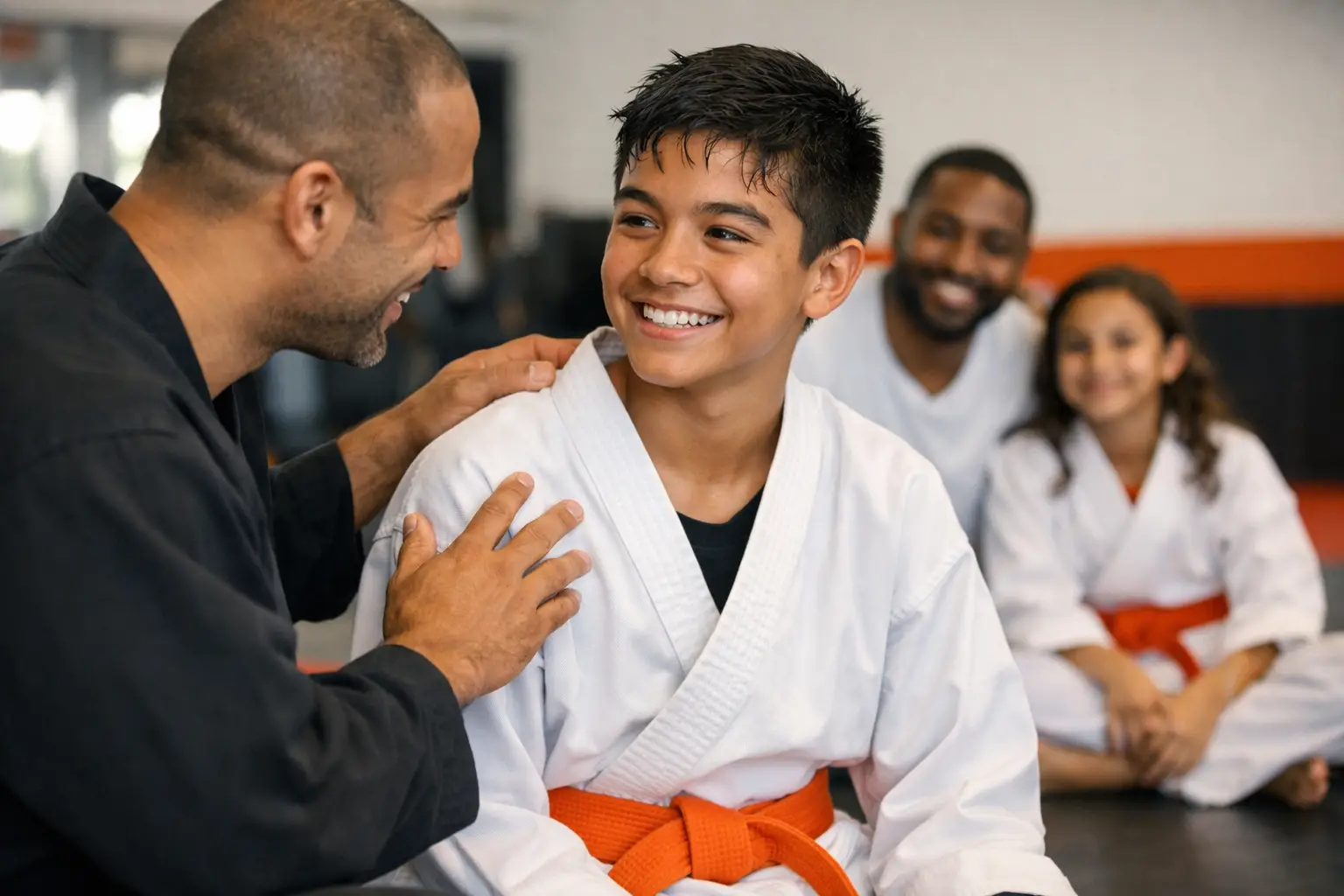
Confidence issues in the teen years rarely look simple. Sometimes it shows up as staying quiet when they have something to say. Sometimes it looks like attitude, withdrawal, quitting too fast, or acting tougher than they feel. That is why martial arts confidence for teens matters so much – real confidence is not about becoming louder. It is about helping a young person feel steady in their own skin.
Parents usually know when something is off. A teen may be capable, smart, and full of potential, but still hesitate in social situations, avoid challenge, or shut down when things get hard. School can help academically. Sports can help physically. But many families are looking for something that builds the whole person. That is where martial arts can make a real difference when it is taught with structure, consistency, and care.
Why martial arts confidence for teens works differently
A lot of teenage confidence advice sounds good on paper and falls apart in real life. Telling a teen to believe in themselves does not give them a reason to. Confidence grows when they do hard things, survive the discomfort, and realize they can handle more than they thought.
Martial arts gives teens that experience over and over again. They walk into class uncertain, practice skills that feel awkward at first, get corrected, improve, and eventually perform with more control. That process matters more than any motivational speech. It gives confidence a foundation.
This is also why martial arts tends to help teens who are very different from each other. The shy teen benefits from having a safe place to speak up, move, and take up space. The teen with too much energy benefits from having that energy directed instead of constantly being told to calm down. The teen who gets discouraged easily learns that progress is usually earned one repetition at a time.
None of that happens overnight. And that is actually the point. Quick confidence is usually fragile. Confidence built through repeated effort tends to stay.
What real confidence looks like in teenagers
Parents often picture confidence as outgoing behavior, but that is only one version of it. Some confident teens are social and expressive. Others are quiet, thoughtful, and still completely secure in themselves.
A stronger sign of confidence is how a teen handles pressure. Can they take correction without falling apart? Can they try again after a mistake? Can they walk into a new room without needing immediate approval from everybody in it? Can they keep their composure when something feels uncomfortable?
Martial arts helps develop those traits because class naturally includes challenge, feedback, and moments of discomfort. A teen may not enjoy every second of training, especially at first. But learning to stay present through difficulty is part of what changes them.
That is an important distinction for parents. The goal is not to create a teenager who never feels nervous. The goal is to help them become someone who knows nervousness does not have to stop them.
Confidence is built through competence
Teens are old enough to tell when praise is empty. If adults say, “Great job” no matter what happened, it stops meaning much. But when they can feel themselves getting stronger, sharper, and more capable, confidence becomes believable.
Martial arts gives them clear evidence of growth. Their stance improves. Their timing improves. Their reactions improve. They remember combinations they once struggled with. They handle partner work better than they did a month ago. These are small wins, but teens need those. Small wins stack up into a different self-image.
The role of structure in martial arts confidence for teens
Teenagers may push against structure, but most of them need it more than they want to admit. A good martial arts class creates expectations that are clear without being harsh. Show up. Be coachable. Stay engaged. Finish what you start.
For teens who feel scattered, discouraged, or stuck, that kind of environment can be grounding. They are not left guessing what matters. They know what is expected, and they have regular chances to meet the standard.
This can be especially meaningful for parents who have tried other activities that were too casual to create change. Confidence usually does not grow in environments where teens can hide in the background indefinitely. It grows where they are seen, challenged, and supported.
That support matters just as much as the challenge. If the room is all pressure and no encouragement, some teens shut down. If it is all encouragement and no expectations, they do not change much. The right balance is where growth happens.
Not every teen grows confidence the same way
This is one of the biggest things parents should know. Some teens respond quickly to the physical side of martial arts. They like movement, sweat, repetition, and visible progress. Others connect more with the mental side – routine, accountability, and learning how to stay composed.
A teen who has had a hard time finding their place may need months before you see obvious changes. Another may seem different after a few weeks. It depends on personality, consistency, and what they are carrying when they walk through the door.
That does not mean one child is getting more out of training than another. It just means confidence is personal. For some teens, the first win is speaking up louder. For others, it is staying calm when corrected or not giving up after a hard class.
What parents may notice first
The first signs of growth are not always dramatic. Many parents expect a sudden transformation and miss the quieter shifts that come first.
You may notice your teen stands differently. They make better eye contact. They recover from frustration faster. They stop arguing with every correction. They become more willing to try something new without insisting they will fail before they begin.
At home, that can look like more follow-through, a steadier attitude, or a little more maturity in stressful moments. At school, it may show up as participating more, speaking with more certainty, or carrying themselves with less self-consciousness.
The change is often subtle before it is obvious. But once it starts, it tends to affect more than class.
Why challenge matters more than hype
Teens hear a lot of messages about confidence. Much of it centers on feeling good, thinking positive, or ignoring what others think. There is some truth in that, but it is incomplete.
A teen who has never had to push through difficulty usually knows it. Deep down, they are not looking for hype. They are looking for proof. They want to know they can handle pressure, effort, and setbacks without falling apart.
Martial arts gives them that proof in a real-world way. Not because it is magic, and not because every class is life-changing, but because consistent training asks something of them. It asks them to pay attention, stay coachable, and keep showing up.
That is where confidence starts to become durable. It is not based on mood. It is based on evidence.
Choosing a program that actually helps
Not every teen needs the same environment. Some need patient encouragement to come out of their shell. Some need stronger accountability. Some need a place where they can be challenged without being embarrassed. Parents know their child best, and that instinct matters.
Look for a program that sees teens as young people in development, not just students moving through drills. The strongest programs understand that what happens on the mat should carry into the rest of life. Progress should feel earned. Instruction should be clear. Expectations should be steady. And the culture should make teens want to rise, not just blend in.
That is part of why family-centered schools tend to matter so much. When the people leading the room understand what parents are really worried about, the conversation changes. It is not about selling an activity. It is about helping a teenager grow into someone more grounded, capable, and ready for what comes next.
At TUFF Martial Arts, that belief has always been personal. It was built by a family who understands what it feels like to search for an outlet that can truly shape a child, not just keep them busy for an hour.
The long-term value of confidence built on effort
Teen confidence gets tested constantly. Friendships change. School gets harder. Social pressure increases. The stakes feel bigger, even when adults know some of those moments will pass.
A teen who has learned to work through discomfort, accept coaching, and trust their own effort carries that with them into all of it. They may still have hard days. They may still feel unsure sometimes. But they are less likely to crumble when life gets demanding.
That kind of confidence is worth more than a temporary boost. It helps teens speak up, recover faster, and keep going when things do not come easy. For parents, that is often the real goal – not raising a fearless teenager, but raising one who knows they can face what is in front of them.
And sometimes that growth begins in a simple way: one class, one challenge, one moment where they realize they are stronger than they thought.