
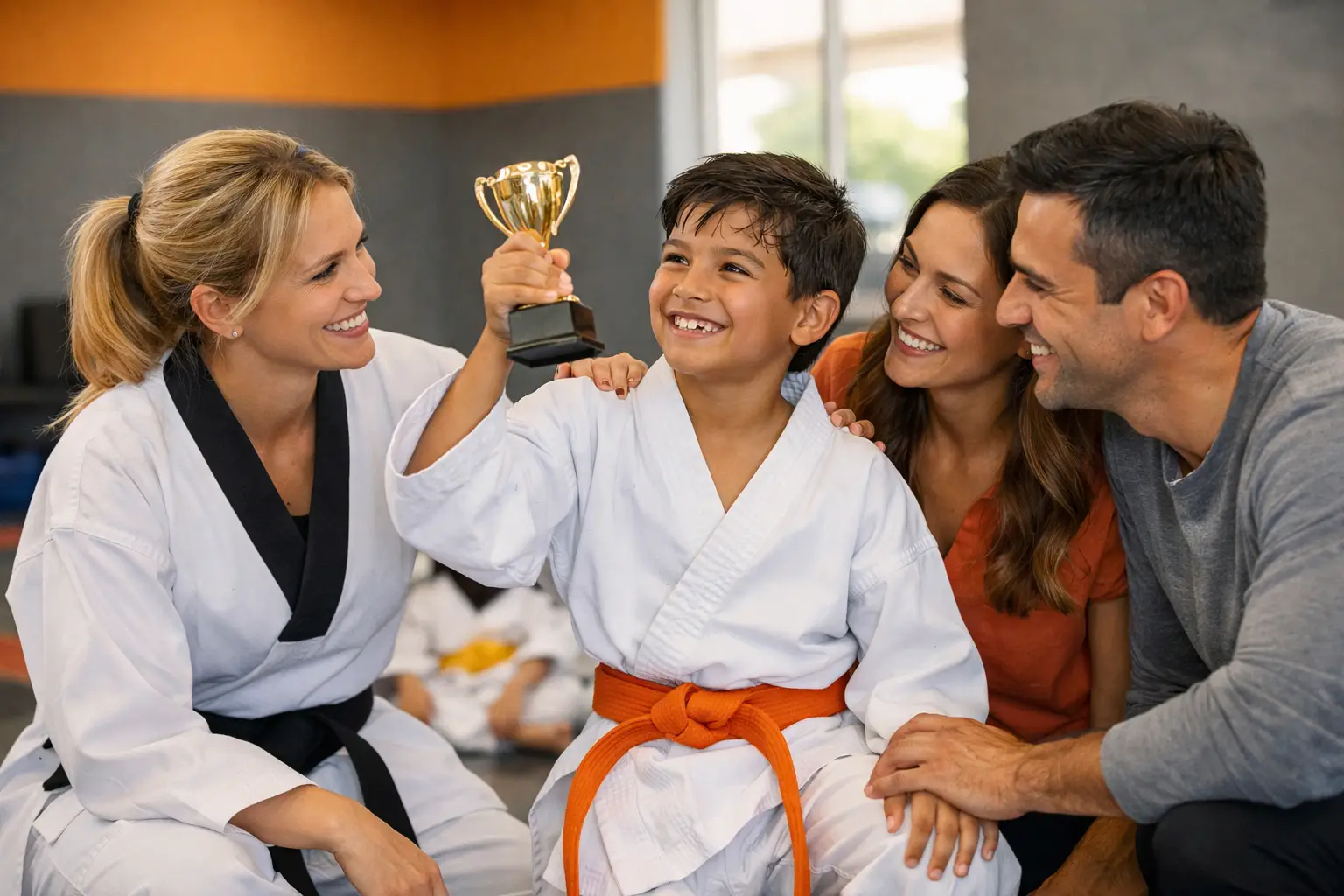
A child does not become a leader because someone gives them a title, a shirt, or a role for one afternoon. Leadership shows up in smaller moments first: carrying themselves calmly after a hard day, following through when no one is watching, helping a newer student feel included, and choosing to try again after a mistake.
That is what parents should look for in youth leadership programs Homestead families can genuinely count on. The right program does more than fill time after school. It gives children a consistent place to practice responsibility, confidence, communication, and perseverance with adults who know their names and expect their best.
For many parents, the search starts with a problem that feels familiar. Maybe school calls have become too common. Maybe your child has energy that spills into every part of the evening. Maybe they are capable but hesitant, bright but easily discouraged, social but unsure of themselves. Or maybe everything is going fine, and you want to give them a stronger foundation before the teenage years arrive.
A meaningful leadership program does not promise to change a child overnight. It creates the daily conditions where growth can take hold.
What Youth Leadership Should Look Like in Real Life
Leadership is often described in big words, but children learn it through repetition. They learn to lead when they arrive prepared, listen with purpose, finish what they start, and understand that their choices affect the people around them.
A quality program gives those lessons somewhere to live. It is not a one-time speech about good character. It is a routine where children are expected to greet instructors, participate even when they feel nervous, recover from correction, and contribute to a group. Over time, those experiences can change how a child sees themselves.
The goal is not to make every child loud or outgoing. Some young leaders are the first to volunteer. Others become the steady student who notices when someone is struggling, helps without being asked, and sets an example through their actions. Both matter.
Confidence Built Through Evidence
Parents can usually tell when confidence is real. It is not just a child saying, “I’m the best.” It is a child who is more willing to speak up, try a new task, handle feedback, or walk into an unfamiliar room without shutting down.
That kind of confidence comes from evidence. A child works at something difficult, receives clear guidance, improves, and realizes they can do hard things. It cannot be handed out with praise alone.
In a structured martial arts setting, students have regular opportunities to see progress. They may learn a sequence they thought was too challenging, assist a younger classmate, or stand in front of peers to demonstrate a skill. Each moment is small on its own. Together, they help a child build a more dependable belief in themselves.
Accountability Without Shame
Children need adults who hold the line and still make them feel safe. That balance is especially valuable for kids who have had difficult days at school or who are still learning how to manage big emotions.
A leadership-centered environment should correct behavior clearly, not embarrass the child. It should help students understand what happened, what choice they can make next time, and how to repair the moment. Being accountable is not about making a child feel small. It is about teaching them that they have the ability to make a better next choice.
This is where consistency matters. One inspiring instructor can make an impression. A team of adults who shows up with the same expectations week after week can help shape habits.
Why Structure Matters After the School Bell
The hours after school can set the tone for the entire household. Working parents need to know their children are not just supervised, but engaged in an environment that has purpose. Children need a transition between the demands of school and the pressures of home.
The best youth leadership programs in Homestead make that time count. They create a predictable rhythm: arrival, homework support when needed, movement, instruction, responsibility, and connection with peers. Predictability is not boring for children. Often, it is what helps them settle in and succeed.
For a child with excess energy or trouble staying engaged, purposeful movement can be especially valuable. Martial arts gave one TUFF Martial Arts Academy founder’s son an outlet when their family was looking for one. His father trained beside him, earned his own black belt, and eventually built a mission around giving other children a place to grow. That history matters because it was never built around a marketing idea. It began with a parent trying to help his own child find a better path forward.
Not every child needs the same level of structure. Some thrive in a full afterschool routine, while others benefit most from a few focused classes each week. The right fit depends on your family’s schedule, your child’s needs, and whether the program has the consistency to support both.
Questions Parents Should Ask Before Enrolling
A tour can tell you a lot, but parents should look past the equipment, uniforms, and first impressions. Ask what leadership means in that particular program. If the answer is vague, the experience may be vague too.
You might ask how instructors handle a child who is frustrated or unwilling to participate. Ask how children earn increased responsibility. Ask whether older students are taught to support younger ones, and how staff communicates with families when there is a concern or a breakthrough worth sharing.
Also ask what a typical afternoon looks like. A dependable program should be able to explain its routine clearly. Working families deserve more than last-minute changes and unclear expectations, especially when transportation, homework, dinner, and bedtime all depend on the afternoon going smoothly.
Look for adults who speak about children with care and honesty. No child needs to be labeled as a problem. At the same time, parents should not be sold a fantasy. Growth takes time, and every child will have strong days and difficult ones. A trustworthy program recognizes both and stays committed.
Leadership Is Learned in Community
Children are shaped by the people around them. When they are surrounded by peers who are expected to show up, work through challenges, and treat one another with care, those expectations become part of the culture.
That is also why family involvement matters. Parents do not need to become martial arts experts or attend every class. But children benefit when the adults in their lives notice effort, ask about their day, and reinforce the values being practiced on the mat.
A simple question can go a long way: “What was hard today, and what did you do about it?” That question shifts the conversation away from whether they won or lost, earned something quickly, or looked impressive. It invites children to reflect on how they responded.
For competition-minded students, leadership matters just as much. Competition can teach composure, preparation, and humility when it is kept in the right place. A medal may mark a strong performance, but character is revealed in how a student trains before the event, treats teammates afterward, and responds when the result is not what they wanted.
A Better Measure of Progress
Parents often enroll because they want a change they can feel at home. They want fewer battles over routines, more willingness to take responsibility, and a child who can carry themselves with greater confidence.
Those changes may not arrive in a straight line. Your child may have a great week followed by a rough one. They may become more aware of their mistakes before they become more consistent in correcting them. That is not failure. It is often part of learning.
The strongest youth leadership programs give children room to grow without lowering the standard. They remind students that being a leader is not about being perfect. It is about being teachable, dependable, and willing to keep showing up.
When your child finds a place where those expectations are lived every day, leadership stops being an abstract goal. It becomes something they practice on the mat, carry into school, and bring home to the people who believe in them most.