
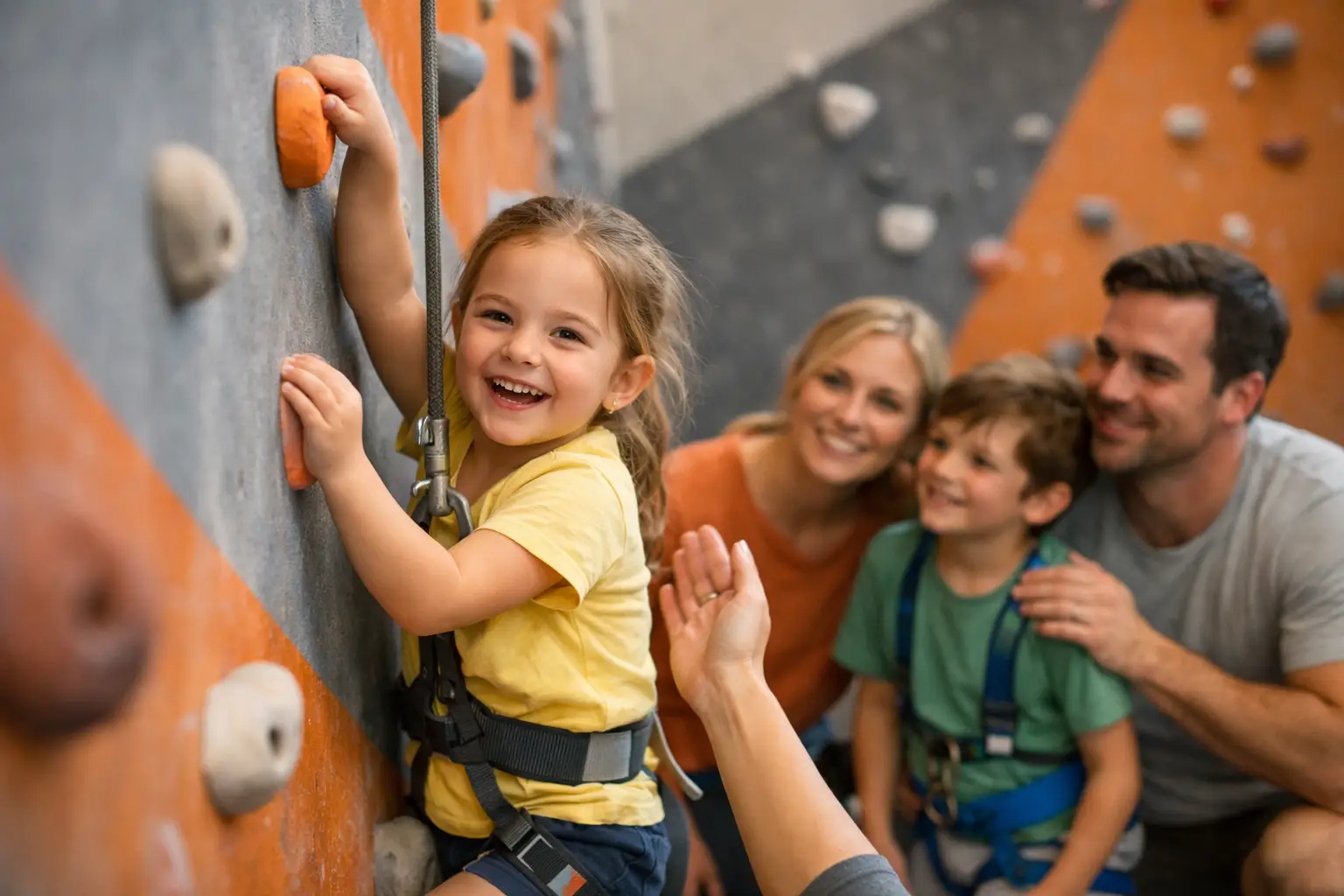
A child misses the target, loses their place in line, gets corrected in front of the group, or has to try a movement again after it did not work. Those small moments can feel big to a parent watching from the side. But they are also where how kids build resilience becomes real: not through a speech about being tough, but through safe, repeated chances to recover, adjust, and keep going.
Resilience is not about raising a child who never gets upset. It is about helping them learn that frustration does not have to be the end of the story. A resilient child can feel disappointed, take a breath, accept help when needed, and return to the challenge with a little more experience than before.
What Resilience Looks Like in Everyday Life
Parents often picture resilience as something needed for a major setback. In reality, it usually grows in ordinary moments. It is the child who comes back to finish homework after a hard start. It is the student who hears a correction without shutting down. It is the teammate who loses a round, congratulates the other person, and asks what to work on next.
This does not mean children should be expected to handle every hard moment alone. Their age, temperament, and current stress level matter. A five-year-old may need a calm adult to help name what happened before they can try again. An older child may need space first, then a conversation. The goal is not to rush past feelings. The goal is to show children that feelings can move through them without controlling every next step.
Resilience also should not be confused with silence or compliance. A child can speak up, ask for clarification, and still be resilient. In fact, learning to ask for help appropriately is part of learning how to meet a challenge instead of avoiding it.
How Kids Build Resilience: Repetition Before Results
Confidence built only on easy wins is fragile. When the work gets difficult, that confidence can disappear quickly. Confidence built through practice is different. It has evidence behind it: “I did not know how to do this at first. I stayed with it. Now I can do more than I could before.”
That is why healthy challenge matters. Children need opportunities that are demanding enough to require effort but not so overwhelming that they feel defeated before they begin. The sweet spot looks different for every child. One may need to practice taking a correction without tears. Another may need to learn how to slow down and follow a sequence. Another may need the courage to step onto the mat, field, stage, or classroom floor for the first time.
The lesson is rarely learned in one big breakthrough. It is built through repetition. Show up. Listen. Try. Miss it. Reset. Try again. Over time, the child begins to recognize the pattern. A hard beginning does not predict a bad ending.
Adults can reinforce that pattern by noticing effort with specifics. Instead of saying, “You’re amazing,” try, “You got frustrated, but you took a breath and finished the last two rounds.” Instead of, “You’re a natural,” say, “You kept practicing that sequence even when it felt awkward.” Specific feedback teaches children which choices helped them move forward.
Let Small Setbacks Do Their Job
It is hard to watch your child struggle, especially when you know you could make the moment easier. Sometimes you should. Children need support, safety, and adults who can tell the difference between productive discomfort and genuine distress.
But solving every small problem for them can send an unintended message: “You cannot handle this.” Resilience grows when children are allowed to carry an age-appropriate share of the work. That might mean packing their gear after a reminder, speaking to an instructor about a missed item, or returning to an activity after a mistake.
A useful question is, “What is the smallest next step you can take?” It keeps the challenge manageable. A child does not have to love the correction, the loss, or the difficult task. They only need to learn what to do next.
For parents, this may require a little patience. Progress is not always neat. A child may handle a setback well one week and melt down over something smaller the next. That does not erase growth. Children are still learning how to regulate themselves, read situations, and use the tools they have practiced. Consistency from the adults around them matters more than a perfect response every time.
Why Structure Gives Children Something to Lean On
Children are more likely to take healthy risks when the environment feels predictable. They need to know what is expected, what happens when they make a mistake, and that correction does not mean rejection.
A consistent routine creates that foundation. At home, it may be a clear after-school rhythm: snack, unpack, begin the first task, then relax. In a youth program, it may be lining up, listening for instructions, working through a lesson, and ending with reflection. The routine itself is not magic. Its value is that children do not have to spend all their energy guessing what comes next.
Clear expectations also make accountability feel fair. If a child forgets something, interrupts, or gives up too quickly, the response should be calm and connected to the behavior. Shame does not teach resilience. Neither does pretending the moment did not happen. Children grow when they understand, “That choice had an effect, and I can make a better choice next time.”
This is especially meaningful for families managing busy workdays and full schedules. A dependable after-school environment can give a child more than supervision. It can give them a place where the expectations stay steady, the adults know their name, and every day includes another chance to practice responsibility.
What Martial Arts Can Teach Beyond a Class
Martial arts offers a practical setting for this kind of growth because the feedback is immediate. A stance either feels balanced or it does not. A sequence takes practice to remember. A partner requires awareness and control. Students are asked to pay attention to their own choices while being part of a group.
The mat also gives children a contained place to experience challenge. They may not get a technique right the first time. They may be corrected. They may watch another student progress at a different pace. With the right instruction, none of those experiences becomes a label about what the child is capable of. They become information: here is what to practice next.
At TUFF Martial Arts Academy, that is the work families have seen over years of showing up. The aim is not to produce children who are never nervous or never disappointed. It is to give them a steady place to practice responding when those feelings show up. A child who learns to reset after a difficult drill has practiced a skill they can carry into school, friendships, responsibilities, and future goals.
Competition can offer another layer of learning for students who are ready for it. It can teach preparation, composure, and how to handle a result with character. Still, competition is not the only measure of progress. For one child, growth may mean stepping forward with confidence. For another, it may mean listening through an entire lesson, returning after a tough day, or becoming the teammate who encourages someone else.
The Words Children Carry With Them
The language adults use becomes part of a child’s inner voice. When a child says, “I can’t do this,” it helps to avoid arguing them out of the feeling. Try adding one word: “You can’t do this yet.” Then bring the focus back to the next attempt.
It also helps to separate identity from performance. “That was a hard class” is different from “You are bad at this.” “You made a poor choice” is different from “You are a problem.” Children need to know they are valued while also learning that their actions matter.
At home, ask questions that make room for reflection. “What was hard today?” “What helped you keep going?” “What would you try differently next time?” These questions are more useful than immediately asking whether they won. They teach children to look for growth they can control.
The strongest message a child can receive is not that life will always be easy. It is that they will not have to face every hard thing alone, and that they are capable of taking the next step. Give them a safe place to struggle, a clear expectation to return, and adults who notice their effort. That is how resilience becomes something they do, not just a word they hear.