
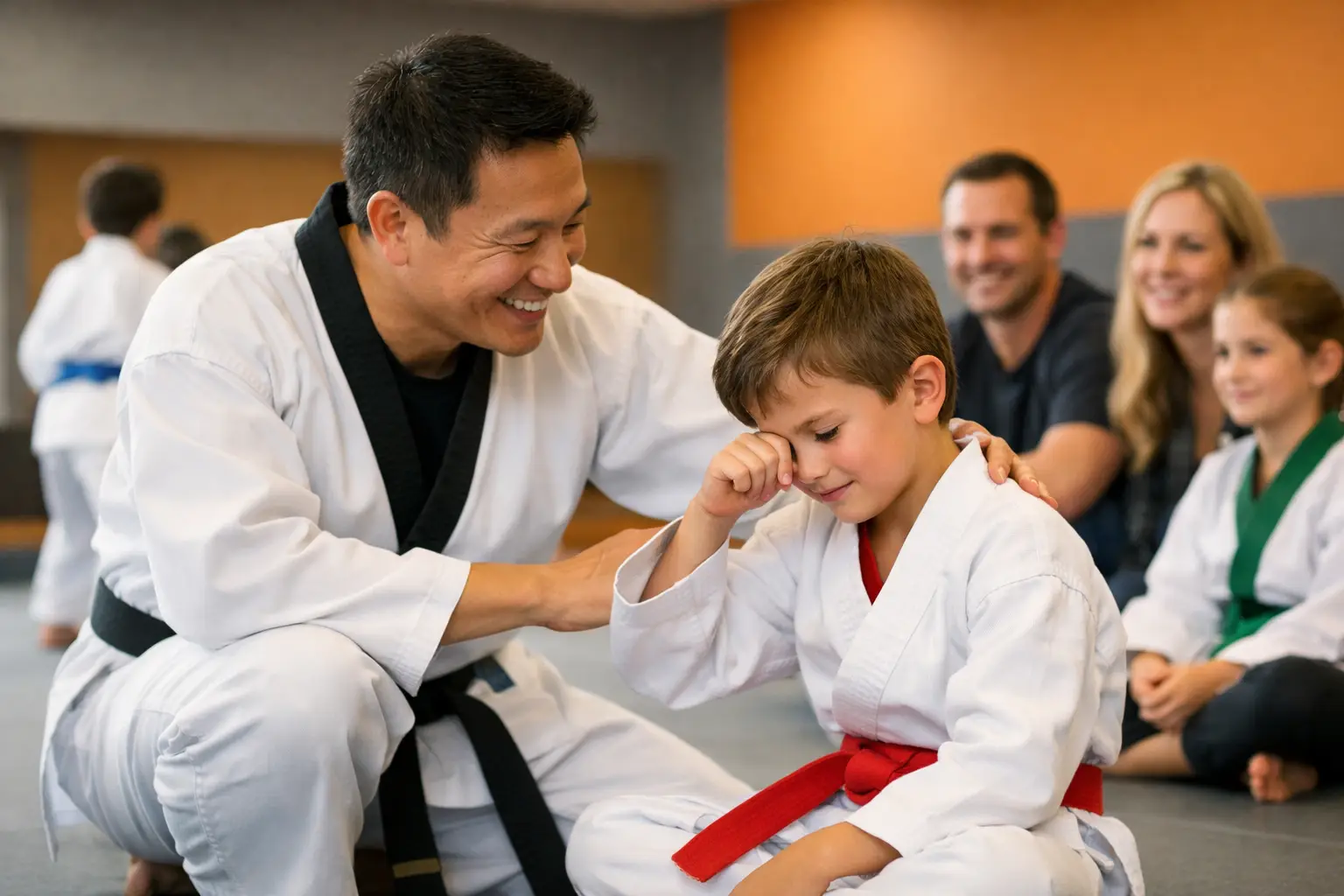
A child can look confident during class and still hesitate when it is time to speak up, help a younger student, or follow through at home. That is where a martial arts leadership program can matter. It gives children repeated chances to practice who they are becoming, not just what they can do on the mat.
For parents, leadership can sound like a big promise. You may simply want your child to listen the first time, manage frustration without shutting down, or carry themselves with more assurance at school. Real leadership starts there. It is not about making every child the loudest person in the room. It is about helping them become dependable, thoughtful, and willing to contribute.
Leadership Is Learned in Small Moments
Children do not develop leadership because someone gives them a title. They develop it when adults give them meaningful responsibilities, hold them to a clear standard, and let them try again when they fall short.
In a quality martial arts leadership program, students are asked to do more than show up and repeat techniques. They may help prepare the training area, welcome a new classmate, demonstrate a movement, or support a younger student who feels nervous. These are small jobs, but they carry real weight. A child learns that other people are counting on them.
That experience looks different for every student. The child with plenty of energy may learn how to direct it with purpose. The quiet child may find a safe place to use their voice. A student who is used to giving up when something gets hard may discover that leadership includes staying present, accepting coaching, and trying again.
The goal is not perfection. The goal is a child who begins to understand, through action, that their choices affect the people around them.
What a Martial Arts Leadership Program Should Teach
Leadership training works best when it is built into the culture of the school rather than treated as a reward reserved for a few students. Students need instruction, examples, and room to grow into responsibility over time.
Communication That Has a Purpose
Many children know how to talk, but communicating clearly is a different skill. When students are asked to greet others, explain a drill, answer a question respectfully, or encourage a teammate, they practice speaking with intention.
That can carry into everyday life. A child who learns to say, “Can I help you?” or “Can you show me again?” has more useful tools than a child who has only been told to be confident. Confidence grows when children see that their voice can be clear, calm, and helpful.
Responsibility Without Shame
Every child misses a step sometimes. They forget equipment, lose track of an instruction, or react poorly when they are frustrated. The right response is not to embarrass them. It is to help them own the moment and make a better choice next time.
In martial arts, progress depends on consistent effort. Students learn that preparation matters, attendance matters, and the way they respond to correction matters. That is responsibility with a real-world purpose. Parents often notice the difference first in the ordinary moments: getting ready with fewer reminders, taking better care of belongings, or explaining what they need instead of melting down when something feels difficult.
Service Before Recognition
A leadership role should never be only about standing at the front of the room. It should teach students to look beyond themselves.
Helping a beginner tie a uniform belt, offering encouragement before a challenging activity, or setting the tone for younger students can be powerful experiences. The student serving may not realize it in the moment, but they are learning patience, empathy, and accountability. The younger student sees someone close to their age making a positive difference, which helps create a stronger class community.
Recognition has a place. Children deserve to feel proud of their effort. But the deeper lesson is that leadership means doing what is needed even when no one is handing you a trophy for it.
Why Repetition Matters More Than a Big Speech
Parents are often looking for a breakthrough. Sometimes there is one: a child volunteers to demonstrate for the first time, handles a disappointment with maturity, or comes home excited because they helped someone else succeed.
More often, growth happens quietly. It happens after weeks of being expected to line up with purpose, listen carefully, reset after a mistake, and show consideration for the people training beside them. The same structure, repeated consistently, gives children a reliable place to practice better habits.
That repetition is especially valuable for children who have struggled to find their footing in other settings. Some need an outlet for their energy. Some need a setting where expectations are clear and adults mean what they say. Some simply need to belong to a group where effort is noticed.
At TUFF Martial Arts Academy, that belief was built from a family’s own experience. What began with a father looking for a positive outlet for his son grew into a mission to help other families raise capable young people. Eleven years later, the work still centers on giving children structure, encouragement, and standards they can carry beyond class.
Leadership Should Reach Beyond the Mat
A parent should not have to guess whether a program is making a difference. The signs may be subtle at first, but they should become visible over time.
You may see your child introduce themselves more comfortably to an adult. They may begin correcting a mistake instead of making an excuse. They may take pride in being the person a younger child looks up to. At home, leadership might show up as finishing a task before being reminded, offering to help, or recovering more quickly after a hard day.
This does not mean martial arts eliminates every tough moment. Children are still learning. They will still test limits, get disappointed, and need reminders. A strong program does not promise a transformed child after a few classes. It gives families a consistent partner in teaching values through practice, coaching, and accountability.
The transfer to home works best when parents stay connected to the process. Ask specific questions after class: “Who did you help today?” “What was challenging?” “What did your instructor ask you to improve?” These questions invite a real conversation. They also tell your child that growth matters just as much as achievement.
How to Know if Your Child Is Ready
Not every child needs to be outgoing to benefit from leadership training. In fact, children who are reserved often grow steadily when they are given small, supported opportunities to contribute.
Readiness is less about personality and more about willingness. Is your child starting to follow routines with consistency? Can they accept redirection, even if they are still working on their reaction? Do they show interest in helping, learning, or setting a good example? Those are meaningful starting points.
Some programs may have age, attendance, or skill expectations before students take on formal leadership responsibilities. That can be healthy. Responsibility should be earned through steady effort, not handed out as a label. At the same time, children should not have to be flawless before they are allowed to practice leading. They need guided opportunities to grow into it.
A Better Question Than “Will My Child Become a Leader?”
The better question is: who is my child practicing becoming each week?
A martial arts leadership program can give them a place to practice courage before a crowd, patience with a younger child, accountability after a mistake, and service when nobody is watching. Those lessons are useful in school, at home, on a team, and eventually in the adult life they are building now.
The next time your child walks onto the mat, look beyond the uniform and the next rank. Notice whether they are learning to carry responsibility with care. That is the kind of progress that stays with them long after class is over.