
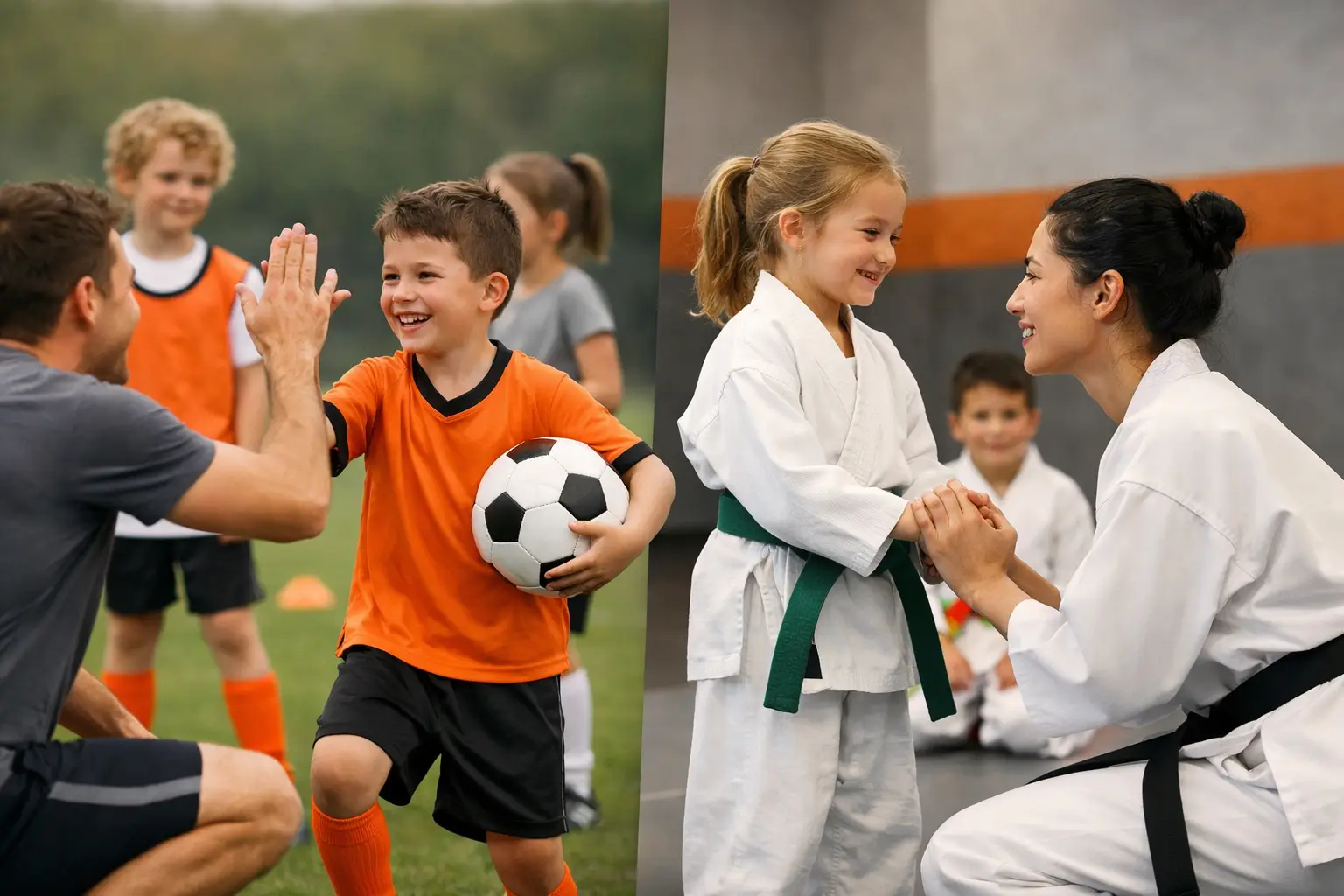
A child can come home sweaty and exhausted from either practice, yet the experience can shape them in very different ways. When parents weigh sports practice vs martial arts, they are usually not just choosing how their child will spend a few afternoons each week. They are asking a bigger question: Where will my child be known, challenged, and given room to grow?
The honest answer is that both can be valuable. A team sport may be exactly what a child needs to learn cooperation, enjoy competition, and feel the energy of working toward a shared goal. Martial arts may be the better fit for a child who needs a clearer routine, more individual feedback, or a place to turn big energy into purposeful effort. The right choice depends on your child, your family schedule, and the outcomes you hope to see beyond game day.
Sports Practice vs Martial Arts: The Core Difference
Most traditional sports are built around the team and the season. Practices prepare athletes for a game, meet, or tournament. A child learns a position, follows a game plan, and contributes to a larger result. That can be powerful, especially for children who light up around teammates and enjoy the excitement of competition.
Martial arts is usually built around the individual within a group. Students train alongside peers, encourage one another, and can compete when that path is right for them. But their daily work is personal. They practice a skill until it improves. They learn to listen, reset after a mistake, and take ownership of the effort they bring to the mat.
That distinction matters for children who can get lost in the noise of a large team. In a martial arts class, there is no bench where a child disappears for most of practice. Every student has a role: show up, participate, learn, try again, and contribute to the culture of the room.
This does not make martial arts better for every child. Some children truly thrive when they have a jersey, a teammate calling for the ball, and a group depending on them. Others need an environment where progress is measured less by playing time and more by their own consistency. Many families find that one experience prepares their child for the other.
What Sports Can Teach That Matters
Team sports give children real lessons that cannot be copied by watching from the sidelines. They learn that a great individual moment does not always produce a win, and that a teammate’s success can be worth celebrating even when they wanted the chance themselves.
They also learn to make decisions quickly. In soccer, basketball, baseball, and similar activities, the game keeps moving. Children have to read situations, communicate, and recover when the play does not go their way. For kids who enjoy fast-paced environments, that can build confidence in a very natural way.
There is also the simple joy of belonging to a team. For many children, shared practices, game-day routines, and friendships formed over a season become meaningful memories. If your child is energized by that atmosphere, sports practice may be a strong fit.
Still, parents should consider the practical side. Seasons end. Team rosters change. Playing time can vary widely, particularly as children get older and competition increases. A child may work hard all week yet have limited opportunities during a game. That is part of sports, but it can be discouraging for a child who needs more consistent engagement to stay motivated.
What Martial Arts Adds to a Child’s Week
Martial arts gives children a repeatable structure. They arrive, line up, listen, train, and leave knowing they were expected to be present from start to finish. That rhythm can be especially meaningful after a long school day, when some children have plenty of energy but need a constructive place to direct it.
Progress is visible, but it is not supposed to be rushed. A child earns advancement through attendance, effort, skill development, and the way they carry themselves in class. The goal is not simply to receive the next belt. The goal is for the child to become ready for what that belt represents.
That process teaches a lesson children need long after childhood: improvement is rarely one big breakthrough. It is built through small choices repeated over time. Showing up when the skill is difficult. Taking correction without shutting down. Trying again after getting something wrong.
At TUFF Martial Arts, that belief comes from lived experience. Our family did not begin with a business plan. We began as parents looking for a meaningful outlet for a child who had a lot of energy and needed a place to grow. Training together changed our family, and the school grew from that conviction. We have seen for more than eleven years that children respond to adults who hold high expectations while making them feel supported.
Individual progress without isolation
Martial arts is sometimes viewed as an individual activity, but a good class is deeply communal. Students bow in together, train with partners, learn from instructors, and see peers of different ages working toward their own goals. A newer student can watch an older student lead with patience. An experienced student can learn what leadership feels like by helping someone who is still finding their footing.
The difference is that each child’s progress remains their own. They do not need to be the fastest, biggest, or most naturally athletic student in the room to have a meaningful win that day. For some children, that is where confidence begins to take root.
A consistent option for working families
For working parents, the best activity is not only one their child enjoys. It must also fit real life. Practices that change constantly, late games, and long drives can create stress for a family already managing school, work, meals, and homework.
A structured martial arts program can offer more predictable routines, particularly when it is part of dependable afterschool care or camp programming. In South Miami-Dade, reliable transportation and a safe place for children to go after school can make the difference between an activity that sounds good and one a family can actually maintain.
Consistency matters because children benefit most when they have time to settle into a routine. A single great class is encouraging. Weeks and months of showing up are where parents often begin noticing changes in how their child handles responsibility, frustration, and new challenges.
How to Decide What Fits Your Child
Start by watching what happens when your child faces a challenge. Do they become more engaged when surrounded by teammates, or do they need direct coaching and a calmer setting before they are willing to try? Neither answer is a problem. It is useful information.
Then consider what your child wants, but look beneath the first answer. A child who says they want soccer because friends are playing may love the social experience. A child who says they do not want to try anything new may be nervous about not being good at it immediately. A trial class, a practice visit, or an honest conversation can reveal more than a quick yes or no.
It also helps to look at the whole family calendar. Can you sustain the schedule without every week becoming a scramble? Does your child have enough time to rest, complete schoolwork, and simply be a kid? The best program is one your family can support consistently, not one that creates pressure from the start.
Finally, pay attention to the adults leading the experience. Children do not need perfection from instructors or coaches. They need adults who are prepared, attentive, and willing to correct them with care. Ask what the program values when no one is watching the scoreboard. The answer will tell you a great deal.
It Does Not Have to Be One or the Other
For some families, the choice is temporary. A child may begin martial arts to build a stronger routine and later add a team sport. Another may play a seasonal sport and continue martial arts year-round as a steady foundation. These paths can complement each other when the schedule allows.
The concern is not whether your child does the activity that looks most impressive from the outside. The concern is whether they are growing in a place that asks something meaningful of them and gives them the support to meet that challenge.
Choose the environment where your child is more likely to keep showing up, learn from difficult moments, and leave feeling capable of trying again tomorrow.